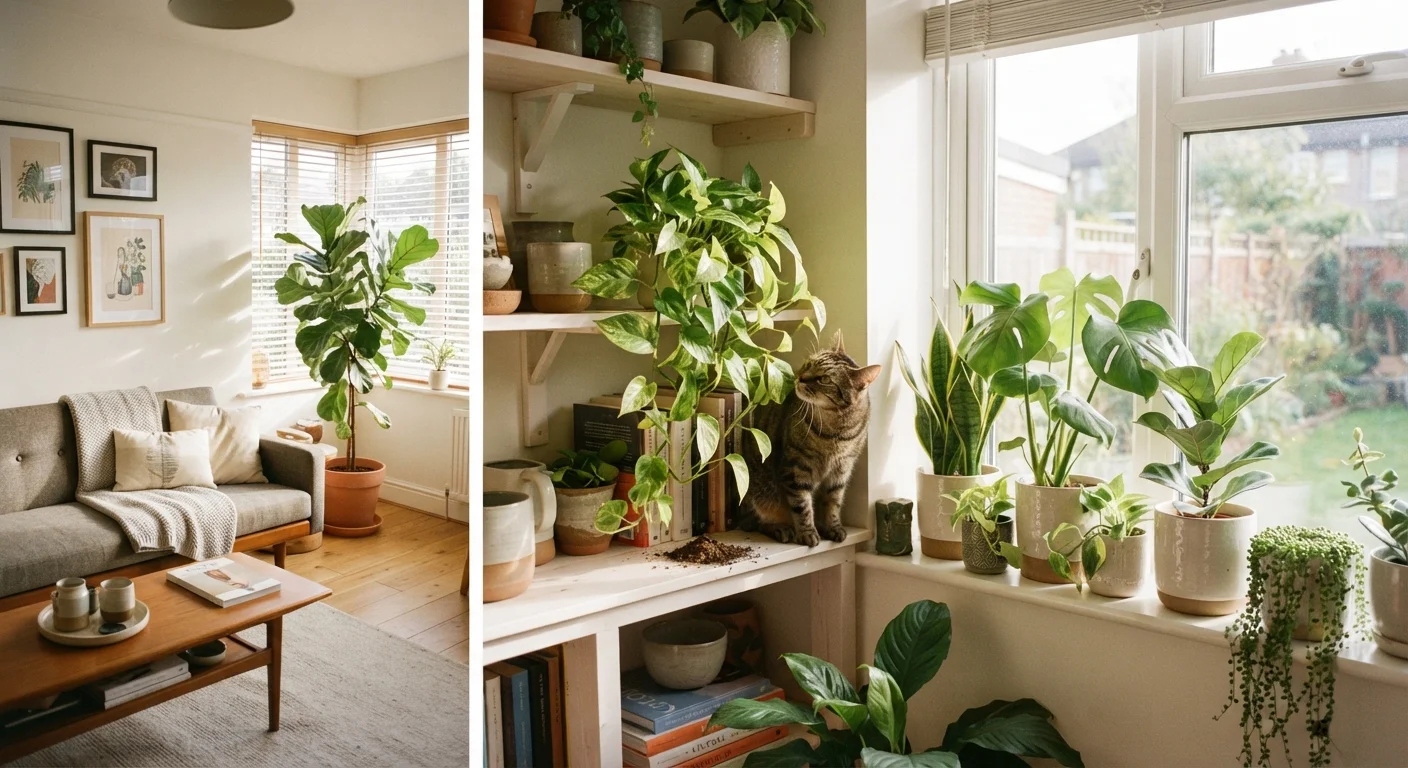
Why Common Houseplants Are a Hidden Hazard
Houseplants improve indoor air quality, add beauty to a room, and rank among the most popular home décor choices in the US - but many of the most widely sold species contain compounds that can seriously harm dogs and cats. Pets explore with their mouths, and even a curious nibble on the wrong plant can trigger anything from mild irritation to organ failure.
This reference covers the plants most commonly reported to poison control centers, the symptoms they cause, and which species carry the highest urgency. For a broader look at household hazards, see our guide on common household items toxic to pets.
| Most dangerous plant for cats | True lilies (Lilium and Hemerocallis species) (ASPCA Animal Poison Control Center) |
| Common symptom across most toxic plants | Vomiting and drooling |
| Plants on ASPCA toxic list | Over 400 species (ASPCA Animal Poison Control Center) |
| Time to act after suspected ingestion | Immediately - do not wait for symptoms |
| Pets most commonly affected | Cats and dogs |
| Emergency poison hotline (US) | ASPCA Poison Control: (888) 426-4435 (A consultation fee may apply) |
High-Risk Plants: Know These by Name
The following plants are frequently found in American homes and pose confirmed toxicity risks to dogs and/or cats:
- True lilies (Lilium spp. and Hemerocallis spp.) - Extremely dangerous to cats. Easter lily, tiger lily, Asiatic lily, and daylily can all cause acute kidney failure. Even pollen or water from the vase is considered a risk. No safe exposure level is established.
- Sago palm (Cycas revoluta) - All parts are toxic to dogs and cats, but the seeds (nuts) contain the highest concentration of cycasin, which causes severe liver failure. Symptoms include vomiting, jaundice, and neurological signs.
- Pothos and philodendron - Both contain insoluble calcium oxalates (see glossary below). Chewing releases crystals that cause intense oral pain, drooling, swelling, and GI upset in dogs and cats.
- Dieffenbachia (dumb cane) - Also contains calcium oxalates; can cause oral swelling severe enough to interfere with swallowing or breathing in rare cases.
- Aloe vera - The latex layer beneath the skin contains saponins and anthraquinones that cause vomiting, diarrhea, and tremors. The gel itself is less toxic but still not safe for pets to ingest.
- ZZ plant (Zamioculcas zamiifolia) - Contains calcium oxalates; toxic to both dogs and cats, causing oral irritation and GI symptoms.
- Oleander (Nerium oleander) - Though typically an outdoor shrub, cuttings are sometimes kept indoors. All parts are highly toxic, containing cardiac glycosides that can cause serious heart rhythm disturbances.
Top 5
Plant categories in pet poisoning calls
Lilies, pothos, philodendrons, aloe, and sago palm are among the most frequently reported plant exposures, according to ASPCA Poison Control data.
100%
Fatality risk from sago palm kernel ingestion
The ASPCA notes that ingestion of even a single sago palm seed can be fatal to dogs without rapid veterinary treatment.
If you're also reviewing what foods could pose a similar risk, see common toxic foods for dogs and cats.
Recognizing Symptoms of Plant Toxicity
Symptoms vary depending on the plant, the amount ingested, and the animal's size and species. Cats are often more sensitive than dogs due to differences in liver metabolism. Common signs include:
- Excessive drooling or pawing at the mouth
- Vomiting or diarrhea
- Lethargy or weakness
- Loss of appetite
- Tremors or seizures (higher-toxicity plants)
- Yellowing of the eyes or skin (jaundice - a sign of liver involvement)
- Increased or decreased urination (a sign of kidney involvement)
Some symptoms appear within minutes of exposure; others, like kidney damage from lily ingestion, may not be obvious for 24-72 hours. Early intervention dramatically improves outcomes, so don't wait for a pet to look obviously ill. Learn more about detecting distress early in our article on signs your pet is in pain.
Always Contact a Vet or Poison Hotline First
If you suspect your pet has chewed or ingested any plant, contact your veterinarian or the ASPCA Animal Poison Control Center immediately - don't wait for symptoms to appear. Bring the plant name (or a photo) so the team can assess the risk accurately. This article is general educational information, not a substitute for professional veterinary guidance.
Toxicosis
Illness caused by exposure to a toxic substance. In pets, plant toxicosis results from ingesting, chewing, or sometimes contacting harmful plant material.
Insoluble calcium oxalates
Microscopic needle-like crystals found in plants such as pothos and philodendron. When chewed, they penetrate oral and gastrointestinal tissue, causing intense irritation and swelling.
Saponins
Naturally occurring compounds in plants like aloe vera and certain lilies. Ingestion can cause vomiting, diarrhea, and lethargy in dogs and cats.
Nephrotoxic
Capable of causing kidney damage. True lilies are considered acutely nephrotoxic to cats - even small exposures can lead to life-threatening kidney failure.
Safer Choices and Practical Prevention
The safest approach is to keep confirmed toxic plants out of any home with pets. If you want greenery, several popular species are considered non-toxic to cats and dogs by the ASPCA, including spider plants (Chlorophytum comosum), Boston ferns, areca palms, and orchids (Phalaenopsis species). Always verify a specific species before bringing it home - common names can refer to multiple plants with very different toxicity profiles.
For plants already in your home, physical barriers matter more than training alone. Placing plants in rooms pets cannot access, using hanging planters out of reach, or relocating toxic species entirely reduces risk more reliably than expecting a curious cat or dog to leave a plant alone. Our room-by-room pet-proofing guide walks through how to assess each space systematically.
Keep the ASPCA Poison Control number and your vet's emergency line saved in your phone. If exposure occurs, note the plant name, estimate how much was consumed, and call immediately - time is the most important variable in plant toxicity outcomes.
This article is for general informational purposes only and does not constitute veterinary or medical advice. Always consult a licensed veterinarian for guidance specific to your pet's health.