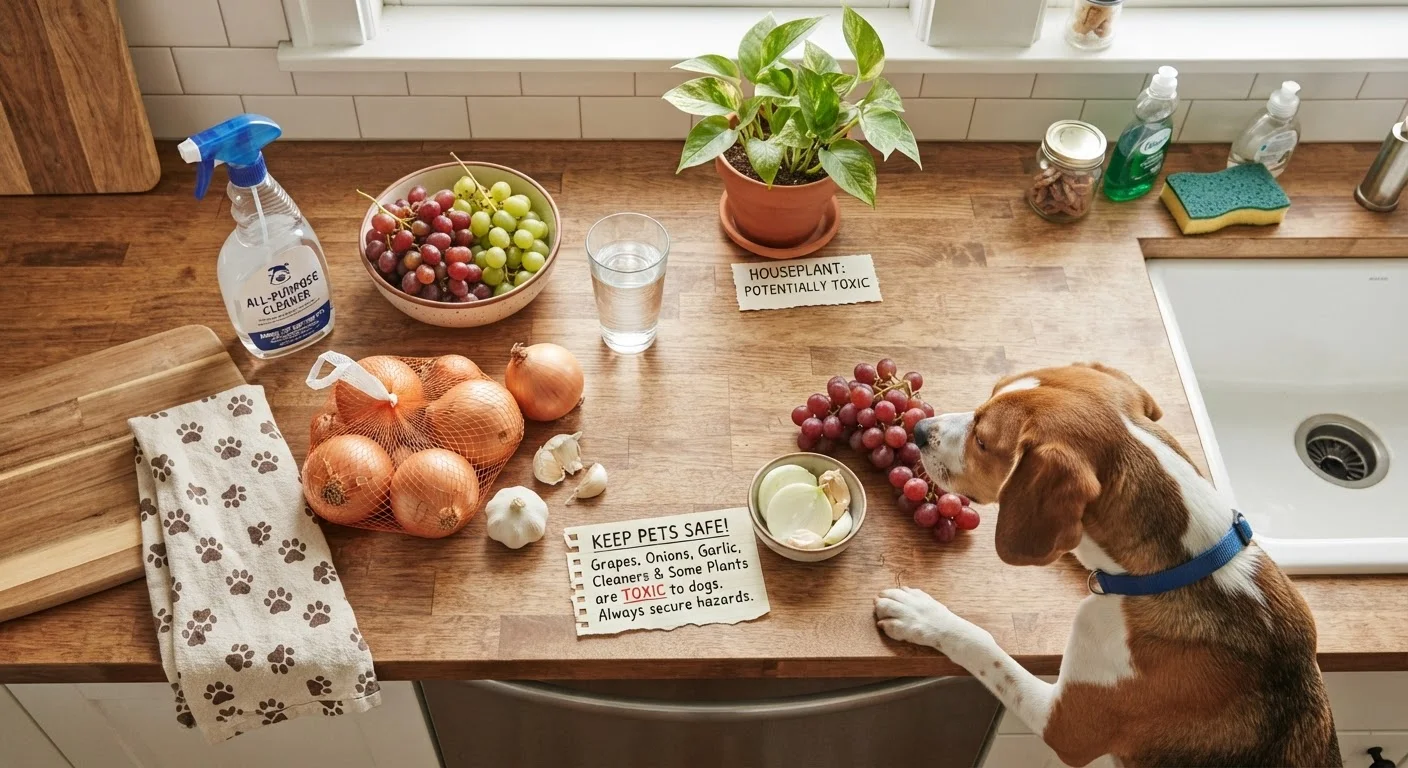
Why Household Toxins Are a Leading Pet Emergency
Accidental poisoning is one of the most common reasons pet owners contact emergency veterinary clinics. Many of the substances involved aren't exotic - they're things already in your kitchen, bathroom, or living room. Dogs and cats explore with their noses and mouths, which makes seemingly ordinary items a genuine hazard.
This reference covers the major categories of household toxins for dogs and cats. If you suspect your pet has ingested something harmful, contact your veterinarian or the ASPCA Animal Poison Control Center immediately. Do not attempt to induce vomiting without direct professional guidance - some toxins cause more damage on the way back up.
| ASPCA Poison Control Hotline | (888) 426-4435 (ASPCA Animal Poison Control Center) |
| Most reported pet toxin category | Human medications (ASPCA Annual Animal Poison Control Report) |
| Most dangerous plant for cats | True lilies (Lilium spp.) (ASPCA Animal Poison Control) |
| Fastest-acting food toxin | Xylitol (rapid hypoglycemia in dogs) (Veterinary toxicology consensus) |
| Species-specific risk | Cats cannot safely metabolize phenols or permethrin (Veterinary pharmacology literature) |
For a broader look at making your living space safer, see our guide on pet-proofing your home room by room.
This article is for general informational purposes only and is not a substitute for professional veterinary advice.
Foods, Plants, Cleaning Products, and Other Common Hazards
Foods Toxic to Pets
Several human foods are well-documented as dangerous to dogs and cats:
- Grapes and raisins - Can cause acute kidney failure in dogs; the exact toxic compound is still under study.
- Onions, garlic, leeks, and chives - Damage red blood cells in both dogs and cats, causing hemolytic anemia.
- Xylitol - A sugar substitute found in sugar-free gum, some peanut butters, and baked goods; causes rapid insulin release and liver failure in dogs.
- Chocolate and caffeine - Contain methylxanthines that cause vomiting, tremors, and cardiac issues in dogs and cats.
- Alcohol and yeast dough - Even small amounts of alcohol or raw dough (which produces alcohol as yeast ferments) can cause serious CNS and respiratory depression.
- Macadamia nuts - Associated with weakness, vomiting, and hyperthermia in dogs.
Common Toxic Houseplants
Many popular indoor and outdoor plants carry significant risk:
- Lilies (Lilium and Hemerocallis species) - Extremely toxic to cats; even small exposures can cause acute kidney failure.
- Sago palm - All parts are toxic to dogs and cats; ingestion can cause liver failure.
- Oleander and foxglove - Contain cardiac glycosides that can cause life-threatening heart arrhythmias.
- Dieffenbachia and philodendron - Cause intense oral irritation, drooling, and swelling when chewed.
Hemolytic anemia
A condition in which red blood cells are destroyed faster than the body can replace them, reducing oxygen delivery. In pets, it can be caused by ingesting allium vegetables like onions and garlic.
Methylxanthines
A class of compounds that includes caffeine and theobromine, found in chocolate and coffee. They stimulate the nervous system and heart at doses that are toxic to dogs and cats.
Cardiac glycosides
Naturally occurring compounds in plants like oleander and foxglove that affect heart muscle function. Ingestion can cause dangerous, potentially fatal changes in heart rhythm.
Ethylene glycol
The active ingredient in most automotive antifreeze products. It is rapidly absorbed and metabolized into compounds that cause severe, often fatal kidney failure in dogs and cats.
Rodenticide
A category of products designed to kill rodents. Different formulations use different toxic mechanisms - including anticoagulants, neurotoxins, and kidney-damaging agents - all of which are also dangerous to pets.
Cleaning Products and Household Chemicals
Many household cleaners are caustic or systemically toxic:
- Bleach and disinfectants - Can irritate the GI tract, respiratory system, and skin; concentrated forms are especially hazardous.
- Phenol-based cleaners (often pine-scented) - Particularly dangerous for cats, whose livers cannot metabolize phenols effectively.
- Antifreeze (ethylene glycol) - Has a sweet taste that attracts animals; even a small amount causes fatal kidney failure in cats and dogs.
- Rodenticides - Multiple formulas exist; some cause internal bleeding, others affect the nervous system or kidneys.
Medications
Both human and pet medications can be toxic when dosed incorrectly or ingested by the wrong species:
- Ibuprofen and acetaminophen - Common OTC pain relievers that are highly toxic to both dogs and cats; acetaminophen is especially dangerous for cats.
- Antidepressants and ADHD medications - Even a dropped pill can cause serious neurological effects.
- Certain flea/tick treatments - Products formulated for dogs that contain permethrin are acutely toxic to cats.
Being prepared matters. Consider reviewing what goes into a home pet first-aid kit so you're ready to act quickly while awaiting professional guidance. You can also check our first-aid supplies checklist for a practical starting point.
Act Fast - Time Matters in Poisoning Cases
If you believe your pet has ingested a toxic substance, do not wait for symptoms to appear. Contact your veterinarian or the ASPCA Animal Poison Control Center at (888) 426-4435 right away. Have the product name, estimated amount ingested, and your pet's weight ready. Never attempt home treatment - including inducing vomiting - without direct guidance from a poison control professional or vet.