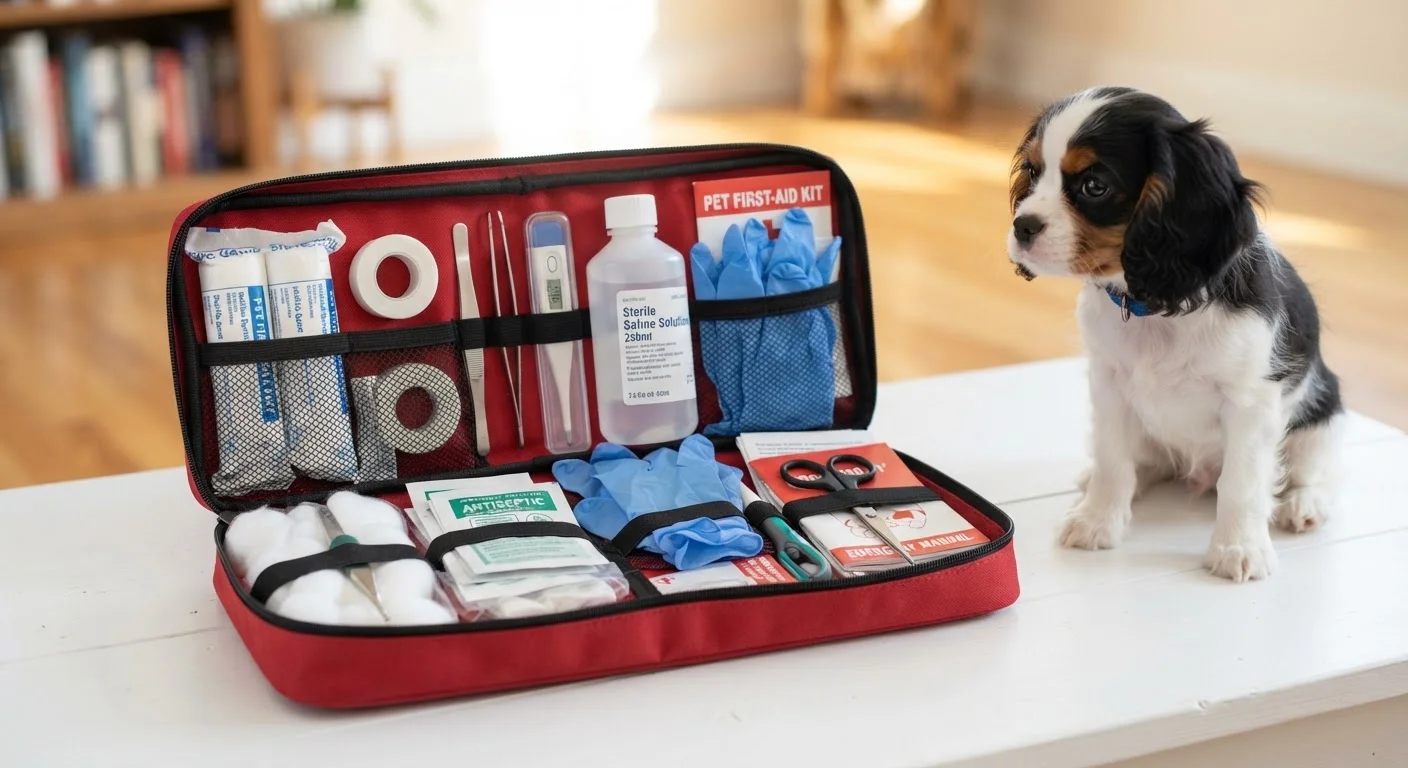
Why Every Pet Owner Needs a First-Aid Kit
Accidents happen without warning - a dog steps on broken glass during a hike, a cat pulls a muscle jumping down, or a curious rabbit chews something it shouldn't. In those first critical minutes, having the right supplies on hand allows you to stabilize your pet calmly and safely before reaching professional care.
A pet first-aid kit is not a substitute for a veterinarian. Its purpose is to manage minor injuries and to buy time - reducing pain, preventing infection, and limiting further harm while you arrange transport. Think of it the way you think of a car's spare tire: essential for getting you somewhere safe, not a permanent fix.
For a broader look at reducing the likelihood of household emergencies in the first place, our room-by-room home safety checklist covers common hazards for dogs, cats, and small animals. And if you're ever unsure whether a situation calls for an emergency room or can wait for a regular vet visit, see our guide on when to seek emergency care for pets.
Hard-sided plastic case or handled first-aid bag
Keeps all supplies organized, dry, and portable for home or travel use.
Digital rectal thermometer
Measures your pet's core body temperature to detect fever or hypothermia.
Blunt-tipped scissors and tweezers
Used to cut bandaging material safely and remove ticks or surface foreign objects.
Saline wound wash
Gently flushes dirt and debris from cuts and abrasions to reduce infection risk.
Self-adhering cohesive bandage wrap
Secures gauze over wounds without adhesive that could pull at fur or skin.
Disposable gloves (nitrile or latex)
Protects both you and your pet from cross-contamination during wound care.
Emergency contact card
Provides instant access to your vet, emergency clinic, and poison control numbers.
Pet first-aid reference guide
Offers step-by-step reminders for common scenarios when stress makes decision-making harder.
Your Complete Pet First-Aid Kit Checklist
The items below are organized by category. Gather them into a dedicated container - a hard-sided plastic case or a handled bag with internal pockets works well - and label it clearly. Keep one kit at home and consider a compact version for travel, as outlined in our guide to traveling with pets safely.
Emergency Contact Information
Wound Care & Bandaging
Examination & Monitoring Tools
Restraint & Safety
Additional Supplies
Do Not Use Human Medications on Pets
Many over-the-counter medications safe for humans - including ibuprofen, acetaminophen, and certain antihistamines - are toxic to dogs, cats, and other animals. Never administer any medication to your pet without explicit guidance from your veterinarian. When in doubt about a specific product, call your vet before adding it to your kit.
When First Aid Is Not Enough
First aid covers minor wounds, mild swelling, and stabilization after an accident. Several situations require immediate veterinary attention regardless of what supplies you have available:
- Difficulty breathing or choking
- Suspected poisoning - call the ASPCA Animal Poison Control Center (888-426-4435) and your vet simultaneously
- Seizures or loss of consciousness
- Deep or gaping wounds that won't stop bleeding
- Suspected broken bones, eye injuries, or signs of shock (pale gums, rapid shallow breathing, collapse)
In these cases, use your kit only to stabilize - apply gentle pressure to bleeding wounds, keep your pet warm and still - then transport immediately. Do not attempt to splint fractures or remove embedded objects at home.
First Aid Buys Time - It Does Not Replace Veterinary Care
Every item in this kit is designed to stabilize your pet in the short term. Even if a wound appears minor after treatment, many injuries require professional assessment to rule out infection, internal damage, or complications that aren't visible. After administering first aid, always contact your veterinarian - even if your pet seems to be recovering.
Building a first-aid kit pairs naturally with other proactive health habits. Our overview of core and non-core pet vaccines and the fundamentals of a healthy daily pet care routine are good next steps for owners focused on prevention.
This article provides general pet care information and is not a substitute for professional veterinary advice. Always consult your veterinarian for guidance specific to your pet's health and condition.