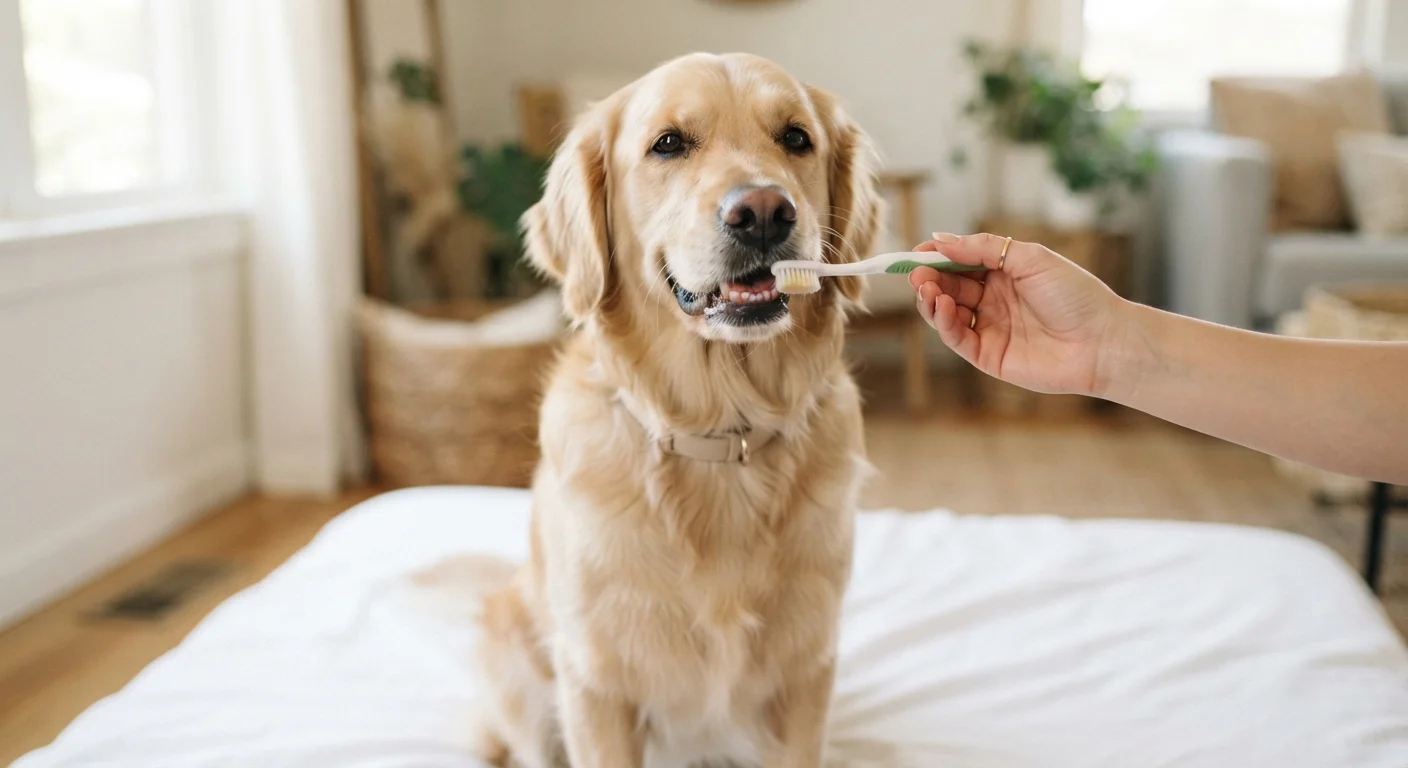
Why Toothbrushing Feels Like a Battle - And Why It Doesn't Have To
Most pets don't resist toothbrushing because they're difficult - they resist because no one introduced it gradually. Having a foreign object pushed into their mouth while being held still is genuinely alarming if they've never experienced it before. The same is true for other handling routines, as explored in our guide to nail trimming anxiety in pets. The good news: dogs and cats can both learn to tolerate - and often accept - regular toothbrushing when the introduction respects their pace.
The stakes are real. Dental disease in pets is more common than most owners realize, with periodontal disease affecting the majority of adult dogs and cats by age three. Home brushing is the single most effective tool owners have to slow its progression between professional cleanings.
Pain or Bleeding Means a Vet Visit First
If your pet pulls away sharply, shows signs of mouth pain, has noticeably red or swollen gums, or bleeds persistently when you touch the gum line, do not attempt to brush through it. These signs may indicate existing periodontal disease or dental pain that requires professional evaluation before a home brushing routine begins. Schedule a veterinary dental examination before proceeding.
Before diving into the steps below, gather your tools. You'll need pet-safe enzymatic toothpaste, a finger brush or soft-bristled pet toothbrush, and a handful of high-value treats for reinforcement.
Finger brush
Fits over your fingertip for gentle, controlled scrubbing - ideal for first-time brushing and small mouths.
Soft-bristled pet toothbrush
Provides better reach for back molars once your pet is comfortable with brushing.
Pet-safe enzymatic toothpaste
Breaks down plaque-forming bacteria enzymatically; comes in flavors palatable to dogs and cats.
High-value treats
Used as positive reinforcement immediately after each brushing session to build a positive association.
Step-by-Step: Building to a Full Brushing Routine
The process below is designed for both dogs and cats. Cats generally require a lighter touch and smaller brushes, but respond well to the same gradual desensitization approach. Move through steps at your pet's pace - some animals progress in a week; others need a month. Neither timeline is wrong.
Let your pet smell and taste the toothpaste first
Before any brush touches your pet's mouth, put a small amount of pet toothpaste on your fingertip and let them sniff and lick it at their own pace. Do this once or twice a day for two to three days. The goal is to establish that this new object and flavor predict something pleasant - not a struggle. Enzymatic toothpastes come in poultry, beef, and seafood flavors that most pets find genuinely appealing.
Introduce the brush with no pressure
Once your pet is comfortable with the toothpaste flavor, place the finger brush or toothbrush on the floor and allow them to investigate it. Then apply toothpaste to the brush and let them lick it off without any attempt to brush. Repeat this for another two to three sessions. You're building familiarity with the tool before asking your pet to tolerate anything more.
Touch the gum line gently with your finger
With toothpaste on your fingertip, begin touching the outside of your pet's upper lip, then gently lift it and graze the gum line at the front teeth. Keep each session to about 15-20 seconds. This step teaches your pet that having their mouth handled is safe and predictable. Follow immediately with a treat and praise. Repeat for two to three sessions before moving on.
Begin brushing the front teeth
Place toothpaste on the brush and, with your pet calmly positioned, lift the lip and apply the brush to the outer surface of the upper front teeth in small, circular or elliptical strokes. Aim for the gum line - this is where plaque accumulates and where brushing has the most impact. Keep the session brief (20-30 seconds). Do not attempt the back teeth yet. Reward generously when finished.
Gradually extend to the cheek teeth
Over the following week, work toward brushing the premolars and molars along the outside of the upper jaw - these teeth are the most prone to tartar buildup. Use a toothbrush with a longer handle for better reach. You typically do not need to brush the inner (tongue-side) surfaces; the tongue naturally clears some plaque there, and most pets resist having the brush that far inside. A full brushing session covering all outer surfaces should take about two minutes.
Establish a consistent daily routine
Anchor toothbrushing to an existing habit - after a walk, before bed, or after a meal - so it becomes a predictable part of your pet's day rather than a random event they must brace for. Daily brushing is the veterinary standard for meaningful plaque control, but three times per week still provides significant benefit compared to no brushing at all. Consistent, calm repetition is what builds lasting cooperation.
Short Sessions Beat Long Battles Every Time
A 20-second session that ends on a positive note is far more valuable than a two-minute struggle. If your pet becomes tense or tries to pull away, stop calmly, offer a treat, and try again the next day. Over weeks, short positive sessions compound into lasting tolerance - and often genuine cooperation.
Once brushing is established, it fits naturally into a broader care routine. Our overview of building a healthy pet routine covers how dental care connects to feeding schedules, exercise, and other daily habits that support long-term wellness.
When Brushing Isn't Enough - Or Isn't Yet Possible
Even with consistent home brushing, most dogs and cats benefit from a professional dental cleaning performed under anesthesia by a veterinarian - typically once a year or as recommended based on the individual animal's oral health. Home brushing reduces the frequency and severity of professional cleanings needed, but it doesn't replace them entirely.
Never Use Human Toothpaste on Pets
Most human toothpastes contain xylitol, fluoride, or foaming agents that are toxic to dogs and cats when swallowed - and pets will swallow toothpaste. Always use a toothpaste specifically formulated and labeled safe for pets. If you are unsure whether a product is appropriate, ask your veterinarian before using it.
If your pet simply will not tolerate a brush despite weeks of patient effort, ask your veterinarian about supplemental options - certain water additives, dental diets, and chews carry the Veterinary Oral Health Council (VOHC) seal, indicating evidence of plaque or tartar reduction. These are adjuncts, not replacements for brushing, but they're meaningfully better than no oral care at all. For a fuller picture of what oral disease looks like when it progresses, see our article on why dental health in pets is more serious than most owners realize.
This article is for general informational and educational purposes only and does not constitute veterinary advice. Always consult a licensed veterinarian regarding your pet's specific health needs, including dental care and oral health concerns.