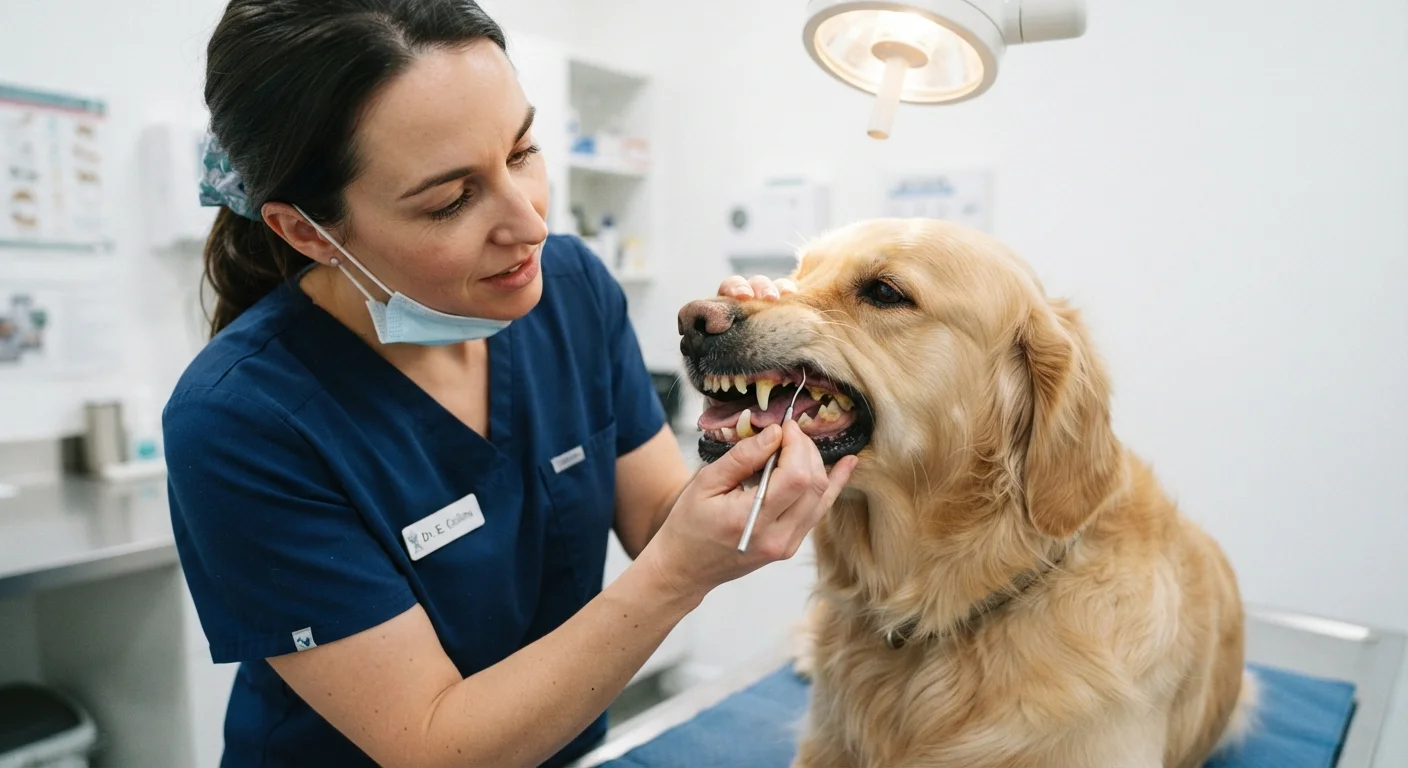
How Dental Disease Develops
Every time a pet eats, bacteria in the mouth form a thin, sticky film called plaque on tooth surfaces. Without removal, plaque mineralizes within days into tartar (also called calculus) - the hard, yellow-brown crust visible at the gumline on many adult pets' teeth. Tartar harbors additional bacteria and creates a protected environment where infection can take hold beneath the gum tissue.
As bacteria accumulate below the gumline, the body responds with inflammation - the hallmark of gingivitis, the earliest and only reversible stage of periodontal disease. If the bacterial load isn't reduced, inflammation becomes chronic, destroying the periodontal ligament, the gum tissue, and eventually the jawbone itself. Teeth loosen and may be lost. Oral pain - often undetected because pets instinctively mask it - can become significant.
The process is gradual and largely invisible in its early stages. Dental X-rays taken during a professional cleaning are often the only way to see the full extent of bone loss below the surface.
Small Breeds Face Higher Risk
Toy and small breeds - including Chihuahuas, Shih Tzus, and Yorkshire Terriers - develop periodontal disease earlier and more severely than larger dogs. Their adult-sized teeth are compressed into a smaller jaw, creating crowding and overlapping that traps food and accelerates plaque buildup. Owners of small breeds should discuss a proactive dental schedule with their veterinarian.
Why It Matters Beyond the Mouth
Periodontal disease isn't just a local problem. The mouth is richly vascularized, meaning bacteria from infected gum tissue can enter the bloodstream - a process called bacteremia. Research has associated chronic periodontal disease in dogs with increased risk of conditions affecting the kidneys, heart valves, and liver. For cats, the connection between oral health and kidney disease is of particular concern, given how common chronic kidney disease is in older cats.
This systemic dimension is why veterinarians frame dental health as a whole-body issue, not simply a cosmetic or comfort concern. It's also why untreated dental disease may complicate management of other conditions - such as diabetes in dogs and cats, where chronic infection can make glucose regulation less predictable.
“The mouth is a window to the rest of the body. What we see in the oral cavity - chronic infection, inflammation - doesn't stay local. It has the potential to affect organ systems far removed from the teeth.”
— Brook Niemiec, Board-certified veterinary dentist and author of multiple veterinary dentistry texts
Prevention and Professional Care
Professional veterinary dental cleanings - performed under general anesthesia - remain the cornerstone of treatment. The procedure includes scaling above and below the gumline, polishing tooth surfaces, probing each tooth for pocket depth, dental radiographs to assess bone, and extraction of any teeth that cannot be saved. It is the only method that fully addresses subgingival disease.
At home, daily toothbrushing using a soft-bristled pet toothbrush and a veterinary-formulated toothpaste is the most evidence-supported preventive practice. Human toothpaste contains ingredients (including fluoride and xylitol) that are harmful to pets - never use it. Introduce brushing gradually, especially in younger animals, pairing the process with positive reinforcement.
Supplemental tools - including dental chews, prescription dental diets, and water additives - can reduce plaque accumulation between brushings. The Veterinary Oral Health Council (VOHC) evaluates and certifies products that meet defined efficacy standards; their approved product list is publicly available and a reliable starting point for owners.
For a broader look at what a complete oral hygiene routine involves, see our guide to dental health basics for dogs and cats. More general pet care basics - from nutrition to grooming - can also support overall wellness.
Start Dental Habits Early
Puppies and kittens accept toothbrushing more readily when introduced to it before six months of age. Use a finger brush initially, apply a small amount of veterinary toothpaste, and keep sessions short and positive. Even pets who resist brushing as adults can usually be gradually desensitized with patience and consistent positive reinforcement.
This article is for general informational purposes only and does not constitute veterinary medical advice. Always consult a licensed veterinarian for guidance specific to your pet's health needs.