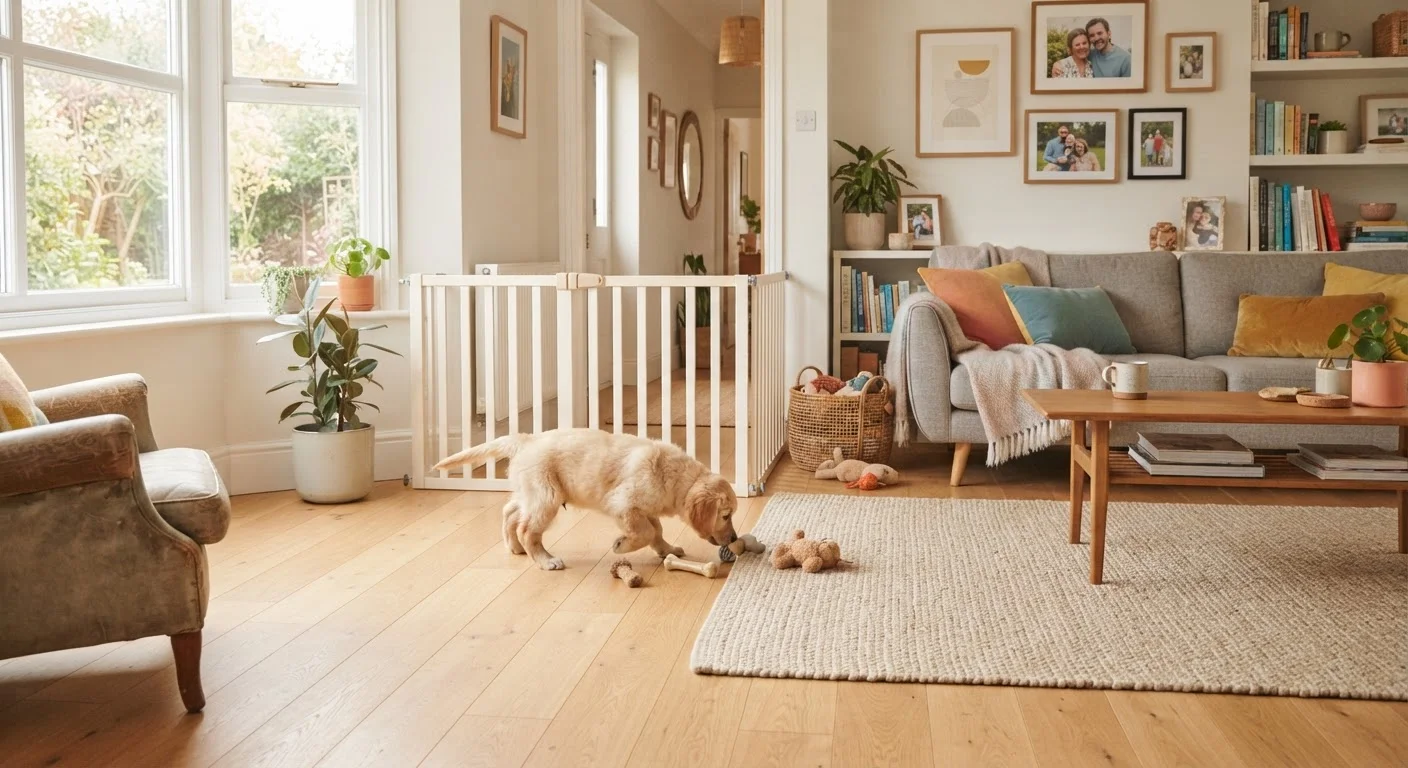
Why Puppy-Proofing Is a Pre-Arrival Priority
Puppies arrive curious, quick, and completely unaware of danger. In the first days at home, a puppy may chew an electrical cord, swallow a small object, lap from a toilet bowl, or squeeze behind an appliance - often in the time it takes to answer the door. Puppy-proofing is not optional extra prep; it's a direct injury-prevention measure.
This checklist takes a room-by-room approach so nothing gets missed. Work through it a day or two before your puppy comes home, not the morning of. If you already have other pets in the house, also review how to manage introductions between animals to reduce conflict during the adjustment period.
Living Areas and Bedrooms
Kitchen and Dining
Bathroom and Laundry
Outdoor Spaces and Garage
Setting Up a Safe Zone
Tools and Supplies to Have Ready
Puppy-proofing isn't only about removing hazards - it's about having the right gear in place so you're not improvising once your puppy is underfoot. Gather these items before the first day.
Baby gates
Block stairways and restrict access to rooms that haven't been fully puppy-proofed.
Child-proof cabinet latches
Secure lower cabinets in the kitchen, bathroom, and laundry areas containing hazardous products.
Appropriately sized crate
Provide a safe, enclosed resting space that supports crate training from day one.
Cord covers or cable management sleeves
Protect electrical cords from chewing and reduce shock or fire risk.
Non-tip water and food bowls
Ensure stable, accessible hydration and feeding without mess or spills.
Enzymatic cleaner
Clean up accidents thoroughly - enzymatic formulas break down odor compounds that can attract repeated marking.
Chew toys (assorted textures)
Give your puppy sanctioned items to gnaw on, reducing the appeal of furniture and cords.
Puppy playpen or exercise pen
Create a contained, supervised area in a larger room when a full room isn't needed.
Once your environment is set and your puppy is settled, a structured training roadmap will help you build good habits from the very beginning, before patterns become problems.
A Note on Ongoing Safety
Puppy-proofing is a starting point, not a one-time task. As your puppy grows, they'll reach higher surfaces, develop new fixations, and test boundaries you haven't encountered yet. Reassess your home at each developmental stage - especially around 4-6 months when chewing intensifies.
Chewing Intensity Increases Before It Decreases
Most puppies go through a peak chewing phase between 3 and 6 months as adult teeth come in. Items that seemed safe to leave accessible - shoes, cushion corners, low chair legs - may become targets during this window. Re-walk each room with fresh eyes as your puppy grows, not just before they arrive.
Some Plants and Foods Are Acutely Toxic
Ingestion of certain common household plants (such as sago palm, azalea, or tulip bulbs) or human foods (such as xylitol, macadamia nuts, or grapes) can cause serious harm quickly. If you suspect your puppy has ingested something toxic, contact your veterinarian or an animal poison control hotline immediately - do not wait for symptoms to appear.
For broader household hazard coverage that applies as your dog matures, the room-by-room pet safety review provides a useful ongoing reference. And once your puppy is comfortable and curious, pre-session training preparation will help you get the most out of every learning opportunity.
This article provides general pet care information for educational purposes. It is not a substitute for guidance from a licensed veterinarian. Consult your vet with any specific questions about your puppy's health, behavior, or safety needs.