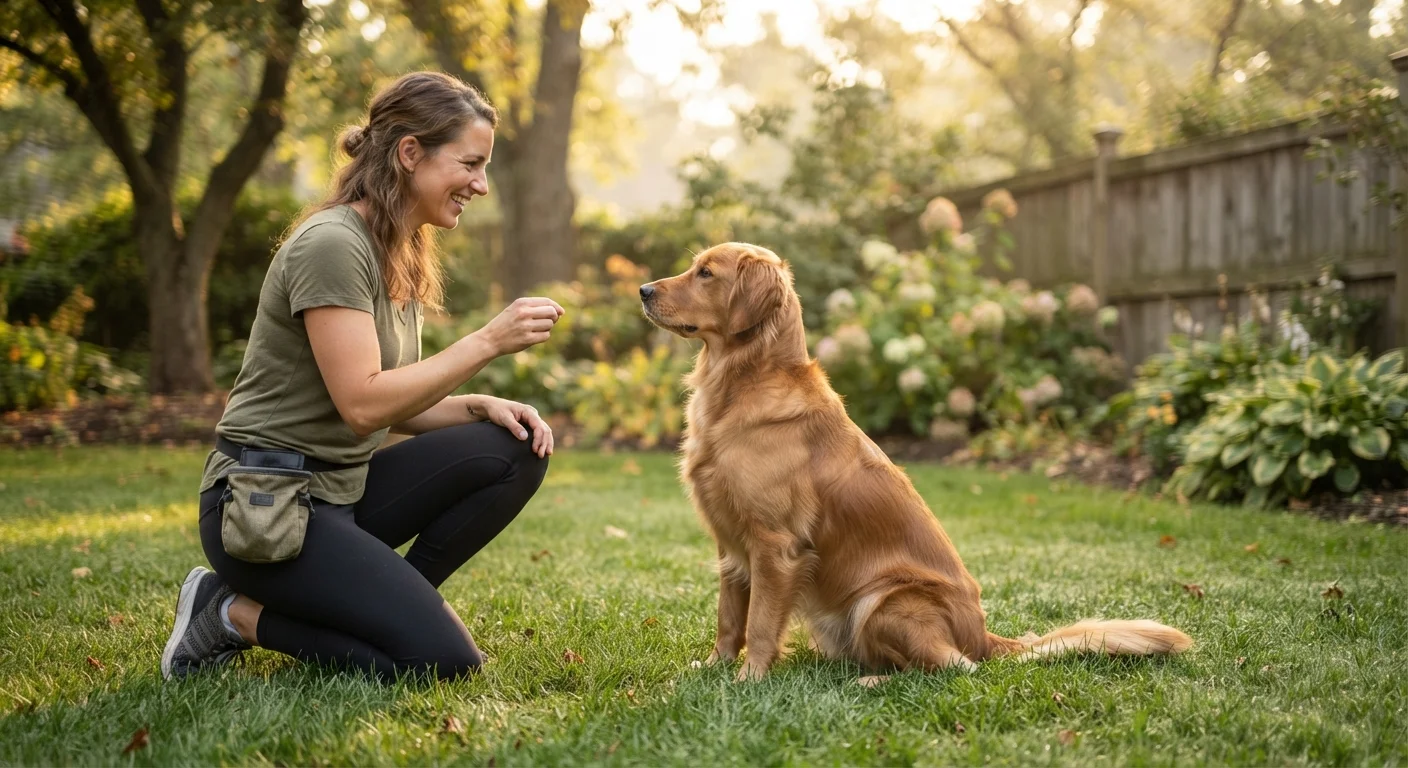
Why Pre-Session Preparation Matters
Effective dog training isn't just about the techniques you use - it's about the conditions in which you apply them. Jumping into a session without checking a few key factors is one of the most common reasons training stalls. Your dog might be overtired, the environment might be flooded with distractions, or your own timing and patience may be off. Any one of these variables can undermine even the best reinforcement strategy.
This checklist is designed to take 10-20 minutes before you begin. Run through it before every session - whether you're working on a brand-new behavior or maintaining skills your dog already knows. If you're working with a puppy for the first time, our puppy training roadmap provides a solid foundation alongside this pre-session routine.
Your Dog's Physical State
Your Dog's Emotional State
Environment Setup
Your Own Readiness
Supplies Gathered
Tools and Resources to Have Ready
Before running through the checklist itself, gather your supplies. Scrambling for a treat pouch mid-session breaks your dog's focus and yours. Not sure what terms like reinforcement schedule or marker mean? Our training glossary covers the behavioral science vocabulary you'll encounter in modern training guides.
Treat Pouch
Keeps small, high-value rewards accessible hands-free so you can mark and reward behavior at the right moment.
Clicker or Verbal Marker
A consistent marker signal (clicker or a short word like "yes") precisely marks the moment your dog performs the desired behavior.
High-Value Training Treats
Small, soft, easy-to-eat treats that your dog finds motivating - especially important when practicing challenging or new behaviors.
Training Mat or Platform
A defined physical space that helps your dog understand where to position themselves during specific exercises.
Timer (phone or stopwatch)
Keeps sessions to the planned length so you avoid overworking your dog and end on a positive note.
Long Line (for outdoor sessions)
A lightweight 15-30 foot leash that gives your dog freedom of movement while keeping them safely under your control outdoors.
Setting Up Your Environment
Where you train shapes what your dog learns. A cluttered, noisy, or unfamiliar space will pull your dog's attention away from you before you've said a single cue. Start indoors or in a low-distraction outdoor area. As your dog's reliability improves, you can gradually add complexity - but during skill-building, make it easy for your dog to succeed.
Avoid Training in Overstimulating Environments Too Soon
It's tempting to proof behaviors in busy parks or on neighborhood walks, but doing so before your dog is reliable in calmer settings often backfires. When the environment is too stimulating, your dog's ability to respond to cues drops significantly. Build skills at low distraction levels first, then gradually raise the difficulty - a principle sometimes called the "three D's": distance, duration, and distraction.
For a deeper look at arranging your home to reinforce good behavior around the clock, see our guide on setting up your home environment to support training goals.
Keeping Sessions Short and Ending Well
One of the most evidence-supported principles in animal learning is that shorter, more frequent sessions produce better results than long marathon efforts. Most dogs - especially puppies - learn best in sessions of five to ten minutes. When in doubt, stop sooner than you think you need to.
Never End a Session on Repeated Failure
If your dog is struggling with a behavior, don't keep repeating it hoping for a breakthrough. Step back to a simpler version of the skill they can succeed at, reward that, and then end the session. Closing on a win - even a small one - preserves your dog's confidence and keeps their association with training positive. Repeated failure in a session can create frustration and avoidance that undoes previous progress.
Always close a session while your dog is still engaged and succeeding. Ask for a behavior your dog knows well, reward generously, and release them with a clear end cue like "all done" or "free." This prevents ending on frustration for either of you, and helps your dog associate training with positive experiences - making them more eager the next time. For a parallel look at how structured preparation improves outcomes in a physical context, the concept maps well to what a warm-up actually needs to include for exercise.
This article is for general educational purposes only and does not constitute professional veterinary or behavioral advice. If your dog shows signs of fear, anxiety, or aggression during training, consult a certified professional trainer or veterinary behaviorist.