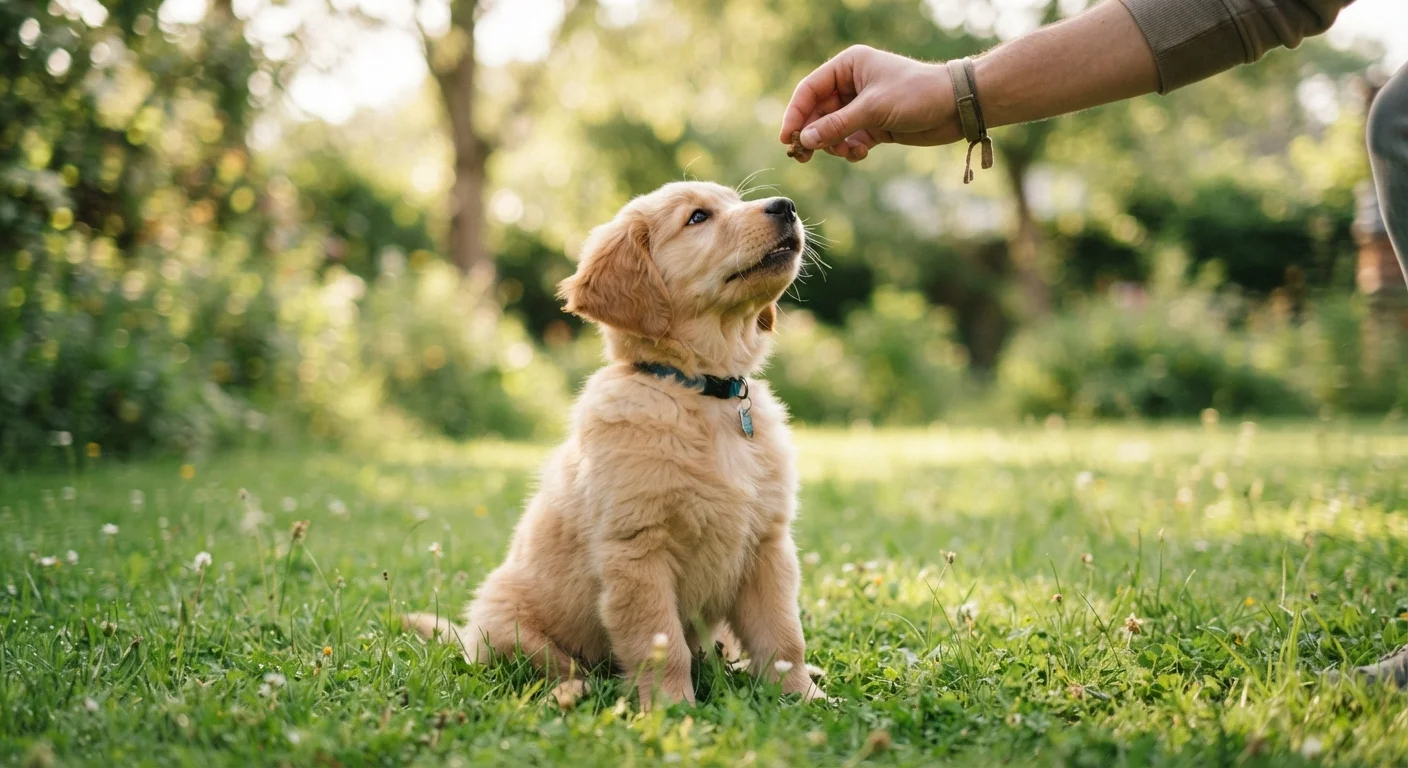
Why the First Few Months Matter Most
Bringing a puppy home is exciting - and the window between 8 and 16 weeks is one of the most consequential periods in your dog's entire life. During this time, the brain is primed for learning, and experiences - positive or negative - leave lasting impressions on temperament, confidence, and behavior. What you do now shapes the adult dog your puppy becomes.
This doesn't mean you need to be perfect. It means you need to be intentional. Setting a consistent routine, introducing the world gently, and building trust through reward-based interactions lays a foundation that makes every future lesson easier. For a broader look at physical development alongside training, see our month-by-month puppy health overview.
Positive reinforcement
A training method that rewards desired behavior with something the dog values - treats, praise, or play - making that behavior more likely to happen again.
Socialization window
A developmental period (roughly 3-16 weeks in puppies) when the brain is especially open to forming neutral or positive associations with new experiences.
Crate training
Teaching a dog to accept a crate as a safe, comfortable space; commonly used during housebreaking to limit unsupervised access to the home.
Marker training
Using a precise signal - a word like "yes" or a clicking device - to mark the exact moment a dog performs a desired behavior, immediately followed by a reward.
Luring
Guiding a puppy into a desired position by moving a treat in front of their nose, then rewarding once they complete the movement.
Enzymatic cleaner
A cleaning product that uses enzymes to break down the organic compounds in urine or feces, eliminating odors that could otherwise draw a dog back to the same spot.
Socialization: The Window You Can't Afford to Miss
Socialization means helping your puppy form positive associations with the wide variety of people, animals, sounds, surfaces, and environments they'll encounter throughout life. The primary socialization window closes around 12-16 weeks. After that, novel experiences become harder to process without some degree of caution or fear.
The goal isn't maximum exposure - it's positive exposure. Overwhelming a puppy with too much too fast can backfire. Instead, introduce new experiences one at a time, pair them with treats or calm praise, and let the puppy set the pace. Good targets include:
- Different types of people (hats, glasses, children, uniforms)
- Other vaccinated, friendly dogs in controlled settings
- Common household sounds (vacuum cleaners, doorbells, traffic)
- Various surfaces (grass, gravel, tile, stairs)
Enroll in a puppy socialization class once your vet clears your dog based on vaccination status. These classes provide guided exposure in a structured environment - and they're one of the best investments a new owner can make. For context on how socialization fits into overall puppy care, explore our Pet Care Basics hub.
Keep Socialization Positive, Not Rushed
Never force a puppy to approach something that frightens them. Let the puppy choose to engage at their own pace and reward any voluntary approach toward a new stimulus. Forced exposure can solidify fear rather than reduce it. If your puppy consistently shuts down or shows distress, consult a certified professional trainer or veterinary behaviorist.
Housebreaking Fundamentals
Housebreaking is built on two non-negotiables: supervision and schedule. Puppies have small bladders and little bladder control before 12-16 weeks. They need a bathroom trip every 1-2 hours during the day, immediately after waking, after eating, and after play.
The most reliable method combines a consistent outdoor routine with crate training during unsupervised time. When your puppy eliminates outside, mark it immediately with a calm, consistent cue like "yes" and reward with a treat. This tells the puppy exactly what earned the reward.
Accidents will happen. Never scold or punish a puppy after the fact - they cannot connect the consequence to a behavior that occurred even minutes earlier. Instead, clean thoroughly with an enzymatic cleaner to remove scent markers that may draw them back to the same spot, and adjust your supervision accordingly. If housebreaking becomes a prolonged challenge, our guide to housetraining dogs who missed early training shows that it's never truly too late - but starting early is much easier.
Avoid Punishment After Accidents
Rubbing a puppy's nose in an accident or scolding them does not teach them where to go - it teaches them to fear you or to hide their elimination. These responses can actually make housebreaking harder. Stick to prevention through supervision and schedule, and reward every outdoor success.
Teaching Foundational Commands
Five commands form the practical safety net every dog needs: sit, stay, come, down, and leave it. These aren't tricks - they're tools that can prevent injury, manage behavior in public, and give your dog clear expectations.
Use positive reinforcement exclusively: a small, high-value treat paired with a verbal marker ("yes" or a clicker) the moment your puppy performs the desired behavior. Keep sessions to 3-5 minutes. End each session on a successful repetition so the puppy's last memory of training is a win.
A simple progression
- Sit - Start here. Lure the nose upward with a treat; the rear naturally lowers.
- Down - From a sit, lure the nose toward the floor between the front paws.
- Stay - Add duration in small increments (1 second, then 3, then 5). Never add distance and duration at the same time.
- Come - Practice in low-distraction spaces first; always make coming to you the best thing that happens in the puppy's day.
- Leave it - Teach the puppy to disengage from anything on cue. A literal life-saving skill.
Before every practice session, use our training readiness checklist to confirm your setup supports success.
Common Mistakes and How to Avoid Them
Even well-meaning owners slip into patterns that slow progress or create new problems. The most common ones to watch for:
- Inconsistency across household members. If one person allows the puppy on the couch and another doesn't, the puppy learns that rules are arbitrary. Align your household on the rules before the puppy arrives.
- Sessions that go too long. A tired, frustrated puppy stops learning. When focus fades, end the session - don't push through.
- Repeating commands. Saying "sit, sit, sit" teaches the puppy that the third repetition is the real cue. Say it once, prompt if needed, then reward.
- Using punishment. Yelling, leash jerks, or physical corrections can erode trust and produce anxiety-based behaviors. Humane, reward-based methods consistently outperform punishment-based approaches in the long-term behavioral research.
- Skipping health context. Behavioral changes can sometimes signal health issues. Staying current with veterinary care gives you the full picture - see our Pet Health hub for guidance on keeping your puppy healthy as training progresses.
This article provides general educational information for pet owners and is not a substitute for advice from a qualified veterinarian or certified animal behaviorist. If your puppy shows signs of fear, aggression, or significant behavioral concerns, consult a professional directly.