Why Introductions Go Wrong - and How to Prevent It
The most common mistake owners make is allowing animals to meet immediately, face-to-face, inside the home. From the resident dog's perspective, its territory has been suddenly invaded by an unfamiliar animal. Stress hormones rise, the new pet feels cornered, and what could have been a manageable first impression becomes a frightening event both animals remember. Even if no serious aggression occurs, a tense first meeting can set a negative association that takes weeks to undo.
Structured introductions work because they respect how animals actually process social information. Dogs rely heavily on scent before sight; they read body language rather than intentions; and they are acutely sensitive to their owner's emotional state during high-arousal situations. A step-by-step approach - scent first, then visual contact at a distance, then supervised shared space - mirrors the way animals in well-managed environments are introduced by professionals.
The process described here applies most directly to dog-to-dog or dog-to-cat introductions, though the broader principles of gradual, positive exposure apply across species. For a broader overview covering mixed-species households, see introducing a new pet to a household with existing animals.
What you will need
What You'll Need Before You Begin
Gathering the right tools before the new pet arrives reduces improvisation in high-stress moments. Below are the key items to have in place.
Baby gate or exercise pen
Creates a visual and physical barrier that allows animals to see and smell each other without direct contact.
Two leashes and well-fitted harnesses
Gives each handler calm, secure control of their animal during the first on-leash outdoor meeting.
High-value treats
Used to reward calm, relaxed behavior from the resident dog in the presence of the new pet.
Crate for the new pet
Provides the new animal a safe, enclosed retreat space inside the home during the separation phase.
Separate food and water bowls
Prevents resource-guarding by ensuring animals never have to compete for food or water.
Enzymatic cleaner
Removes scent markers from accidents or territorial marking without leaving residue that can trigger reactivity.
Step-by-Step Introduction Process
Follow these steps in sequence, and resist the temptation to skip ahead based on how well things seem to be going. Progress is determined by both animals' behavior, not the calendar.
Prepare the home before the new pet arrives
Before the new animal sets foot inside, designate a separate zone - a bedroom, bathroom, or gated section of a room - as its exclusive space for the first several days. Stock it with bedding, a litter box or pee pads if applicable, food, water, and a hiding spot. The resident dog should have full access to the rest of the home as usual. This physical separation prevents an overwhelming first encounter and lets each animal adjust to the other's scent at a safe distance. See our home preparation checklist for a room-by-room rundown of hazards to address in advance.
Swap scents before any face-to-face contact
For the first two to three days, exchange bedding or use a clean cloth to rub each animal and then place it in the other's space. Allow each animal to investigate the scent object at its own pace. Watch the resident dog's reaction: sniffing calmly and moving on is a good sign; sustained fixation, whining, or refusal to eat near the scent object suggests more time is needed at this stage. Scent introductions are not a formality - they significantly lower arousal before visual contact begins.
Conduct the first meeting on neutral territory
Choose a neutral outdoor space - a quiet section of a park or a neighbor's yard - where the resident dog does not regularly walk or patrol. Have one handler per animal, both on leash with slack. Walk the animals in parallel at a distance where the dog notices the newcomer but remains focused and responsive to its handler. Gradually reduce the distance over the walk only if both animals display loose, relaxed body language. End the session before either animal shows signs of stress or over-excitement. For a dog-to-dog introduction, this step is especially critical in preventing territorial behavior indoors.
Allow a brief, supervised introduction at the gate
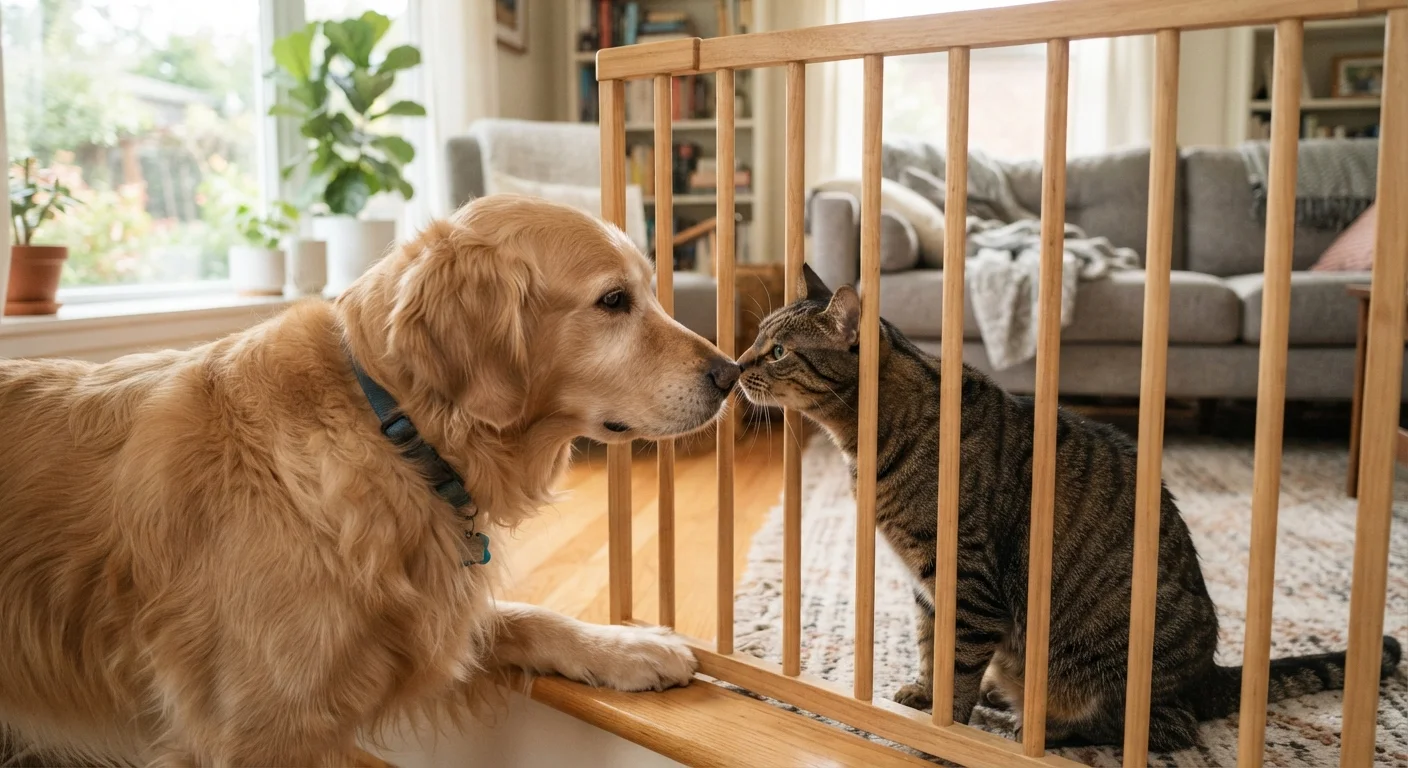
Once both animals have tolerated the outdoor meeting calmly, bring them inside and allow the resident dog to approach the new pet's gated zone. Keep the session to two to three minutes. Reward the resident dog with treats for any calm behavior: sniffing without fixating, looking away, sitting. If either animal becomes frantic, overstimulated, or aggressive, calmly redirect and end the session. Repeat these gate sessions daily, gradually extending their duration as both animals stay relaxed.
[tip_callout]Progress to shared space - supervised and on leash
When gate sessions consistently produce calm, curious behavior from both animals, allow them to share a room while the resident dog remains on a leash. Keep the new pet free to move and retreat as needed. Do not force proximity - let the animals set the pace. Short sessions of five to ten minutes, followed by separation, build positive associations gradually. Continue rewarding the resident dog for relaxed behavior. Most animals begin to habituate meaningfully within one to two weeks of daily structured sessions, though individual timelines vary considerably.
[warning_callout]Establish permanent house rules for cohabitation
Once both animals are comfortable sharing space under supervision, establish routines that prevent resource conflicts long-term: feed in separate locations, provide multiple water stations, and ensure the new pet always has an accessible retreat the resident dog cannot enter. Continue monitoring mealtimes, high-value toys, and doorways - these are common flashpoints even between animals that coexist peacefully otherwise. Consistent structure and individual attention for the resident dog help maintain the positive relationship over time. For households adding a second dog specifically, our guide to training multiple dogs together covers managing sessions and reducing inter-dog interference.
Growling or Stiff Body Language Means Stop
If your resident dog freezes, stares hard, raises its hackles, or growls during any stage, calmly separate the animals immediately - do not punish the warning signal. Suppressing growling removes your dog's communication tool and can lead to bites without warning. If serious aggression occurs at any point, pause introductions and consult a certified professional, such as a veterinary behaviorist or a Certified Applied Animal Behaviorist.
Signs the Introduction Is Going Well
Positive indicators include: loose, wiggly body posture from the resident dog near the new pet; play bows or brief mutual sniffing followed by disengagement; the resident dog returning to normal eating, sleeping, and play routines; and the new pet voluntarily approaching the gate or shared space rather than hiding. If your new pet is a puppy, reviewing what early socialization involves can help you set appropriate expectations for its behavior throughout this process.
If weeks pass without improvement - or if you observe repeated stiff posturing, guarding, or inability of either animal to relax - consult a veterinary behaviorist or certified applied animal behaviorist. These professionals can observe the animals directly, assess the relationship accurately, and build a behavior modification plan. This is a straightforward case where professional support produces better outcomes than extended trial and error at home.
This article provides general educational information for pet owners and is not a substitute for professional veterinary or animal behavior advice. If you have concerns about your pet's health or behavior, consult a licensed veterinarian or certified animal behaviorist.