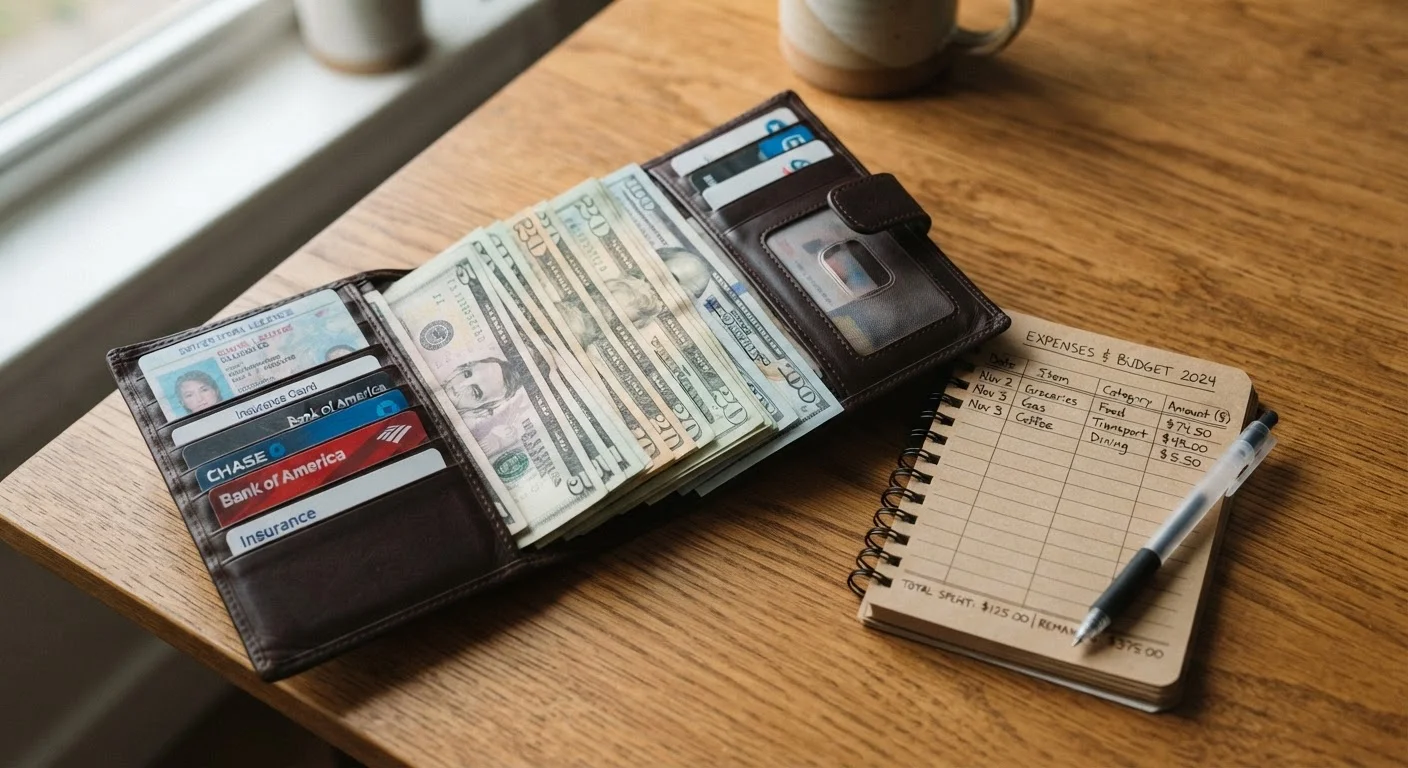
What the Cash-Only Method Actually Means
The cash-only spending method - sometimes called a cash diet - means paying for everyday purchases exclusively with physical currency rather than credit cards, debit cards, or digital payment apps. At its core, the approach is simple: withdraw a set amount of cash at the start of a week or month, allocate it to spending categories, and stop spending when the bills run out.
It is most commonly associated with the envelope budgeting system, where cash is physically divided into labeled envelopes for groceries, dining, entertainment, and similar variable expenses. For a fuller explanation of how envelope budgeting works alongside other frameworks, see Budgeting Approaches Compared. The cash-only method is not a complete budget in itself - it is a spending-control mechanism layered on top of a broader financial plan.
Most people who try this approach apply it to discretionary spending only. Fixed obligations like rent, utility bills, and loan payments are almost always handled digitally regardless of the method, simply because cash is impractical for those transactions.
The Advantages of Paying in Cash
There is solid behavioral reasoning behind why cash works as a spending brake for many people.
Creates tangible awareness of every dollar spent
Handing over physical bills activates a stronger sense of loss than tapping a card, a phenomenon well-documented in behavioral economics research. This heightened awareness tends to reduce impulse purchases.
Enforces a hard spending ceiling automatically
Once the cash is gone, spending stops - no overdraft fees, no accumulating credit card balance. The limit enforces itself without requiring willpower at the point of purchase.
Eliminates credit card interest risk entirely
Consumers who carry credit card balances from month to month pay significant interest costs. A cash-only approach for variable spending removes that risk for those categories completely.
Simplifies budgeting for non-tech-comfortable users
No app, no spreadsheet, and no login required. For people who find digital budgeting tools overwhelming, counting cash in an envelope is a straightforward alternative.
Reduces exposure to card fraud and data breaches
Physical cash cannot be skimmed at a compromised card reader or exposed in a data breach. For high-risk spending environments like certain travel situations, this is a meaningful advantage.
~20%
Share of US transactions made in cash
According to the Federal Reserve's Diary of Consumer Payment Choice, cash accounted for roughly 20% of US consumer transactions in recent survey years, down from over 30% a decade earlier.
~$400
Median monthly discretionary cash spending
Federal Reserve payment surveys indicate that cash remains most common for smaller, in-person discretionary purchases - the exact category where the cash-only method is most applicable.
Beyond the psychological effect, cash enforces a hard budget ceiling. A debit card can technically be overdrafted; a credit card extends a line of credit. A wallet with $200 in it cannot. That constraint is a feature, not a bug, for anyone who struggles with overspending. For a deeper look at how cash and card payments compare in practice, see Paying with Credit vs. Paying with Cash or Debit.
The Drawbacks You Should Not Overlook
Despite its behavioral benefits, the cash-only method carries real limitations that can make it impractical or even costly for some households.
Useless for online purchases and bill pay
A large and growing share of everyday spending - from streaming subscriptions to utility bills - requires digital or card payment. The cash method simply cannot cover these categories.
Cash offers no fraud protection or purchase records
Lost or stolen cash is gone with no recourse. Credit and debit cards carry federal fraud protections under the Fair Credit Billing Act and the Electronic Fund Transfer Act; cash carries none.
Misses out on credit-building activity
Responsible credit card use - paying the balance in full each month - is one of the most efficient ways to build a credit history. A strict cash diet can stall credit score progress over time.
Forfeits rewards, cash back, and purchase protections
Many credit cards offer cash back, travel points, extended warranties, and purchase protection that have genuine monetary value for disciplined cardholders. Cash spending captures none of these benefits.
Difficult to track spending without extra effort
Card and bank statements generate automatic spending records. Cash transactions require manual logging - a step many people skip, creating blind spots in their budget picture.
Safety and logistics concerns with carrying cash
Carrying larger sums of cash for a week or month of spending introduces theft risk and logistical inconvenience. Replacing lost cash, unlike a cancelled card, is simply not possible.
Cash and Credit Score Impact
If you rely entirely on cash and avoid credit products, your credit file may become thin or inactive over time. Lenders use credit history to assess loan applications for mortgages, auto financing, and other major borrowing needs. This does not mean you must carry credit card debt - paying a card balance in full each month builds credit without incurring interest. Consult a financial professional if you are unsure how your payment habits are affecting your credit profile.
For people who value detailed records of their spending - or who rely on spreadsheet or app-based budget tracking - cash creates a tracking gap that requires extra manual effort to close.
Who Benefits Most and Who Should Be Cautious
The cash method tends to deliver the strongest results for people with a specific pattern: they know their budget numbers but consistently exceed them on discretionary categories like dining, clothing, or entertainment. For these individuals, removing the ease of card spending introduces enough friction to change behavior.
It is less suited to people with irregular incomes, frequent travelers, or anyone who shops primarily online. It also does little to build the kind of automated savings discipline described in Automating Your Budget. Missing out on credit-building activity can also matter - for context on how payment habits affect your credit profile, the Credit and Banking hub covers the fundamentals.
A hybrid approach - cash for groceries, dining, and entertainment; digital tools for bills and savings transfers - captures most of the method's behavioral benefits while avoiding its practical downsides. The digital envelope budgeting approach replicates the same spending constraints without requiring physical currency.
This article is for general informational and educational purposes only. It does not constitute personalized financial advice. Consult a qualified financial professional for guidance tailored to your individual circumstances.