Why Your Budgeting Method Matters
A budget is only as good as your ability to follow it consistently. That's why choosing a framework that matches your habits, income type, and financial goals matters as much as the math itself. The four methods covered here - envelope, zero-based, 50/30/20, and pay-yourself-first - each approach money management from a different angle.
Before diving in, consider two questions: Do you prefer strict rules or flexible guidelines? And is your income predictable month to month? Your answers will narrow the field considerably. For a broader grounding in budgeting fundamentals, see The Complete Personal Budgeting Reference.
| Envelope | Zero-Based | 50/30/20 | Pay-Yourself-First | |
|---|---|---|---|---|
| Core concept | Spend from fixed category pots | Every dollar assigned a job | Split income by percentages | Save first, spend the rest |
| Effort level | Moderate | High | Low | Low to moderate |
| Best income type | Stable or predictable | Variable or irregular | Stable | Any income type |
| Savings focus | Indirect - a category among many | Explicit - allocated like any expense | Built in at 20% | Primary focus |
| Flexibility | Low - categories are fixed | Low - requires replanning | High - broad buckets | Moderate - remainder is flexible |
| Ideal for | Curbing impulse spending | Total spending visibility | Beginners or busy households | Automating savings goals |
The Four Methods Explained
Envelope Budgeting
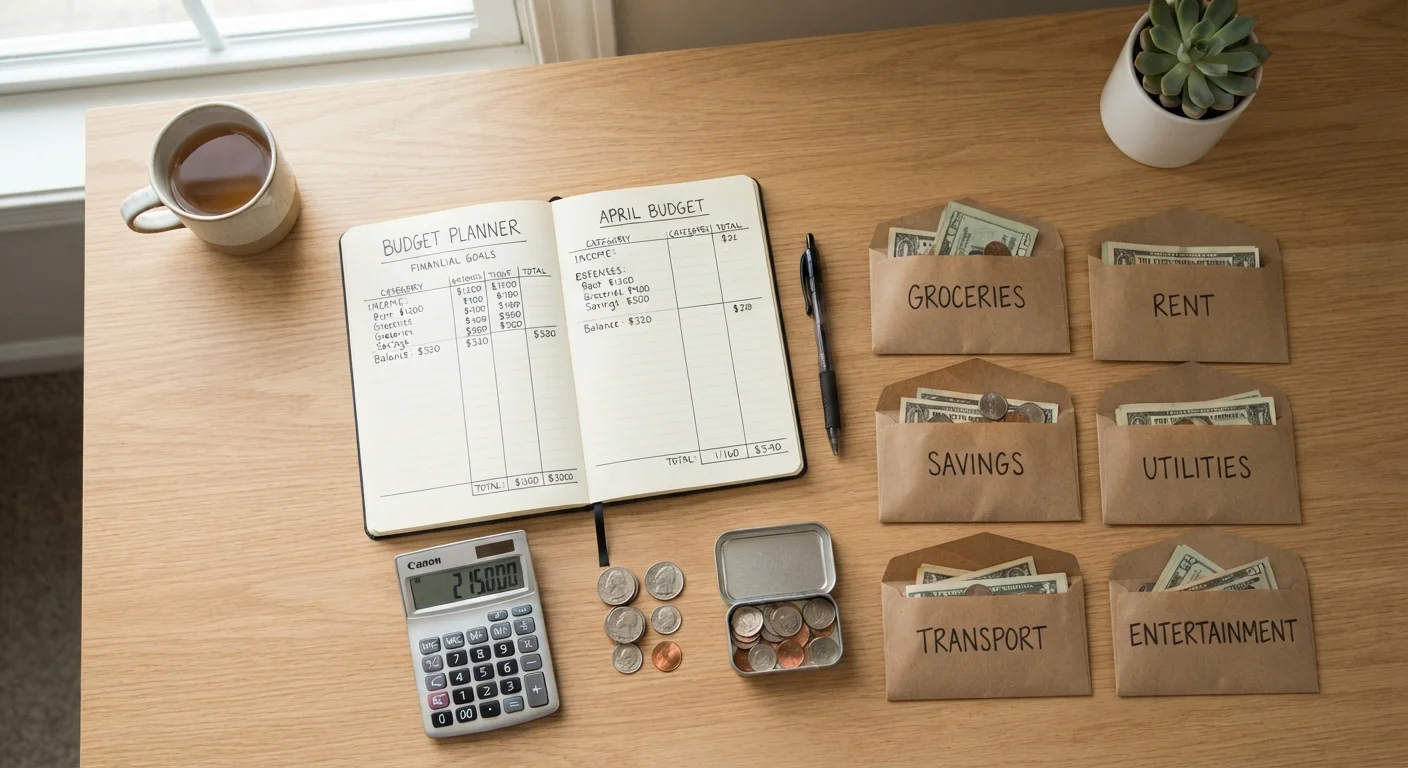
Originally a cash-based system, envelope budgeting divides your take-home pay into spending categories - groceries, gas, dining out - and places a set cash amount in a labeled envelope for each. Once an envelope is empty, spending in that category stops for the month. The method's power lies in its tangibility: you feel the money leaving. Digital apps now replicate this logic without physical cash. For a deeper look at how the classic and digital versions compare, see Envelope Budgeting in a Digital Age.
Zero-Based Budgeting
With zero-based budgeting, you allocate every dollar of your monthly income to a specific category - expenses, savings, or debt repayment - until income minus allocations equals zero. Nothing is unaccounted for. This requires more upfront effort but produces a granular picture of where money is going. It works especially well for people with irregular or variable income who need to rebuild their plan each period.
The 50/30/20 Rule
This percentage-based framework divides after-tax income into three buckets: 50% toward needs (rent, utilities, groceries), 30% toward wants (dining, entertainment, subscriptions), and 20% toward savings and debt repayment. It's deliberately simple - no itemized categories, no envelope counting. The tradeoff is less precision, but for many households the structure is enough to prevent lifestyle creep.
Pay-Yourself-First
This method flips conventional budgeting logic. Instead of saving whatever is left after expenses, you transfer a predetermined amount into savings or investments immediately on payday, then live on the remainder. Automation is key: setting up automatic transfers removes the temptation to spend first. This approach pairs well with retirement contributions or emergency fund building, and aligns with guidance available in Saving & Debt resources.
Try a Hybrid Approach
You don't have to pick just one method and stick with it rigidly. Many people use pay-yourself-first for savings automation and envelope logic for high-risk spending categories like dining or entertainment. Mixing elements from multiple frameworks is a legitimate and often more sustainable strategy. Once you choose a method, consider whether a spreadsheet or app better supports it - see Spreadsheet Budgets vs. App-Based Budgets for a practical breakdown.
Tradeoffs and Who Each Method Suits
Each framework comes with real tradeoffs worth understanding before committing.
- Envelope: Highly effective at stopping category overspending, but requires consistent tracking and can feel restrictive. Best for people who overspend on specific categories like dining or shopping.
- Zero-based: Delivers maximum visibility and control, but is time-intensive. Variable-income earners benefit most, though anyone willing to put in the planning time can use it effectively.
- 50/30/20: Easiest to start and maintain. Works well for stable-income earners but may not fit households in high cost-of-living areas where 50% barely covers needs.
- Pay-yourself-first: Automates the most important financial behavior - saving - but requires discipline to stay within what remains. Those with minimal discretionary cushion may find it stressful without an established emergency fund.
If your pay schedule adds complexity, Budgeting by Paycheck vs. Budgeting by Month explores how to sync any of these methods to your actual pay cycle. For those sharing finances, Sharing a Budget with a Partner covers how couples can align on a common method.
Budgets Require Regular Review
No budget method runs itself indefinitely without adjustment. Life changes - income shifts, new expenses emerge, financial goals evolve. Plan to revisit your budget at least quarterly, and after any major financial event such as a job change, relocation, or new household member. A method that worked well at one life stage may need modification as circumstances change.
This article is for general informational and educational purposes only and does not constitute personalized financial advice. Consult a licensed financial professional for guidance specific to your situation.