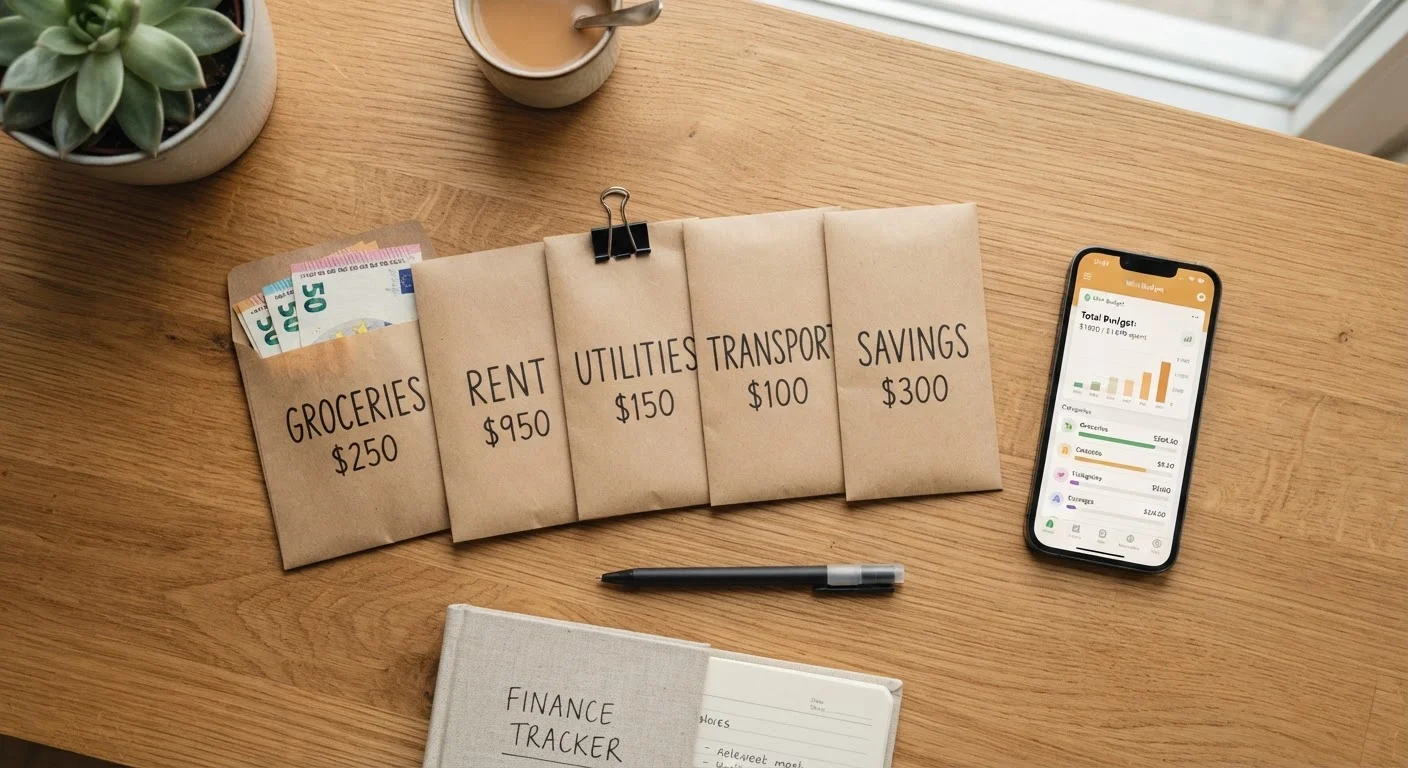
How the Original Envelope Method Works
The envelope method has roots in Depression-era household management, when families needed an airtight way to stretch limited wages. The mechanics are straightforward: at the start of each month, you determine how much income you have after essential fixed bills - rent, insurance, loan payments - and then divide the remainder into spending categories. You label an envelope for each category, stuff it with the appropriate cash amount, and spend only from that envelope throughout the month.
The power is in the physical constraint. When the grocery envelope holds $400 and you've spent $390, you know exactly where you stand without checking an app or running a report. The limitation is built into the system itself. This tactile feedback loop is what makes the method so effective at curbing the kind of gradual overspending that erodes budgets invisibly.
If you're new to budgeting altogether, our guide to personal budgeting from the ground up walks through the foundational concepts before you add a specific framework on top.
Start With Just Three or Four Envelopes
Beginners often overcomplicate the system by creating a dozen categories at once. Pick the two or three spending areas where you most frequently overspend - usually groceries, dining out, and entertainment - and build from there. A simpler system you actually follow beats an elaborate one you abandon after two weeks.
Why It Works: The Psychology Behind the Method
Research in behavioral economics consistently finds that people spend more freely when payment is abstract - tapping a card or clicking a button creates less psychological friction than handing over bills. Envelope budgeting restores that friction deliberately. Seeing a category's funds dwindle makes the trade-off between spending now and having money later feel real and immediate.
The method also eliminates the mental accounting errors that trip up most budgeters. Rather than keeping a rough mental tally of what you think you've spent, the envelope balance is the definitive record. There's no reconciliation required.
“A budget is telling your money where to go instead of wondering where it went.”
— John C. Maxwell, Author and leadership speaker, widely cited in personal finance contexts
For a balanced look at what cash-only spending does and doesn't accomplish, our article on the advantages and drawbacks of the cash-only spending method covers the tradeoffs honestly.
Digital Envelope Budgeting: The Same Rules, New Tools
Most Americans don't carry significant cash, and that's a reasonable adaptation to modern life. Digital envelope systems replicate the original method's logic by assigning virtual amounts to named spending categories. When you make a purchase, you manually or automatically deduct it from the relevant category. The category limit still acts as a hard stop - the format is digital, but the discipline is identical.
~33%
Americans without a working monthly budget
A 2023 Debt.com survey found roughly one-third of Americans do not follow a budget, suggesting significant room for structured methods like envelope budgeting to improve financial outcomes.
20%+
Typical overspend in discretionary categories
Financial planning research broadly finds that untracked discretionary categories - dining, entertainment, shopping - commonly run 20% or more over informal mental estimates.
Some people track digital envelopes in a simple spreadsheet; others prefer dedicated software. Our comparison of spreadsheet budgets versus app-based budgets can help you decide which format suits your habits. The important distinction is that digital envelope budgeting is active - you're deliberately tracking and making decisions, not relying on automation to manage your money for you.
That last point matters. Automation has real advantages, but it can also disconnect you from your spending patterns. Our article on automating your budget examines that tradeoff in depth.
Putting Envelope Budgeting Into Practice
Start by listing every variable spending category you have - groceries, dining, gas, entertainment, clothing, personal care. Assign each a monthly dollar limit based on past spending or a target you want to hit. Total those amounts, confirm they don't exceed your available income after fixed expenses, and you have your envelope structure.
Review your envelopes at the end of each month. Categories that consistently run out early may need a higher allocation - or a spending habit adjustment. Categories that routinely have leftover funds can be reduced, and the freed-up money redirected toward savings or debt payoff. This monthly review is where the real learning happens. Understanding where your money actually goes, rather than where you assume it goes, is the foundation of lasting financial control. For broader perspective on managing savings and debt alongside your budget, explore our Saving & Debt resources.
This article is for general informational and educational purposes only and does not constitute personalized financial advice. Consult a qualified financial professional for guidance specific to your situation.