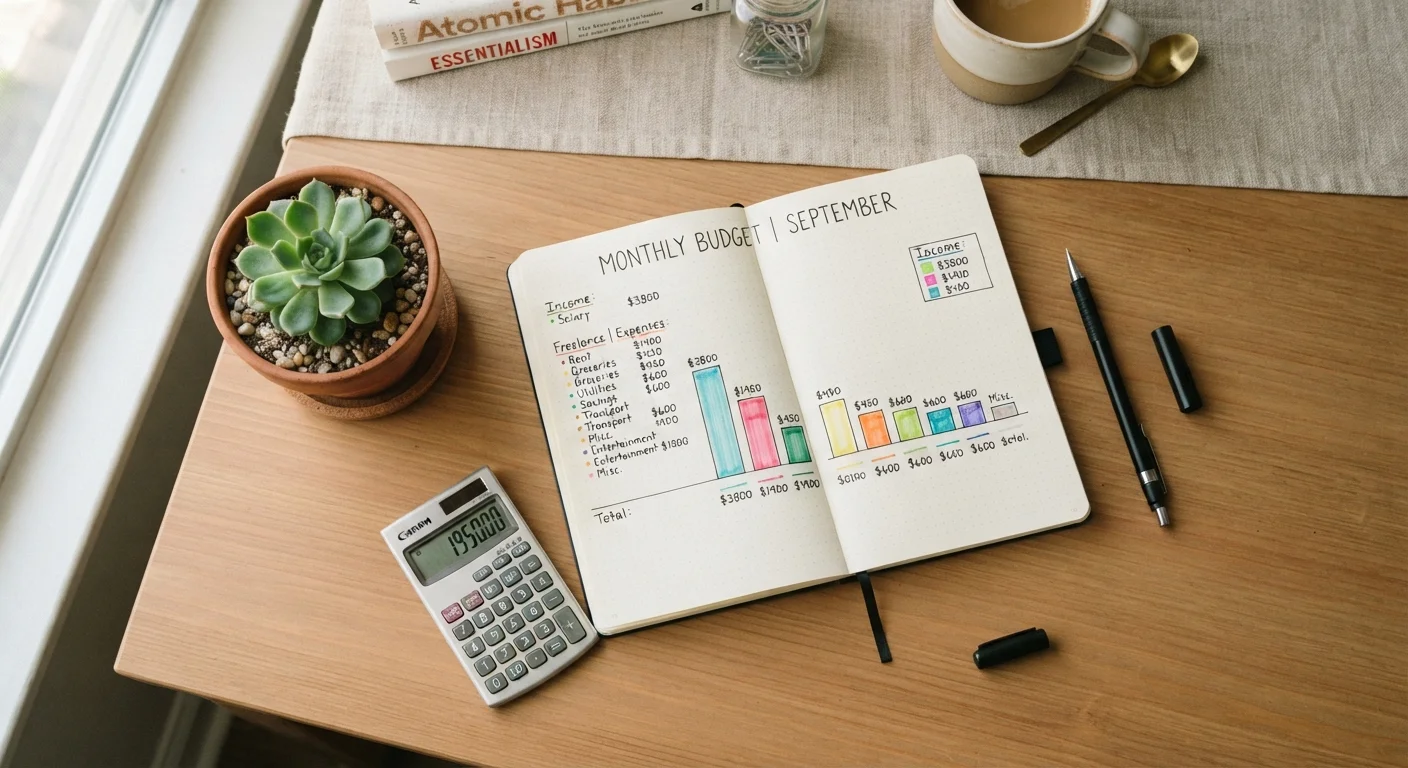
What Is a Budget and Why Does It Matter?
A budget is simply a written plan for how you intend to use your money during a set period - most commonly a month. It is not a restriction on enjoyment; it is a tool that ensures your spending reflects your actual priorities rather than impulse or inertia.
Without a plan, money tends to disappear in ways that are hard to explain. Budgeting closes that gap. It gives you a clear answer to two fundamental questions: Where is my money going? and Is that where I actually want it to go?
Research from financial literacy organizations consistently finds that people who budget feel more in control of their finances, are better prepared for unexpected costs, and make faster progress on savings goals - even when their income is modest. The size of your paycheck matters far less than the intentionality you bring to it.
For a deeper dive into the full landscape of budgeting concepts, see The Complete Personal Budgeting Reference, which covers methods, behavioral strategies, and how to adapt your plan as life changes.
Budgeting Is General Financial Education
The information in this article is intended for educational purposes and does not constitute personalized financial advice. Individual circumstances vary widely. For guidance specific to your situation - especially regarding debt, taxes, or investment decisions - consult a qualified financial professional.
Know Your Numbers: Income and Expenses
Every budget starts with two figures: what comes in and what goes out. Getting these right is the foundation everything else rests on.
Net income
The amount of money you actually take home after taxes and other deductions - the real figure to base your budget on, not your gross (pre-tax) salary.
Fixed expense
A recurring cost that stays the same each month, such as rent, a car payment, or a subscription with a set fee.
Variable expense
A spending category whose amount changes from month to month, like groceries, dining out, or gas - areas where you have some control.
Discretionary spending
Money spent on wants rather than needs - entertainment, hobbies, clothing beyond basics - the category most often adjusted when trimming a budget.
Sinking fund
A dedicated savings pool built gradually over time to cover a known future expense, such as holiday gifts or an annual insurance premium.
Cash flow
The net difference between money coming in and money going out during a given period. Positive cash flow means you have money left after expenses; negative means you are spending more than you earn.
Step 1 - Calculate your net income. Add up all reliable monthly take-home pay from every source: wages, freelance work, side income, or benefits. Use net (after-tax) amounts, not gross. If your income varies, use a conservative estimate based on your lower months.
Step 2 - List every expense. Separate your costs into fixed expenses (rent, loan payments, insurance premiums) and variable expenses (groceries, utilities, fuel, dining out). Don't forget annual or irregular costs - car registration, back-to-school supplies, and medical co-pays all count. Divide annual costs by 12 and add that monthly slice to your budget.
Step 3 - Compare the two totals. If your income exceeds your expenses, you have positive cash flow to direct toward savings or debt. If expenses exceed income, you have a deficit to address by reducing spending, increasing income, or both.
Start With One Month of Real Data
Before setting any spending limits, gather one month of actual bank and credit card statements. Real spending data reveals habits that estimates often miss - and gives you an honest baseline to build from. Guessing your expenses is one of the most common reasons first budgets fail.
For a thorough vocabulary companion as you work through these steps, Personal Finance Terms Every Budgeter Should Know defines every term you will encounter.
Choosing a Budgeting Method That Fits Your Life
Once you know your numbers, you need a framework for organizing them. Several widely used approaches exist, each with different strengths.
- 50/30/20: Allocate roughly 50% of net income to needs, 30% to wants, and 20% to savings and debt repayment. Simple and flexible, it works well for people who want broad guardrails without micromanaging every dollar.
- Zero-based budgeting: Assign every dollar of income a specific purpose until the balance reaches zero. Requires more detail but leaves nothing unaccounted for - useful if overspending is a persistent problem.
- Envelope method: Set cash amounts for variable spending categories in separate physical or digital envelopes. When an envelope is empty, spending in that category stops for the month.
- Pay-yourself-first: Automatically transfer savings and investment contributions at the start of each month, then budget the remainder. Prioritizes long-term goals without relying on willpower at month's end.
No method is universally superior. The one you will actually maintain is always the right choice. Budgeting Approaches Compared walks through the tradeoffs of each framework in detail.
Avoid Building a Budget You Can't Live With
Cutting every discretionary expense in one go often leads to budget fatigue and abandonment within weeks. A plan that feels punishingly restrictive is not sustainable. Build in a modest amount for enjoyment from the start - a workable budget is always more effective than a perfect one you quit.
Building Savings and Managing Debt Within Your Budget
Savings and debt repayment should appear in your budget as fixed line items - not afterthoughts funded by whatever is left over at month's end, because that remainder is often zero.
Emergency fund first. Before aggressively paying down debt or investing, most financial educators recommend building a small emergency cushion - commonly cited as one to three months of essential expenses to start. This prevents a single unexpected bill from sending you straight to high-interest credit. See Starting a Savings Plan From Zero for a step-by-step approach.
Tackle debt strategically. If you carry high-interest debt, allocating a set monthly payment above the minimum accelerates payoff and reduces the total interest you pay. The Saving & Debt hub offers practical guidance on debt prioritization strategies.
Plan for irregular expenses. Use sinking funds - small monthly set-asides - to cover known annual costs so they don't shock your budget when they arrive. Creating a Budget That Accounts for Annual and Irregular Expenses explains exactly how to build these into your plan.
Personal Finance Terms Every Budgeter Should Know
A plain-language glossary of budgeting vocabulary - from net income and cash flow to sinking funds and discretionary spending - ideal for anyone new to the topic.
Building Your First Monthly Budget in Seven Steps
A practical, step-by-step walkthrough that translates the concepts in this article into a concrete monthly budget, covering income, fixed costs, variable spending, and savings targets.
Starting a Savings Plan From Zero: A Beginner's Roadmap
Once your budget is in place, this companion guide shows you how to open the right accounts, automate contributions, and build your first financial cushion.
Keeping Your Budget on Track Over Time
A budget is a living document, not a one-time exercise. Life changes - income fluctuates, expenses shift, goals evolve - and your plan needs to keep pace.
Review monthly. Set aside 20 to 30 minutes at the end of each month to compare what you planned against what you actually spent. Identify any categories that consistently run over and adjust your allocations to reflect reality, not wishful thinking.
Revisit after major life events. A job change, a new baby, a move, or a paid-off debt all alter your financial picture significantly. Each is a natural trigger to rebuild your budget from the current baseline.
Be patient with the process. The first budget is rarely perfect - it is a first draft. Most people find their budget becomes more accurate and easier to maintain after two or three months of real-world testing.
When you are ready to move from concepts to action, Building Your First Monthly Budget in Seven Steps provides a concrete, step-by-step walkthrough. Your budget and your broader financial habits are also closely tied - understanding credit and banking basics can help you make the most of the accounts and tools you use every day.
This article is intended for general informational and educational purposes only and does not constitute personalized financial advice. Consult a qualified financial professional for guidance specific to your individual circumstances.