Why Valuation Method Is the Most Underread Line in Your Policy
When a covered loss occurs - a kitchen fire, a burst pipe, a stolen laptop - most policyholders assume their insurance will pay enough to restore what was lost. That assumption is often wrong, not because of a claims trick, but because of a single phrase buried in policy language: the valuation method.
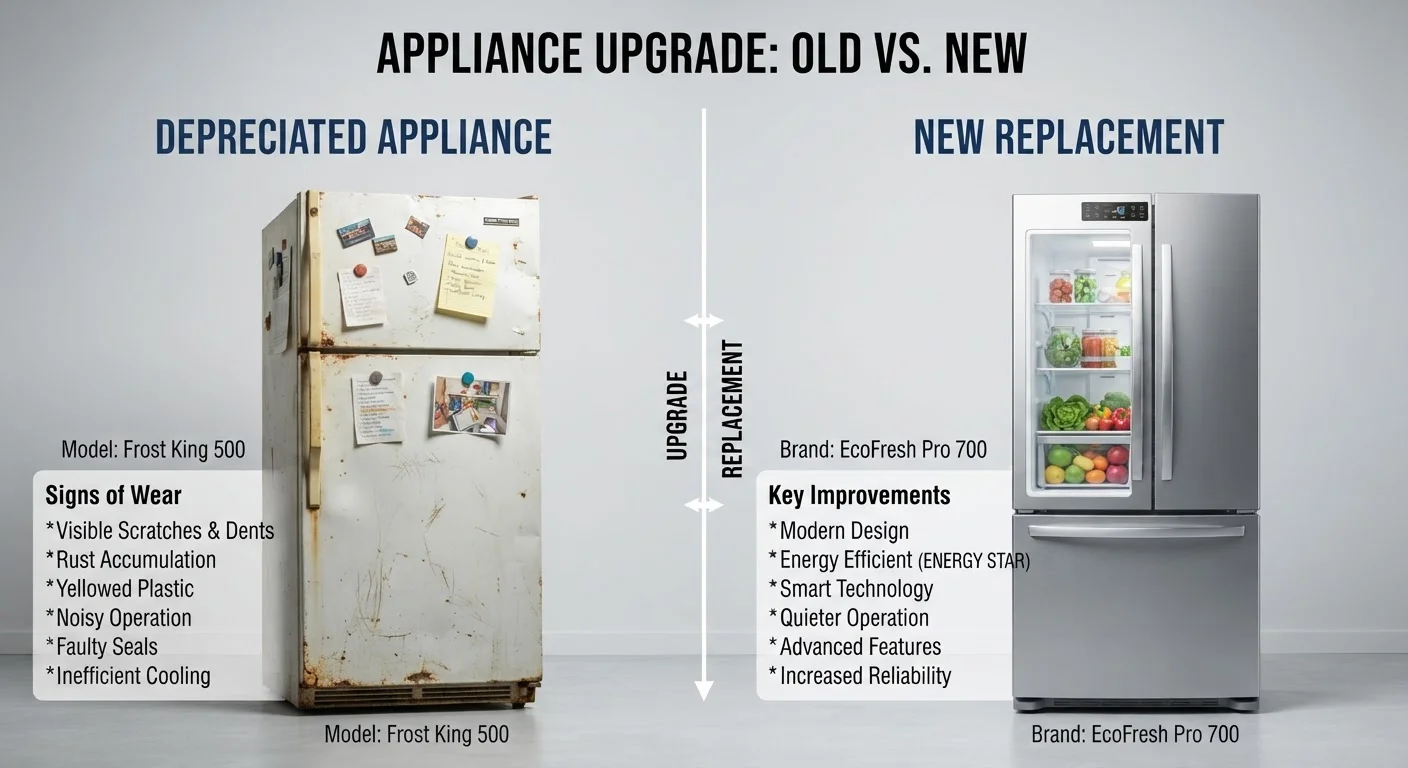
Policies that pay Actual Cash Value (ACV) settle claims based on what the damaged property was worth at the moment of loss, factoring in age, condition, and wear. Policies that pay Replacement Cost Value (RCV) settle based on what it would cost to buy a comparable new item today. The arithmetic difference between those two figures is called depreciation - and it can be surprisingly large.
For a five-year-old roof, the gap between ACV and RCV could easily exceed $10,000. For a collection of furniture and appliances, it might run even higher. Understanding which method applies to your coverage - before a loss - is one of the most consequential things a policyholder can do. See our guide to depreciation in insurance claims for a closer look at how insurers calculate and apply this reduction.
How Each Valuation Method Works
Actual Cash Value is calculated with a straightforward formula: replacement cost minus depreciation. Depreciation reflects the reduction in value that comes from age, wear, and obsolescence. A roof installed 10 years ago with a 20-year lifespan might be considered 50% depreciated - meaning an ACV claim would pay roughly half what a new roof costs today, regardless of your original purchase price.
Replacement Cost Value skips the depreciation step. Instead, the insurer determines what it would cost to repair or replace the damaged property with materials or items of like kind and quality at current market prices. Many RCV policies are structured in two stages: an initial payment (often equivalent to ACV) is issued first, and the remaining amount - the recoverable depreciation - is released after repairs are completed or replacements are purchased.
| Criterion | Actual Cash Value (ACV) | Replacement Cost Value (RCV) |
|---|---|---|
| Payout basis | Depreciated value at time of loss | Cost to replace with new equivalent |
| Depreciation applied | Yes - reduces payout | No - full replacement cost covered |
| Typical premium cost | Lower | Higher |
| Out-of-pocket gap at claim | Often significant on older property | Minimal, subject to deductible |
| Payment structure | Single lump-sum settlement | Often two-stage: initial + recoverable depreciation |
| Common policy types | Auto, some renters/homeowners contents | Homeowners dwelling, upgraded contents |
| Best for older property | Poor - payouts shrink with age | Strong - age doesn't reduce payout |
It's worth noting that even RCV policies have limits. Coverage caps, deductibles, and coinsurance clauses can all reduce the final payout. For a deeper look at how those provisions interact with your claim, see our article on coinsurance clauses and how they affect payouts.
Where These Methods Show Up Across Policy Types
The ACV vs. RCV distinction appears across multiple lines of insurance, but it operates slightly differently in each context.
- Homeowners insurance: The dwelling itself (your home's structure) is commonly insured at replacement cost on standard policies, but personal property - furniture, electronics, clothing - may default to ACV unless you specifically elect RCV coverage for contents. Check your declarations page carefully.
- Renters insurance: Personal property coverage under renters policies frequently defaults to ACV. Upgrading to RCV for contents is typically available and worth evaluating, especially if you own newer electronics or appliances.
- Auto insurance: Total-loss auto claims are almost always settled at ACV - the market value of your vehicle immediately before the loss. If you financed or leased a newer car, that ACV payout may be less than the remaining loan balance, which is where GAP coverage becomes relevant.
The Two-Stage RCV Payment Process
Many replacement cost policies do not pay the full RCV amount upfront. Insurers typically issue an initial payment equal to the ACV of the damaged property, then release the withheld depreciation - sometimes called 'recoverable depreciation' - once you provide proof that repairs have been completed or replacement items have been purchased. If you don't complete the repairs or replacement, you may only receive the ACV portion. Always confirm the documentation requirements with your insurer at the start of a claim.
For more context on related benefits that often interact with property valuations - particularly while repairs are underway - see our overview of loss of use coverage, which can help cover temporary housing or transportation costs during the claims process.
Making an Informed Coverage Decision
Neither valuation method is universally superior - the right fit depends on your financial situation, the age of your property, and your tolerance for out-of-pocket exposure in a claim scenario.
50%+
Value lost to depreciation on a mid-life roof under ACV
A roof at the midpoint of its useful life can carry 50% or more accumulated depreciation, dramatically reducing an ACV claim payout compared to current replacement costs.
~20-30%
Typical premium increase for RCV vs. ACV contents coverage
Upgrading personal property coverage from ACV to RCV on a renters or homeowners policy often carries a meaningful premium increase, though exact amounts vary by insurer and location.
Before your next policy renewal, consider three practical steps. First, locate your declarations page and identify which valuation method applies to your dwelling, other structures, and personal property separately - they can differ within the same policy. Second, evaluate whether the premium difference between ACV and RCV coverage aligns with the replacement cost of your most valuable possessions. Third, if you hold RCV coverage, understand the two-step payment process: you'll typically need to complete repairs or purchases before the recoverable depreciation is released.
For a broader comparison of how these valuation methods affect coverage decisions across different property types, our article on how ACV and replacement cost coverage differ in property insurance provides additional context. And if you are evaluating which approach fits your situation at the policy-selection stage, our coverage-choice comparison walks through the tradeoffs in detail.
This article is intended for general educational purposes only and does not constitute personalized insurance, financial, or legal advice. Coverage terms, valuation methods, and claim processes vary by insurer, policy, and state. Always review your actual policy documents and consult a licensed insurance professional for guidance specific to your situation.