What Depreciation Actually Means in a Policy Context
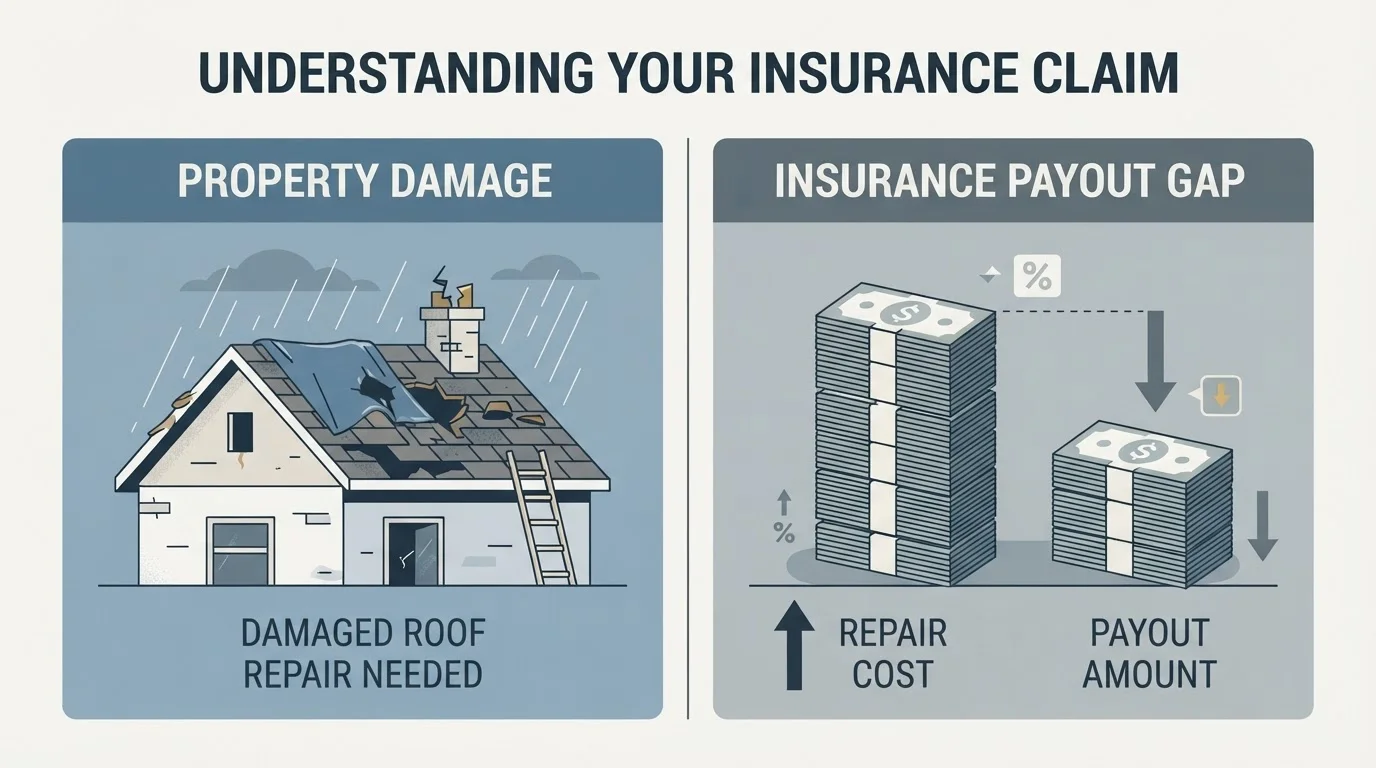
When a covered loss occurs - say, a storm tears off part of your roof - many policyholders assume the insurer will pay whatever it costs to make things right again. In practice, the payout calculation often starts with a different question: what was the damaged property worth on the day of the loss?
That figure is known as Actual Cash Value (ACV), and it is almost always lower than what you would spend at today's prices. The gap between ACV and current replacement cost is depreciation - the portion of value subtracted to account for age and wear.
Depreciation affects far more than roofs. Appliances, HVAC systems, personal belongings, flooring, and vehicles are all subject to it. Insurers reference industry-standard depreciation tables that assign each category of property an expected useful life, then calculate how much value has been consumed based on the item's age.
Depreciation Also Applies to Personal Property
Depreciation isn't limited to structural elements like roofs or HVAC systems. Clothing, electronics, furniture, and other personal belongings are also depreciated based on their age and condition. Jewelry and collectibles may be handled differently and often require separate scheduled coverage to be fully protected.
For a deeper look at how ACV compares to Replacement Cost Value - and which situations call for each - see our article on Actual Cash Value vs. Replacement Cost Coverage.
How the Depreciation Calculation Works
A simplified version of the insurer's math looks like this:
- Determine replacement cost: What does an equivalent new item cost today?
- Establish useful life: Industry tables assign life expectancies - a roof might have a 20-year life; a water heater, 12 years.
- Calculate consumed life: Divide the item's age by its useful life to get a depreciation percentage.
- Subtract depreciation: Apply that percentage to the replacement cost to arrive at ACV.
For example, a 10-year-old roof with a 20-year useful life has consumed 50% of its value. If a new roof costs $15,000, the ACV payout would be approximately $7,500 - before your deductible is applied.
20-50%
Typical ACV reduction vs. replacement cost
Depending on item age and category, depreciation deductions commonly range from 20% to over 50% of the replacement cost value on residential claims.
12-20 years
Typical useful life for roofing (varies by material)
Insurer depreciation tables assign useful-life values by material type; asphalt shingles are often assigned 20 years, while other materials may differ significantly.
Depreciation rates can also vary based on the condition of the item, not just its age. An item that was well maintained may receive a lower depreciation figure than one showing significant wear. This is one reason documenting the condition of your property before a loss can work in your favor.
Recoverable vs. Non-Recoverable Depreciation
Not all withheld depreciation is gone forever. How much - if any - you can reclaim depends on your policy's coverage type.
Replacement Cost Value (RCV) Policies
These policies typically use a two-step payment process. First, the insurer pays ACV - the replacement cost minus depreciation. Once you complete the repair or replacement and submit documentation, the insurer releases the withheld (recoverable) depreciation, bringing the total closer to the actual cost of the work.
Actual Cash Value (ACV) Policies
Under an ACV-only policy, the depreciation withheld is generally non-recoverable. What you receive upfront is the final payment. These policies typically carry lower premiums, but the trade-off is meaningful when a major loss occurs.
Understanding your coverage type and how ACV and replacement cost differ in property insurance before you file a claim can prevent a costly surprise. Review your Declarations Page - the summary sheet at the front of your policy - to identify which valuation method applies to each category of covered property.
Know Your Policy Type Before a Loss Occurs
Check your Declarations Page now - before you ever need to file a claim - to confirm whether each category of covered property is valued at ACV or Replacement Cost. If you find ACV-only coverage on major structural items, it may be worth discussing an upgrade with your agent. Premiums will be higher, but the gap between ACV and full replacement can be substantial on large losses.
Practical Steps When Depreciation Reduces Your Payout
Receiving a lower-than-expected settlement can feel discouraging, but there are constructive steps you can take:
- Request a written depreciation schedule. Ask your adjuster for a line-by-line breakdown showing the replacement cost, useful life, age, and depreciation amount for each item. Errors in these figures are not uncommon.
- Document your property before losses occur. Photographs, purchase receipts, and maintenance records can support a challenge to an aggressive depreciation estimate.
- Complete repairs promptly if you have RCV coverage. Recoverable depreciation is typically only released after you submit proof of completed repairs - there are often deadlines for doing so.
- Consider a public adjuster if the dispute is significant. Licensed public adjusters represent policyholders - not insurers - in claim negotiations. Their fee is typically a percentage of the settlement.
For a fuller picture of how claims move from first report to final payment, see Understanding the Claims Process From First Notice to Final Settlement.
This article is for general informational purposes only and does not constitute personalized insurance, financial, or legal advice. Coverage terms, depreciation methods, and payout structures vary by insurer, policy, and state. Consult a licensed insurance professional and read your actual policy documents before making coverage decisions.