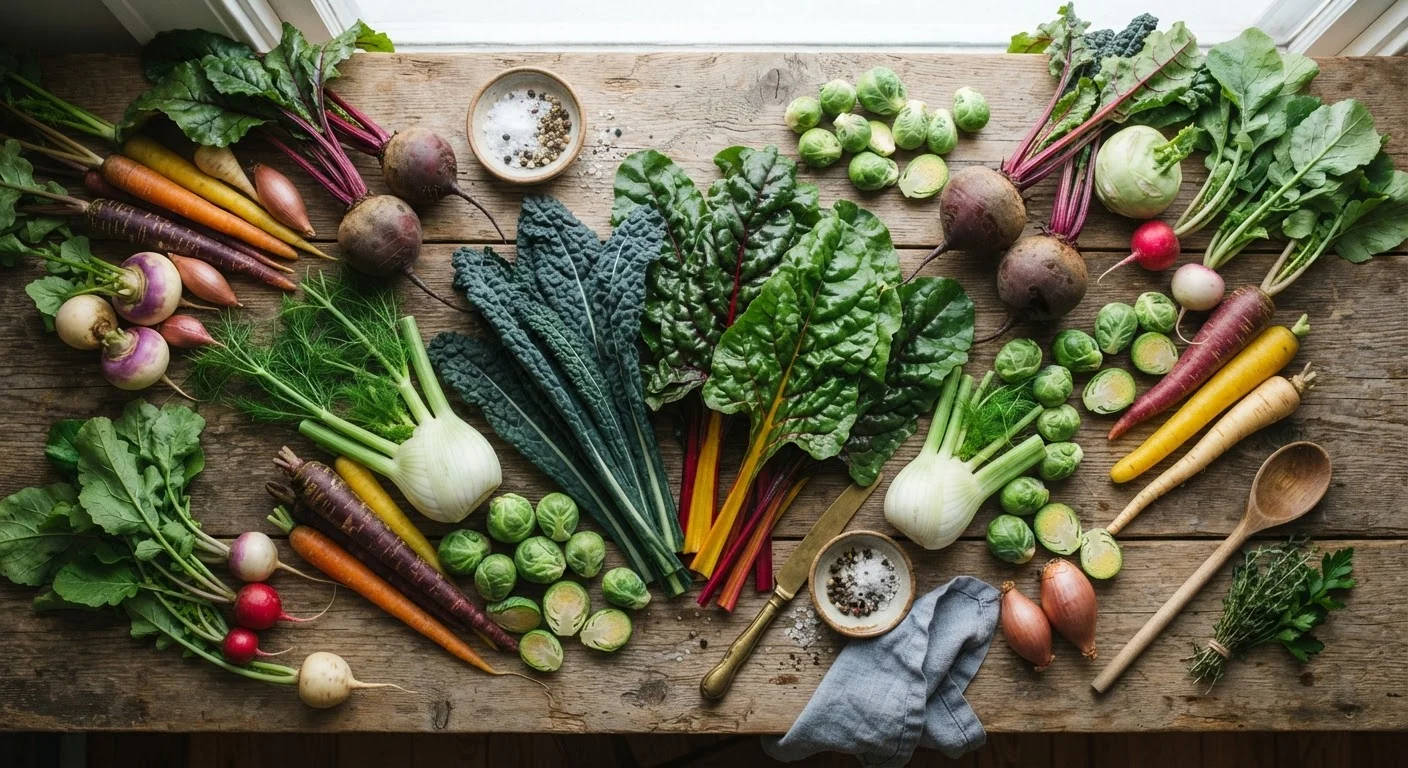
Why the Vegetable Gap Matters
According to data from the CDC and the Dietary Guidelines for Americans, the majority of U.S. adults consume vegetables at levels below federal recommendations. Most guidelines suggest filling roughly half your plate with fruits and vegetables at each meal - yet surveys consistently show that fewer than one in ten adults meets this target.
The consequences extend beyond simple nutrition shortfalls. Vegetables are among the most reliable dietary sources of fiber, potassium, folate, and a range of phytonutrients - compounds associated with reduced risk of chronic disease. When the overall diet skews toward processed foods and refined grains, entire categories of beneficial plant compounds go missing. Understanding which vegetables are most often overlooked - and why - is the first step toward making realistic changes.
For a broader look at how vegetable choices fit into overall shopping habits, see our guide to building a nutritionally balanced grocery list.
Vegetable Variety Matters, Not Just Volume
Different vegetables provide meaningfully different nutrient profiles. Eating a wide range of types - not just more of a single vegetable - is the most effective way to cover the spectrum of vitamins, minerals, and phytonutrients that a plant-rich diet can provide. Rotating through colors and categories is a simple rule of thumb for expanding nutritional coverage.
Underconsumed Vegetables Worth Adding to Your Plate
Dark Leafy Greens (Beyond Iceberg)
Kale, Swiss chard, collard greens, and mustard greens are among the most nutrient-dense foods in the vegetable kingdom, yet they account for a small fraction of average American vegetable consumption. These greens provide vitamin K, folate, calcium, and various antioxidants in concentrations rarely matched by lighter lettuces.
The perceived barrier is usually flavor or preparation uncertainty. Sautéing with a small amount of olive oil and garlic softens the bitterness of most sturdy greens in under ten minutes. Collards and chard also work well braised in broth. For raw applications, massaging kale with a bit of acid - lemon juice or vinegar - breaks down its fibrous texture significantly.
Dark leafy greens offer exceptional nutrient density, yet remain among the least consumed vegetables in U.S. diets.
Legumes (Beans, Lentils, and Peas)
Dietary guidelines classify legumes in both the vegetable and protein food groups - a reflection of their unusual nutritional profile. Black beans, lentils, chickpeas, and split peas deliver substantial fiber, plant-based protein, iron, and magnesium. Despite these credentials, most Americans eat them infrequently.
Canned legumes require no pre-soaking and can be incorporated into meals quickly: tossed into salads, mashed into dips, stirred into stews, or used as a base for grain bowls. Lentils cook from dry in roughly 20-25 minutes without soaking, making them one of the most time-efficient legume options.
Legumes uniquely count as both a vegetable and a protein source - a nutritional pairing few other foods can match.
Cruciferous Vegetables (Broccoli, Brussels Sprouts, Cauliflower, Cabbage)
This vegetable family is notable for containing glucosinolates - sulfur-containing compounds that have been studied for their potential role in cellular health, though research in humans is ongoing and findings should be interpreted with appropriate caution. What is well established is that cruciferous vegetables provide vitamin C, vitamin K, fiber, and folate.
Roasting at high heat transforms Brussels sprouts and broccoli from divisive to broadly palatable - caramelization reduces bitterness and adds complexity. Cabbage is one of the most economical vegetables available and holds up well in slaws, stir-fries, and soups. Cauliflower's mild flavor makes it a versatile base that absorbs seasonings readily.
Roasting cruciferous vegetables at high heat is a simple technique that dramatically improves their flavor and palatability.
Beets
Beets are consistently underrepresented in average American diets despite containing folate, manganese, potassium, and dietary nitrates - compounds that have been studied for their effects on blood pressure and exercise performance, though individual responses vary and the science is still developing.
Roasted beets keep well in the refrigerator for several days, making batch preparation practical. They work in salads, grain bowls, and even blended into smoothies where their earthy flavor is largely masked. Pre-cooked vacuum-packed beets are widely available and require no preparation, lowering the barrier to regular use considerably.
Batch-roasting beets and refrigerating them makes it easy to add this underused vegetable to meals throughout the week.
Winter Squash (Butternut, Acorn, Delicata)
While summer squash like zucchini appears relatively frequently, winter squash varieties are far less common on American plates despite being available much of the year. Butternut squash is rich in beta-carotene - a precursor to vitamin A - along with vitamin C, potassium, and fiber. Acorn and delicata squash offer similar profiles and, in the case of delicata, have edible skin that eliminates peeling.
Pre-cut frozen butternut squash is a practical shortcut that significantly reduces preparation time. Roasted, it can anchor a meal as a side dish or be blended into soups. Its mild sweetness also makes it broadly acceptable across a range of palates, including those of picky eaters.
Delicata squash has edible skin, eliminating peeling entirely and making it one of the most prep-friendly winter squash options.
Fennel
Fennel rarely makes it into American shopping carts, partly due to unfamiliarity and partly due to its distinctive anise-like aroma when raw. However, roasting or braising fennel mellows its flavor considerably, producing a sweet, savory result that many people who dislike it raw find quite approachable. It provides vitamin C, potassium, and fiber.
Thinly sliced raw fennel adds crunch to salads and pairs well with citrus. Roasted alongside other root vegetables, it blends seamlessly into familiar preparations. The fronds - the feathery green tops - can be used as an herb, reducing food waste in the process.
Roasting fennel transforms its sharp raw flavor into something mild and sweet, making it far more approachable for most palates.
Start With One New Vegetable at a Time
Rather than restructuring your entire diet at once, try introducing a single unfamiliar vegetable per week. Prepare it in a straightforward way - roasted with oil and salt is a reliable starting point - before experimenting with more complex preparations. Building familiarity gradually reduces the likelihood of reverting to default choices.
Making the Shift: Practical Framing
Nutritional improvement rarely happens through complete dietary overhauls. Research on sustainable behavior change suggests that small, consistent additions tend to be more durable than sweeping restrictions. Rather than replacing familiar meals, look for insertion points: a handful of spinach in a smoothie, white beans stirred into soup, shredded beets on a grain bowl.
Cost is a legitimate barrier for many households. Frozen vegetables - which are typically processed at peak ripeness - retain most of their nutritional value and are often significantly less expensive than fresh. The same applies to canned legumes. Our article on eating well on a budget covers practical strategies for maintaining dietary quality without premium grocery bills.
It's also worth noting that higher vegetable intake naturally supports fiber consumption, hydration, and micronutrient density simultaneously. For deeper context on any of those dimensions, explore our pieces on dietary fiber and common micronutrient shortfalls.
This article provides general nutrition information and is not a substitute for personalized dietary advice. Consult a registered dietitian or qualified healthcare professional for guidance specific to your health needs and circumstances.