Why Fiber Keeps Getting Overlooked
Fiber rarely dominates health headlines. It doesn't carry the cultural weight of protein, generate the debate surrounding fats, or attract the anxiety that added sugars do. Yet federal dietary data consistently shows it is one of the nutrients Americans fall most significantly short on - alongside several key vitamins and minerals.
The shortfall isn't a mystery. Diets heavy in processed foods, refined grains, and animal proteins naturally crowd out the plant foods where fiber lives. Whole grains get refined. Skins get peeled. Legumes rarely appear on dinner plates with any regularity. The result is an average daily intake - around 15 grams - that sits well below recommended levels for both men and women.
~15g
Average daily fiber intake for U.S. adults
According to dietary intake data cited in the Dietary Guidelines for Americans, average fiber consumption falls roughly 10 grams below recommended levels for women and nearly 25 grams below recommendations for men.
95%
Americans not meeting daily fiber recommendations
Public health researchers have described fiber as a widespread 'shortfall nutrient,' with the vast majority of the U.S. population consistently below recommended intake levels.
10-15%
LDL cholesterol reduction linked to high fiber intake
Research published in peer-reviewed nutrition journals suggests that diets consistently high in soluble fiber are associated with meaningful reductions in LDL (low-density lipoprotein) cholesterol compared to low-fiber diets.
What Fiber Actually Does in Your Body
Fiber's benefits extend well beyond preventing constipation, though it does that reliably. The two main categories - soluble and insoluble fiber - work through different mechanisms, which is why eating a variety of plant foods matters more than fixating on any single source.
Soluble fiber dissolves in water and forms a viscous gel in the digestive tract. This slows the absorption of glucose into the bloodstream, which can help moderate blood sugar responses after meals. It also binds to bile acids in the gut - compounds made from cholesterol - prompting the liver to draw more cholesterol from the blood to make new bile. This is the primary mechanism behind fiber's well-established association with lower LDL cholesterol levels.
Insoluble fiber does not dissolve. It adds bulk and water to stool, shortening transit time through the colon and supporting regular bowel movements. Research also associates higher fiber intake with a more diverse gut microbiome, since certain fibers ferment in the colon and feed beneficial bacteria - a process that produces short-chain fatty acids with anti-inflammatory properties.
“Dietary fiber is one of the most consistently underconsumed nutrients in the American diet, yet it's also one of the most accessible - it's in the foods most dietary guidance already recommends eating more of.”
— Academy of Nutrition and Dietetics, Leading U.S. professional organization for registered dietitians and nutrition professionals
Where to Find Fiber in Real Food
No single food monopolizes fiber. It's distributed across a wide range of plant foods, which makes dietary variety the most practical strategy.
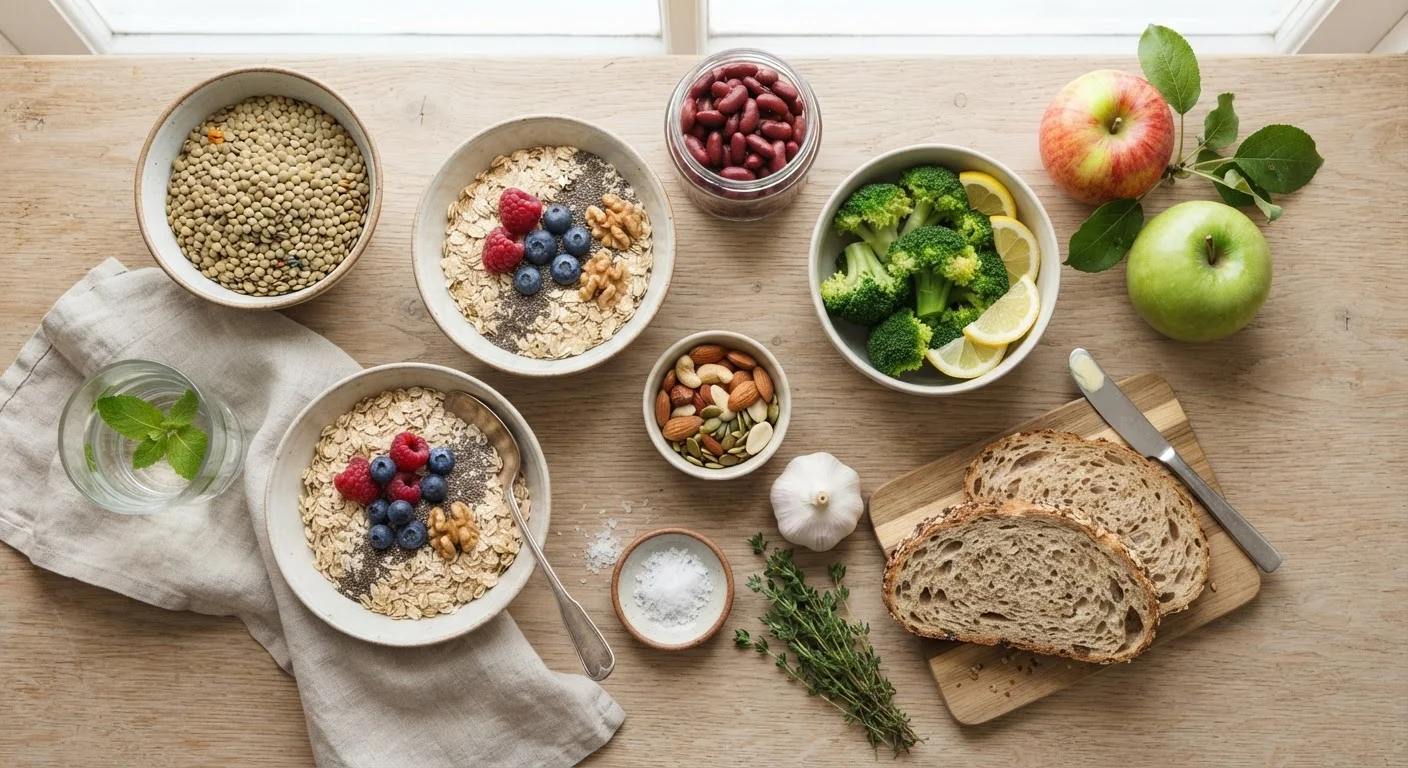
- Legumes: Lentils, black beans, chickpeas, and kidney beans are among the most concentrated fiber sources available - typically 13-16 grams per cooked cup. They are also inexpensive and shelf-stable.
- Whole grains: Oats, barley, bulgur, and whole wheat provide both soluble and insoluble fiber. Oats in particular are a well-researched source of beta-glucan, the soluble fiber linked to cholesterol-lowering effects.
- Vegetables: Broccoli, Brussels sprouts, carrots, artichokes, and leafy greens all contribute meaningful fiber. Many nutritionally valuable vegetables are also among the most fiber-dense options available.
- Fruits: Raspberries, pears, apples (with skin), and avocados are particularly fiber-rich. Whole fruit always contains more fiber than juice.
- Nuts and seeds: Chia seeds, flaxseeds, almonds, and pistachios offer fiber alongside healthy fats, making them a practical addition to meals or snacks.
When evaluating packaged foods, the Nutrition Facts label makes comparison straightforward. You can learn more about interpreting the full label - including percent daily values - in our guide to reading nutrition labels.
A Simple Rule for Adding More Fiber
Aim to include at least one plant food - a vegetable, fruit, legume, or whole grain - in every meal. You don't need to track grams precisely; building the habit of variety across the day will naturally move intake in the right direction. Keeping canned beans or frozen vegetables on hand makes this practical on busy weeknights.
Building Fiber Intake Without the Side Effects
One reason people abandon fiber-rich eating patterns is digestive discomfort: bloating, gas, and cramping are common when fiber intake increases too quickly. These symptoms are normal but avoidable with a measured approach.
Nutrition professionals generally recommend adding one or two high-fiber foods per week rather than overhauling the entire diet at once. Gradual change gives gut bacteria time to adapt. Adequate hydration is equally important - soluble fiber absorbs water as it moves through the gut, and insufficient fluid intake can worsen rather than relieve constipation. See our related piece on how food contributes to daily hydration for context on meeting fluid needs.
It's also worth noting that fiber is just one component of a broader dietary picture. Concerns about other nutrients - sodium intake, for example - are part of the same conversation about food quality. Our article on sodium in the American diet explores the parallel challenge of an overcorrection in the opposite direction.
This article is for general informational purposes only and does not constitute medical or nutritional advice. Consult a registered dietitian or qualified healthcare professional for guidance tailored to your individual health needs and circumstances.