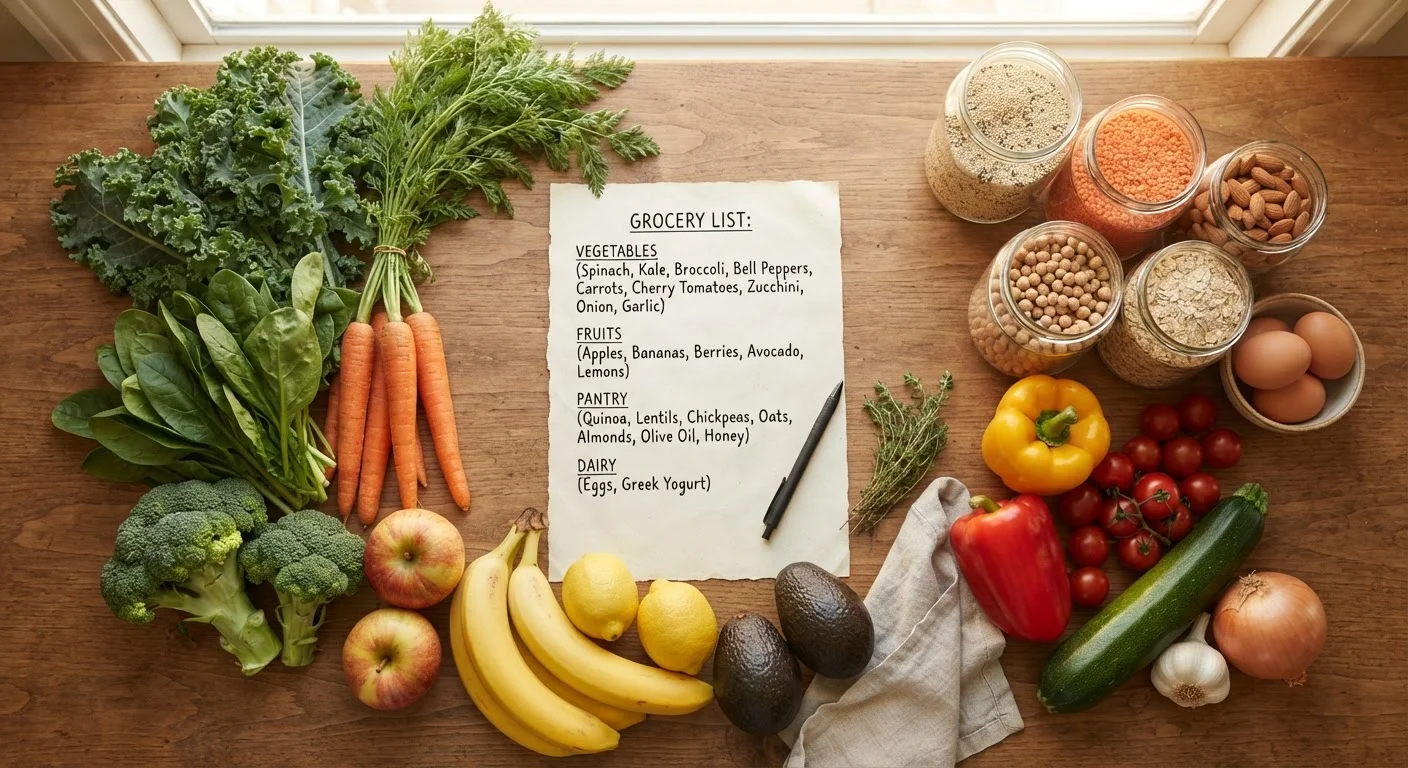
Why Your Grocery List Is a Nutritional Tool
Most grocery lists are written reactively - scanning the fridge, remembering what ran out, jotting things down on the back of an envelope. The result is a cart that mirrors habit rather than intention. But the list you write before you shop is one of the most direct levers you have over what your household actually eats.
Nutritional quality is largely determined before you reach the checkout. Once an item is in your home, it tends to get eaten. Structuring your list with food groups in mind - rather than store aisles or memory triggers - shifts that dynamic in a meaningful way. It also supports the kind of consistency that meal planning as a nutritional strategy can provide week after week.
This guide walks you through a practical, repeatable process for building a grocery list that reflects sound nutritional priorities - without requiring a nutrition degree or hours of preparation.
What you will need
Step-by-Step: Building Your Nutrition-Focused List
Follow these steps each week to develop a grocery list that reflects genuine nutritional balance. Adjust the specifics to your household's size, preferences, and any dietary needs your healthcare provider has outlined.
Do a quick pantry audit
Before writing a single item, spend five minutes checking what you already have. Note staples that are running low - cooking oils, grains, canned legumes, condiments - and confirm what proteins and produce remain. This prevents doubling up on items and ensures your list fills genuine gaps rather than clutter.
Sketch your meals for the week
You don't need a rigid meal plan - a rough sketch of five to six dinners and general ideas for breakfasts and lunches is enough. This step prevents the most common grocery list failure: buying food with no clear use for it. Even loose meal anchors (a grain bowl, a stir-fry, a pasta dish) give your list structure and reduce waste.
Build your list by food group, not by aisle
Organize your list into the following categories: Vegetables and Fruits, Proteins (meat, poultry, fish, eggs, legumes, tofu), Whole Grains (oats, brown rice, whole-grain bread, quinoa), Dairy or Alternatives, and Pantry Staples (oils, canned goods, spices, condiments). Writing by food group exposes imbalance - if the produce section is thin and the pantry section is heavy, that's useful information before you shop.
Apply a needs-first filter
Review each item on your draft list and ask: does this support a planned meal or a nutritional gap, or is it a reflex purchase? This isn't about restriction - it's about intention. Items that don't serve a clear purpose are candidates to defer. A needs-vs-wants framework applied at the list stage tends to be far more effective than trying to apply it under store lighting.
Note quantities and prevent over-buying perishables
Add rough quantities next to each item, particularly for produce and proteins. Over-buying perishables is a primary driver of food waste and a quiet budget drain. For items you're unsure you'll use within the week, list a frozen or shelf-stable alternative alongside the fresh version so you can make the call at the store.
Save your list as a repeatable template
Once you've written a solid list, save the structure - not the specific items, but the category framework and your typical staples. Most grocery apps allow saved lists; a simple document or note works equally well. Each week you'll adjust quantities and swap proteins or produce varieties, but the skeleton stays intact. This is the step that converts a one-time effort into an efficient, sustainable habit.
Use Color as a Nutritional Proxy
When reviewing your produce selections, look for variety in color - dark leafy greens, orange and red vegetables, and purple or blue fruits each signal different nutrient profiles. A visually diverse produce list is a practical shortcut toward broader micronutrient coverage, even without tracking individual vitamins.
Common Pitfalls and How to Avoid Them
Even a well-intentioned list can fall apart at the store. A few structural habits help keep it effective.
Skipping produce because it spoils: Mixing fresh and frozen vegetables on your list solves this. Frozen options retain most of their nutritional value and extend your planning horizon significantly.
Over-relying on packaged convenience items: These aren't automatically unhealthy, but leaning on them heavily can shift your list away from whole-food staples. If convenience matters - and it reasonably does for most households - look for minimally processed versions with shorter ingredient lists.
Shopping without eating first: Hunger reliably inflates a cart with high-calorie, low-nutrient items. It's a practical issue as much as a willpower one. A structured shopping list built in advance also serves as a financial guardrail against this pattern.
For households with children, it's worth noting that children's nutritional needs differ from adults in meaningful ways - a topic worth reviewing with a pediatric healthcare provider when building a family-wide list. If budget is a constraint, the same nutritional principles apply; see our overview of eating well on a budget for practical strategies.
Lists Aren't a Substitute for Professional Guidance
A well-structured grocery list supports general healthy eating patterns, but it cannot account for individual health conditions, food allergies, medication interactions, or specific dietary requirements. If you or a family member has a diagnosed condition or specific nutritional concern, consult a registered dietitian or your healthcare provider before making significant changes to your diet.
This article is for general informational and educational purposes only and does not constitute medical or dietary advice. Consult a qualified healthcare professional or registered dietitian for guidance tailored to your individual health needs.