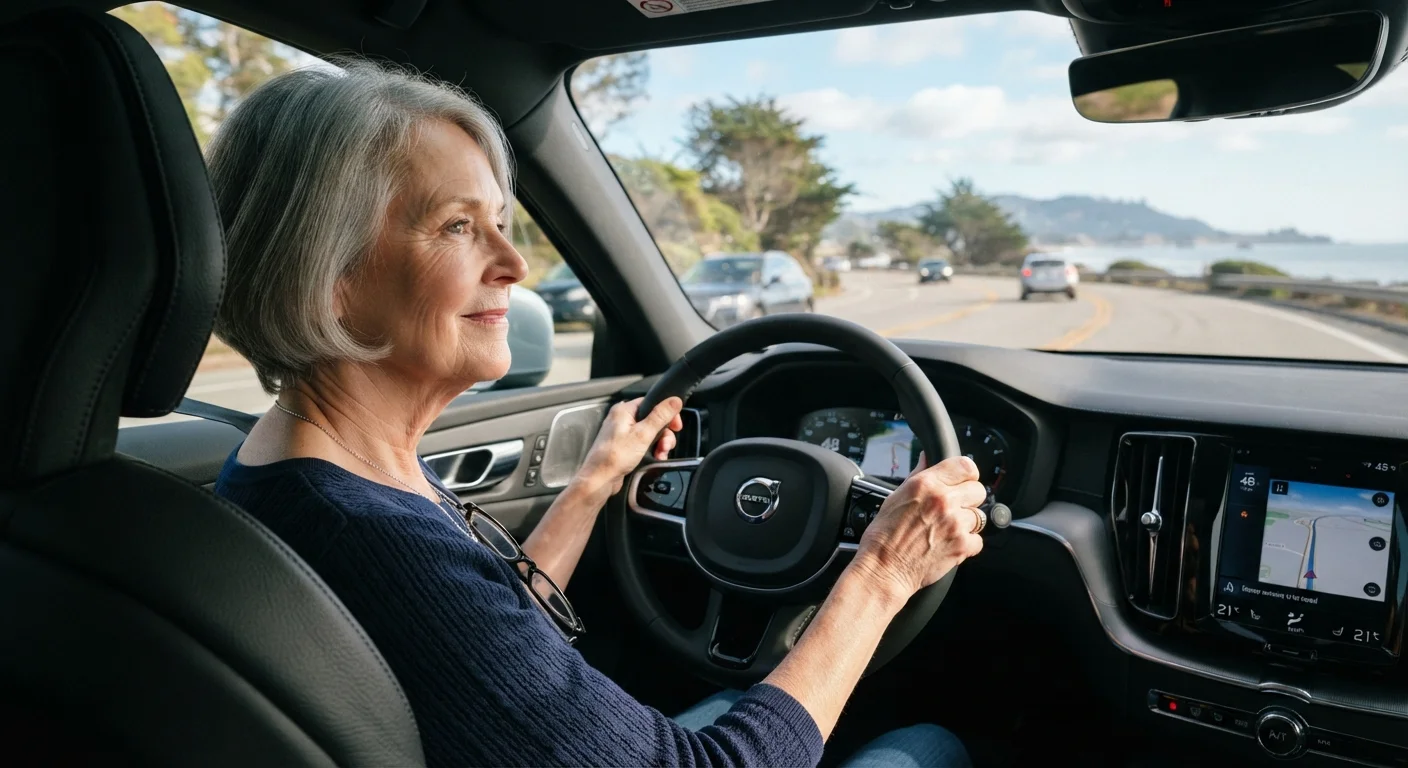
How Normal Aging Affects the Driving Task
Driving is a complex, multi-layered task. It requires sustained attention, accurate visual perception, the ability to process moving information quickly, and coordinated physical control of the vehicle. Each of these demands is affected - to varying degrees - by the normal biology of aging.
Vision is the most frequently discussed factor. The lens of the eye stiffens with age, making it harder to shift focus quickly between dashboard and road. Contrast sensitivity - the ability to distinguish objects from similar-toned backgrounds - also declines, which matters most in low-light conditions. Glare recovery slows, meaning bright headlights at night take longer to recover from. These changes don't happen suddenly, and many are correctable with updated prescriptions or treated conditions like cataracts.
Reaction time increases gradually with age due to slower neural processing. This doesn't mean older drivers are unsafe - experienced drivers often compensate through anticipation, following distance, and speed management. However, in high-demand situations, the margin narrows. The relationship between speed and reaction time is explored in more detail in our piece on how reaction time changes at speed.
Neck and trunk flexibility tends to decrease with age, affecting the ability to check blind spots or look over the shoulder when merging. This is a practical, addressable concern - both through vehicle selection and awareness of compensatory habits. See also our explainer on how blind spots work.
Age Is Not a Uniform Experience
Two drivers of the same age can have dramatically different driving-relevant abilities. A 78-year-old with excellent corrected vision, no significant medications, and good physical flexibility may be a safer driver than a 65-year-old managing multiple health conditions. Chronological age is a rough signal, not a reliable individual predictor.
Factors Beyond the Obvious: Medications and Cognitive Load
Older adults are more likely than younger drivers to take multiple prescription or over-the-counter medications. Many common drug classes - sedating antihistamines, sleep aids, benzodiazepines, certain antihypertensives, and opioid pain relievers - carry driving-relevant side effects including drowsiness, impaired coordination, and slowed processing speed. The interaction effects of multiple medications taken together can be more significant than any single drug alone.
This is a topic worth raising directly with a pharmacist or prescribing physician, particularly after any new prescription is added. Many patients are unaware that medications they've taken for years may affect driving differently as their liver and kidney function changes with age.
Cognitive load is another often-overlooked factor. Driving in unfamiliar areas, navigating complex intersections, or managing in-car technology all increase the mental demands of the task. Older drivers who experience early cognitive changes may find high-demand environments - highway vs. city driving, heavy traffic - disproportionately taxing. Fatigue compounds all of these effects; our article on driver fatigue covers why tiredness impairs judgment in ways that are easy to underestimate.
Review Medications With Your Pharmacist Annually
Ask your pharmacist to conduct a medication review specifically looking at driving-relevant side effects - including drowsiness, dizziness, and slowed reaction time. This is a free service at most pharmacies and takes only a few minutes. It's especially valuable after any change in prescriptions or dosages.
Practical Strategies for Staying Safer Longer
The goal for most older drivers isn't an abrupt stop - it's thoughtful adaptation. Several evidence-informed approaches can extend safe driving years while genuinely reducing risk.
Route and timing choices: Avoiding peak-traffic hours, unfamiliar roads, and high-speed merging environments can significantly reduce exposure to the situations most affected by age-related changes. Limiting night driving is one of the most effective individual adjustments, given the compounding effects of reduced vision and slower reaction time after dark.
Vehicle selection: Vehicles with backup cameras, blind-spot warning systems, automatic emergency braking, and adjustable seating can compensate for reduced flexibility and slower response. Larger side mirrors and higher seating positions improve sightlines without requiring neck rotation.
Formal evaluation: A certified driving rehabilitation specialist can assess the full picture - vision, cognition, physical function, and actual on-road performance - and recommend specific adaptations. This is not a test to fail; it's a tool to use. Many older drivers discover modifications that allow them to drive safely for longer than they might have otherwise.
Home and lifestyle alignment: Driving independence is closely tied to how well daily life is organized. Readers thinking about broader independence at home may find our article on aging-in-place home modifications a useful companion resource.
45M+
Licensed drivers aged 65 and older in the U.S.
According to the Federal Highway Administration, older adults represent one of the fastest-growing segments of the licensed driver population.
~3x
Increased crash fatality risk per mile for drivers 75+
The Insurance Institute for Highway Safety notes that while older drivers crash less frequently than teens, their injury severity in crashes is significantly higher due to physical fragility.
66%
Older drivers who self-restrict driving at some point
Research published in transportation and gerontology journals consistently finds that a majority of older drivers voluntarily adjust their driving habits before any formal intervention.
When Driving Restrictions - or Alternatives - Make Sense
Self-imposed restrictions are a mark of sound judgment, not defeat. Many older drivers voluntarily stop driving at night, avoid interstates, or limit trips to familiar local routes - and do so safely for years. These calibrated choices reflect exactly the kind of self-awareness that keeps crash risk low.
Warning signs that suggest a more thorough evaluation include: recent at-fault crashes or near-misses, difficulty staying in lane, getting lost on familiar routes, delayed brake response observed by passengers, or feedback from multiple people expressing concern. These are not automatic disqualifiers, but they warrant professional rather than informal assessment.
Where driving must be reduced or stopped, planning for alternatives matters. Ride-hailing services, community transit programs, family coordination, and local senior transportation services all vary widely by region - but they represent a genuine ecosystem worth mapping out before the need becomes urgent. Driving is one dimension of independence, and it intersects with many others.
This article provides general educational information about age-related factors in driving. It is not a substitute for professional medical, clinical, or driving-rehabilitation evaluation. Driving fitness determinations should be made in consultation with qualified professionals and, where applicable, in accordance with applicable state licensing requirements.