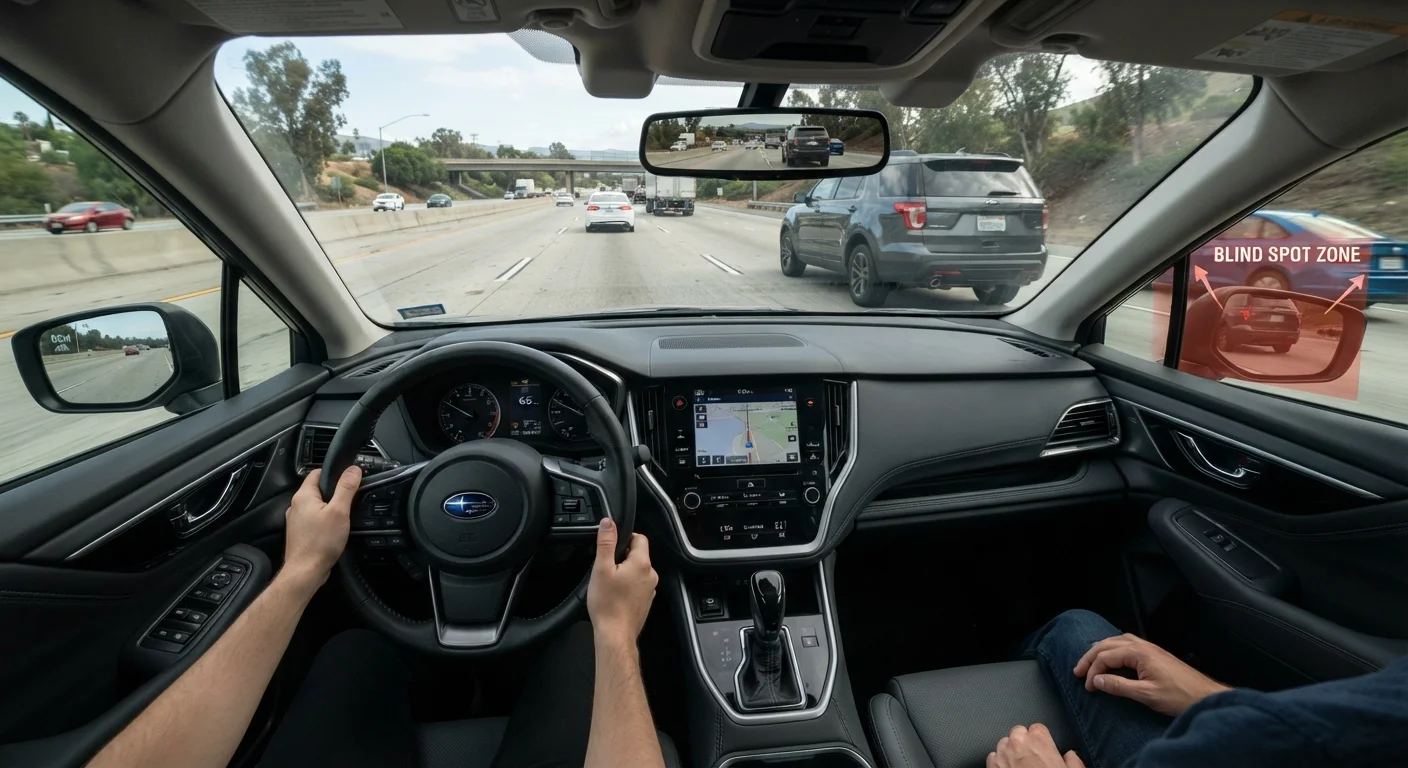
The Blind Spot Problem Most Drivers Get Wrong
Ask most drivers where their blind spots are, and they'll gesture vaguely toward the rear corners of their vehicle. That general instinct isn't wrong - but it significantly understates the actual size of the problem. Research from the National Highway Traffic Safety Administration consistently identifies blind-spot-related lane changes as a contributing factor in hundreds of thousands of crashes annually in the United States.
The core misconception is that mirrors provide near-complete coverage of what's around a vehicle. In reality, the standard mirror setup on most passenger cars leaves substantial zones uncovered - zones large enough to hide a motorcycle, a cyclist, or even another car depending on road and vehicle conditions. Drivers who rely exclusively on mirrors without performing shoulder checks are operating on an incomplete picture of their surroundings.
For newer drivers, understanding this early is foundational. Getting behind the wheel for the first time involves absorbing a lot, but blind spot awareness ranks among the most safety-critical habits to build from the start.
840,000+
Annual blind spot crashes in the U.S.
The NHTSA estimates over 840,000 crashes annually in the U.S. are associated with blind zone areas around vehicles.
~20 ft
Rear blind zone depth on large SUVs
Consumer Reports testing has found that some full-size SUVs and trucks have rear blind zones extending nearly 20 feet behind the vehicle.
1 in 3
Drivers using incorrect mirror positioning
Safety researchers have consistently found that a large proportion of drivers position side mirrors to see their own car, which duplicates rearview coverage rather than extending it.
Where Blind Spots Actually Exist - and How Big They Are
Every vehicle has at least four distinct problem zones. The two most dangerous are the left and right rear quadrants - the areas roughly parallel to the driver's torso and extending behind the rear door. Your side mirrors, when adjusted to factory default, often show a significant slice of your own vehicle instead of the adjacent lane. This is a common and correctable mirror setup mistake.
A rear center blind spot exists in vehicles with tall headrests, cargo, or high trunk lines - think hatchbacks, SUVs, and minivans. The front corners of the vehicle also create blind zones for nearby pedestrians and cyclists at intersections, particularly when turning.
Vehicle size dramatically affects blind zone scale. A compact sedan's side blind spot might span 10 to 12 feet. A full-size pickup truck or large SUV can have rear blind zones that extend 20 feet or more behind the vehicle - enough to hide a small child entirely from the driver's view. This is one reason parking lot accidents are so common: pedestrians and shopping carts routinely enter these unseen rear zones as drivers back out of spaces.
Recalibrate Your Mirror Setup Today
Sit in your normal driving position and adjust each side mirror so the edge of your vehicle is just barely visible - or not visible at all. Many drivers have their mirrors set to show too much of their own car, creating a false sense of security. This simple one-time adjustment can meaningfully extend your field of view without any added technology.
How to Minimize Blind Spot Risk
No technology or technique eliminates blind spots entirely, but several practices significantly reduce the danger they pose.
Reposition Your Mirrors
The most impactful adjustment costs nothing. Tilt your side mirrors outward slightly beyond the point where you see the edge of your own car. You'll lose the ability to see your vehicle's flank, but gain substantially more coverage of the lane beside you. Use the rearview mirror for the immediate rear - that's its intended function.
Always Perform a Shoulder Check
Before any lane change, check mirrors, signal, then glance over your shoulder toward the target lane. This quick head turn fills in what mirrors cannot show. It should become automatic, not optional. Drivers who skip this step because they have blind spot monitoring systems are placing more confidence in that technology than its designers intended.
Be Aware of Where You Are in Others' Blind Spots
Blind spots are a two-way concern. When following a large truck closely, you're likely invisible to the driver - an issue that compounds the dangers described in our look at why tailgating is more dangerous than most drivers realize. Pass large vehicles deliberately and don't linger alongside them.
“Mirrors are tools, not windows. They give you a curated view of what's around you - and what they don't show you is exactly what will get you into trouble.”
— David Strayer, Cognitive neuroscientist and distracted driving researcher, University of Utah
As we age, reduced neck flexibility and changes in peripheral vision can make shoulder checks harder to perform effectively. Drivers navigating these changes can benefit from the guidance in our article on older drivers and changing road safety needs.
Blind Spot Tech Has Real Limits
Blind spot monitoring and cross-traffic alert systems are now standard on many new vehicles and are genuinely useful. However, they can fail to detect objects at high relative speeds, may not recognize narrow objects like motorcycles reliably in all conditions, and can be impaired by sensor blockage from dirt, ice, or damage. Always treat these systems as a supplementary layer - not a replacement for checking manually.