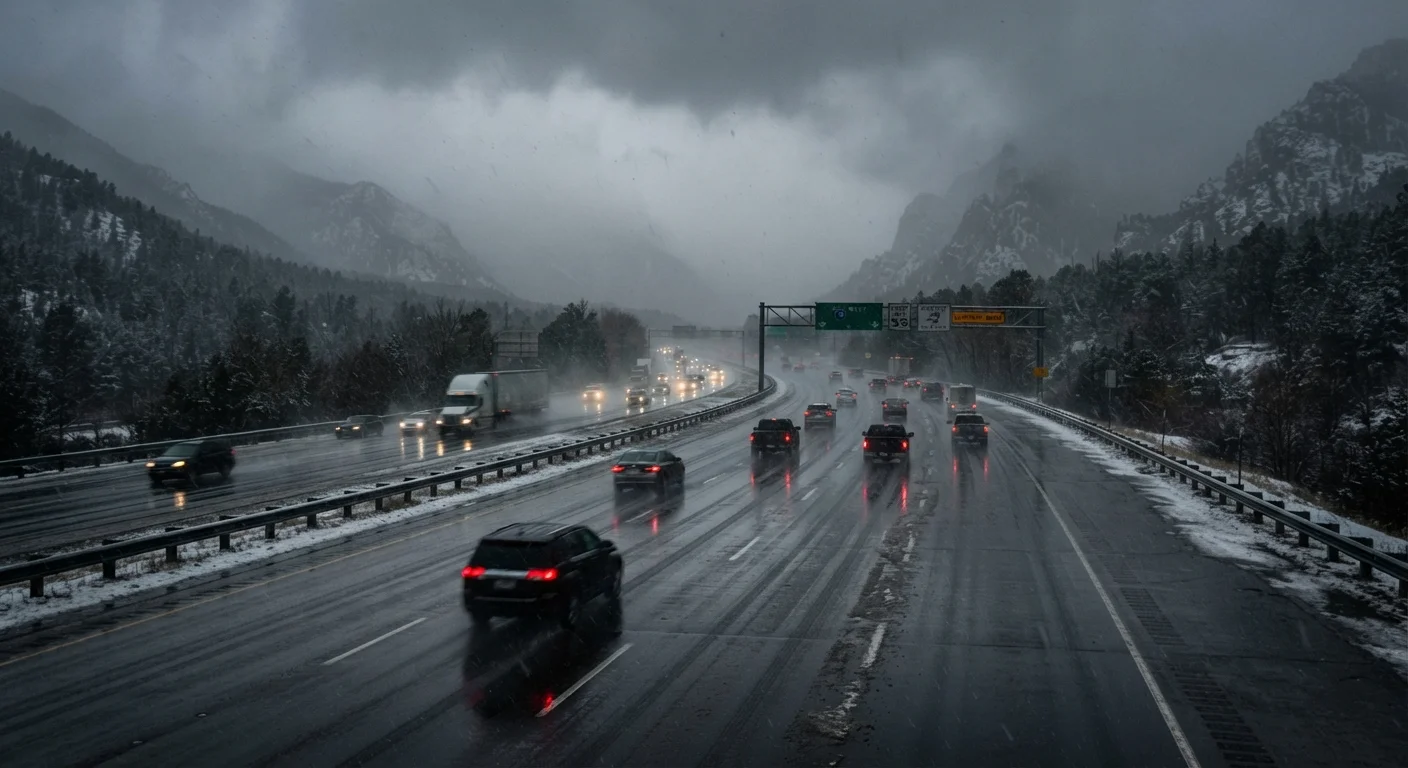
Why Weather Conditions Can't Be Treated the Same
Most drivers know to slow down when the weather turns. But slowing down is only one piece of the puzzle - and it doesn't work the same way in every condition. Rain affects grip and visibility differently than snow. Ice behaves nothing like a wet road. Fog creates its own category of risk that has nothing to do with traction at all.
Understanding the specific physics of each condition helps you respond with the right technique rather than a generic caution. Fog that reduces visibility to 200 feet calls for completely different adjustments than a snowy road that cuts traction in half. This breakdown covers what each condition actually does to your vehicle - and how to adapt accordingly.
Rain: Grip Loss, Spray, and Hydroplaning
Water on the road creates a film between your tires and the pavement, reducing friction and extending stopping distances. At highway speeds on a wet surface, stopping distances can increase by 50% or more compared to dry conditions. The risk compounds when rain is heavy enough to reduce visibility and creates spray from other vehicles.
One of the most misunderstood hazards in rain is hydroplaning - when your tires ride on a layer of water rather than contacting the road surface. It can happen faster than most drivers expect, particularly on worn tires. See our guide to hydroplaning causes and recovery for a full breakdown of what triggers it and the correct response.
Key rain adjustments: reduce speed by at least 5-10 mph below posted limits in steady rain, maintain a following distance of at least four seconds, and turn off cruise control. Standard cruise control is not designed to respond to sudden traction loss. See when cruise control is and isn't safe to use for more context.
Check Tire Tread Before Wet-Weather Driving
Tire tread depth is the single biggest factor in how quickly your vehicle channels water away from the contact patch. The minimum legal tread depth in most states is 2/32 of an inch, but many safety experts recommend replacing tires at 4/32 for wet-road performance. A quick test: insert a quarter into the tread groove - if you can see the top of Washington's head, tread depth may already be marginal for rain driving.
Snow: Smooth Inputs and Knowing Your Drive System
Snow changes the dynamic significantly. Unlike rain, which reduces grip but still allows relatively familiar vehicle behavior, snow demands a complete rethinking of how you accelerate, steer, and brake. Sudden inputs in any of these three areas can break traction almost instantly.
The key principle in snow is gradual everything: gradual acceleration, gradual braking, gradual steering. Leave a following distance of at least six to eight seconds. Hills are particularly dangerous - if you can't maintain momentum through a snowy incline, stopping and restarting is often harder than keeping moving at a steady pace.
One widely misunderstood factor is what four-wheel drive actually helps with. It improves traction during acceleration but does nothing for braking or cornering grip. Drivers who over-rely on 4WD in snow often encounter a harsh correction. Our article on four-wheel drive winter myths covers this in detail.
For broader seasonal preparation - including tire tread depth and emergency kit readiness - winter driving preparation often goes beyond what owners expect.
Ice: The Most Dangerous Surface on the Road
Ice - particularly black ice, the thin transparent layer that forms on road surfaces at just-above or just-below-freezing temperatures - is arguably the most hazardous condition a driver can encounter. Because it's nearly invisible and often appears on bridges, overpasses, and shaded road sections first, drivers frequently have no warning before their vehicle loses control.
On ice, standard braking instincts can make things worse. Steering inputs that would be routine on dry pavement can spin a vehicle on ice. The adjustment required is extreme: slow down to near-crawl speeds when ice is suspected, avoid any abrupt movement of the wheel or brake pedal, and if you feel the vehicle begin to slide, ease off the accelerator rather than braking hard.
Black Ice Offers No Warning Signs
Black ice looks like a wet or shiny road surface and gives drivers virtually no visual cue that the road is frozen. It most commonly forms between 32°F and 25°F, especially overnight and in the early morning. If road temperatures are near freezing and you notice your steering feels unusually light or your vehicle seems to drift without input, assume ice and ease off the accelerator immediately - do not brake sharply.
Bridges and overpasses freeze before road surfaces because cold air circulates beneath them. Temperature signs along highways often reflect air temperature, not road surface temperature - the road can be icy even when the air is slightly above freezing.
Fog: A Visibility Problem, Not a Traction Problem
Fog is categorically different from rain, snow, and ice because traction on a fog-covered road may be entirely normal - the danger is that you cannot see far enough ahead to respond to hazards in time. Dense fog can reduce visibility to under 100 feet, which at even 30 mph gives a driver only about two seconds of reaction time before reaching an obstacle they just spotted.
The key fog rule most drivers get wrong is headlight use. High-beam headlights in fog reflect off the water droplets in the air and actually reduce how far you can see. Low beams - or dedicated fog lights if your vehicle has them - cast light downward and forward, beneath the fog layer. Use low beams even during the day in dense fog.
Reduce speed significantly, use the right edge of the road as a reference line rather than the vehicle ahead, and never stop on the road in fog unless absolutely necessary. If you must pull over, get completely off the roadway and turn your lights off so approaching drivers don't follow your taillights thinking you're moving traffic.
Fog also shares a key trait with night driving: both demand that you drive within your stopping distance. Our article on night driving skills and adjustments explores that concept in depth.
| Rain | Snow | Ice | Fog | |
|---|---|---|---|---|
| Primary hazard | Reduced grip and hydroplaning | Traction loss on acceleration/braking | Near-zero friction, often invisible | Severely limited visibility |
| Stopping distance impact | Up to 50% longer | 2-3x longer | Up to 10x longer | Unchanged (dry road) |
| Recommended following distance | 4+ seconds | 6-8 seconds | Maximum possible | 4+ seconds, reduce speed |
| Headlight setting | Low beams on | Low beams on | Low beams on | Low beams only - no high beams |
| Cruise control use | Off | Off | Off | Off |
| Greatest risk zone | Highway speeds on worn tires | Intersections and hills | Bridges, overpasses, shaded areas | Any road, particularly highways |