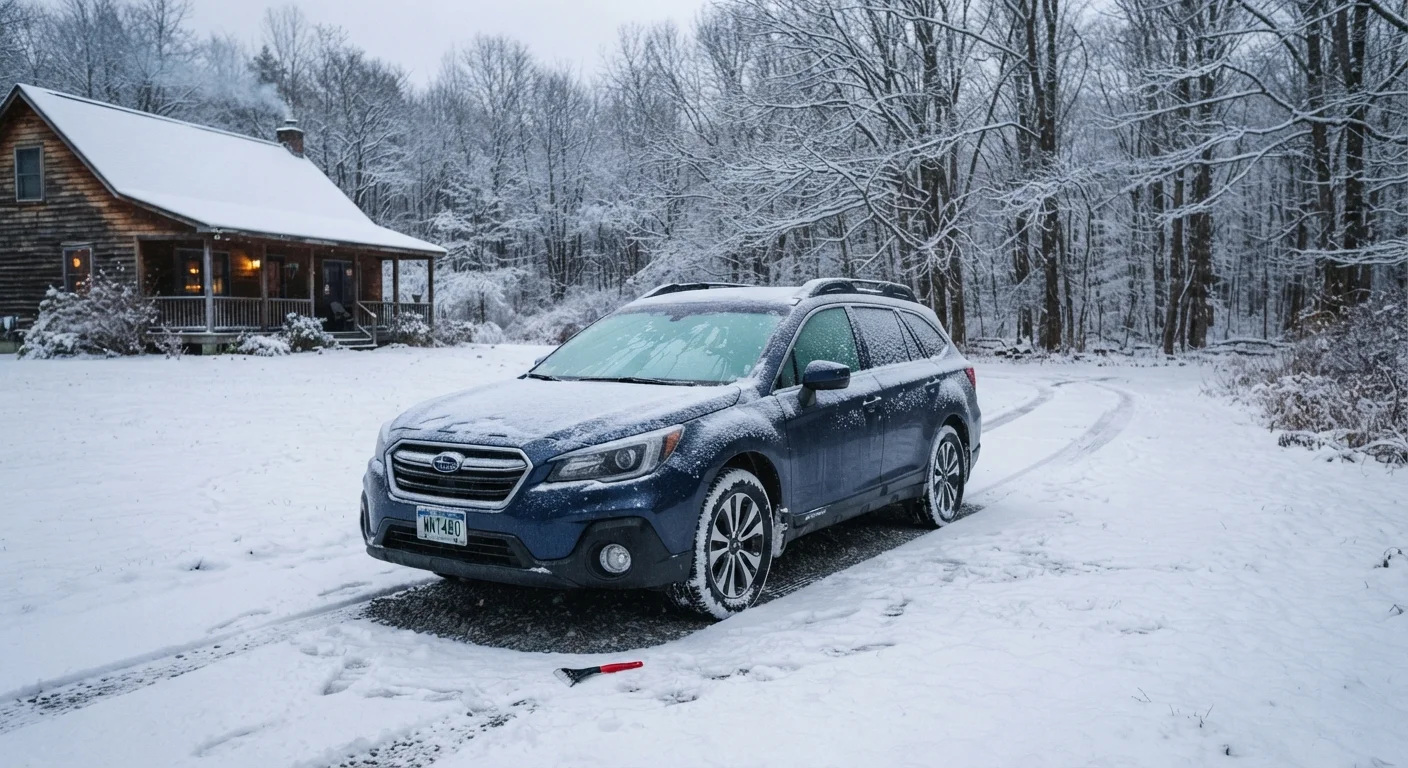
Why Winter Prep Gets Skipped - and Why That's Risky
Most drivers know winter driving is more demanding, yet preparation often stops at refilling washer fluid or keeping a snow brush in the back seat. The real risks - a battery that fails in single-digit temperatures, tires with just enough tread for dry roads, or a missing emergency kit when a storm traps you on the highway - tend to go unaddressed until something goes wrong.
The consequences aren't just inconvenient. Cold-weather breakdowns and weather-related crashes are among the most preventable vehicle incidents on the road. The Driving & Safety hub covers the broader picture of road risk, but winter preparation deserves its own focused attention before the first hard freeze arrives.
Assuming last year's battery will handle another winter without testing.
Why it happens: Batteries often give little warning before failing - they work fine until they suddenly don't, especially when cold temperatures deliver the final stress.
Relying on all-season tires in regions with sustained cold temperatures or regular snowfall.
Why it happens: Many drivers assume 'all-season' means 'winter-capable.' In reality, all-season tread compounds harden below roughly 45°F, reducing grip on both snow and dry cold pavement.
Believing four-wheel drive or AWD eliminates winter driving risk.
Why it happens: These systems genuinely do improve traction during acceleration, which builds driver confidence - sometimes excessive confidence in icy or low-traction situations.
Skipping the emergency kit or carrying a summer-configured one through winter.
Why it happens: Emergency kits feel unnecessary until they're urgently needed. Drivers who assembled one in spring rarely audit it before cold weather arrives.
Ignoring wiper blade condition until visibility fails during a storm.
Why it happens: Wiper blade degradation is gradual and easy to overlook during dry months when the blades see light use.
The Checks Most Drivers Forget
Once you've addressed the common mistakes below, a few additional areas deserve attention before temperatures drop consistently.
17%
Of all vehicle crashes linked to winter conditions
According to the U.S. Federal Highway Administration, roughly 17% of all vehicle crashes occur during winter weather conditions including snow, slush, and ice.
~35%
Battery power lost at 32°F vs. room temperature
Cold temperatures measurably reduce battery cranking power; at 0°F, that loss can reach approximately 60%, according to battery industry technical data.
Battery Health
A battery that starts your car reliably in September may struggle in January. Cold temperatures slow the chemical reaction inside lead-acid batteries, reducing available cranking power by as much as 35% at 32°F and up to 60% at 0°F. Have your battery load-tested at any auto parts retailer or service shop - most will test it for free. If your battery is more than four years old and hasn't been tested, this is your highest-priority winter check.
Wiper Blades and Washer Fluid
Standard all-season wiper blades can streak, skip, or freeze solid in heavy snow and ice. Winter-specific blades use a rubber boot to prevent snow and ice accumulation in the blade mechanism. Pair them with a washer fluid rated for well below your region's lowest expected temperature - standard fluid freezes on the glass and impairs visibility dangerously. See our guide on routine maintenance intervals for when other fluid checks are typically due.
Tire Inflation and Tread
Tire pressure drops roughly one PSI for every 10°F decrease in ambient temperature. Under-inflated tires handle poorly and wear unevenly. Check pressure when tires are cold - not after driving - and inflate to the specification on your vehicle's door jamb sticker, not the tire sidewall. For tread depth, insert a quarter into a tread groove with Washington's head pointing down: if you can see the top of his head, the tire is likely worn below safe winter thresholds. Our article on tire care habits that extend tread life covers ongoing maintenance practices in detail.
Don't Warm Up Your Car in an Enclosed Space
Letting your engine idle inside a garage - even with the door open - can allow carbon monoxide to build to dangerous levels rapidly. Always move the vehicle outside before warming it up. Modern fuel-injected engines also require only a brief idle before driving, so extended warm-up periods are rarely necessary for the engine itself.
Emergency Kit Contents
A roadside emergency kit for winter needs to go beyond jumper cables. Ice scraper, sand or kitty litter for traction, a wool blanket, hand warmers, a flashlight with fresh batteries, and a small shovel are all items that could matter during an extended roadside wait in freezing conditions. The roadside emergency essentials guide provides a thorough rundown of what every car should carry year-round.
If You Get Stranded in Winter Weather
Stay with your vehicle - it's easier for rescuers to locate than a person on foot in low visibility. Run the engine sparingly for heat and crack a window slightly to prevent carbon monoxide buildup. Make sure the exhaust pipe is clear of snow before running the engine. A charged phone and a winter emergency kit dramatically improve outcomes in this situation.