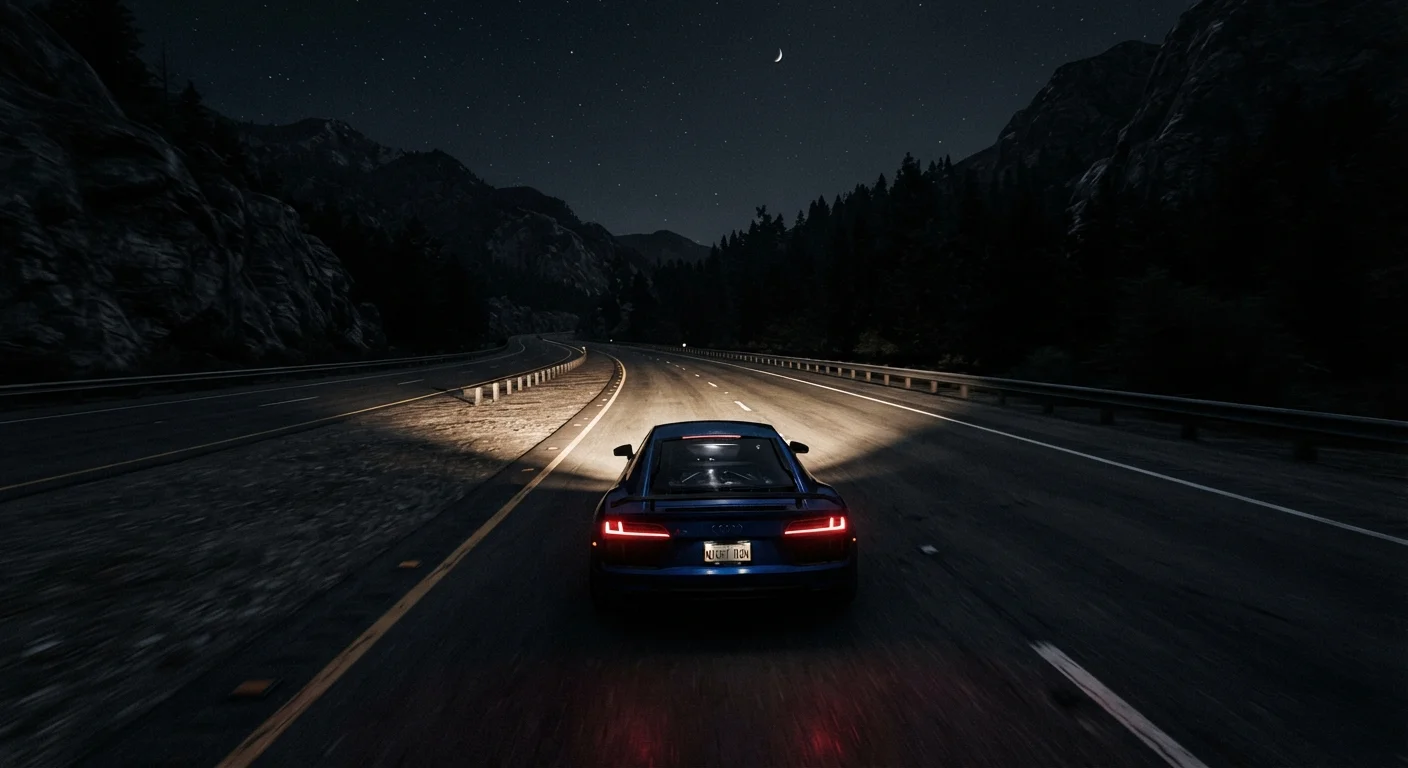
Why Night Driving Is Statistically More Dangerous
Traffic volume drops after dark, yet nighttime driving carries a fatality rate per mile traveled that is significantly higher than daytime driving. The National Highway Traffic Safety Administration (NHTSA) has consistently documented that a disproportionate share of fatal crashes occur at night. The explanation isn't mysterious: human vision is built for daylight, and once the sun goes down, nearly every visual input a driver depends on becomes less reliable.
The three core problems are reduced visibility range, compromised depth perception, and glare from artificial light sources. These don't operate independently - they interact with each other and with driver fatigue, which naturally peaks during late-night hours. Understanding each factor separately helps drivers recognize exactly what changes when they get behind the wheel after dark. For a parallel look at how environmental conditions affect driving, see our guide to rain, snow, ice, and fog.
The Core Visual Challenges After Dark
Human eyes rely on two types of photoreceptors: cones for color and fine detail in bright light, and rods for low-light sensitivity. At night, the visual system shifts toward rod-dominant processing - which means reduced color discrimination, narrowed peripheral vision, and degraded ability to judge distances accurately. A pedestrian in dark clothing may be genuinely invisible until they're well within the danger zone.
Glare adds another layer. When an oncoming vehicle's headlights hit your eyes directly, the pupils constrict rapidly, and it can take several seconds to readjust once the light source passes. During that recovery window, your effective vision is significantly reduced. Older drivers experience this more acutely, since the aging eye takes longer to recover from glare - a topic explored further in our article on older drivers and changing road safety needs.
~50%
Of traffic fatalities occur at night
According to NHTSA data, roughly half of all U.S. traffic fatalities happen during nighttime hours despite significantly lower overall traffic volume.
3-7 sec
Vision recovery time after glare
Research on headlight glare suggests that full visual recovery after exposure to bright oncoming lights can take several seconds, during which driver visibility is substantially reduced.
Best Practices for Safer Night Driving
Adjusting for nighttime conditions isn't about being timid - it's about matching your driving behavior to what your eyes and vehicle can actually handle in reduced light.
Slow down to stay within your headlight range
Standard low-beam headlights illuminate roughly 160-200 feet ahead, but at 60 mph a vehicle travels about 88 feet per second - meaning stopping distance can easily exceed what your lights reveal. Reducing speed at night closes this gap and gives you meaningful reaction time.
Increase your following distance beyond the daytime standard
The standard three-second following distance assumes adequate visibility. At night, hazards appear later, so adding one to two more seconds of buffer compensates for your reduced ability to spot brake lights, obstacles, or stopped vehicles in time.
Keep headlights and windshields clean and properly aimed
A film of grime on a headlight lens can reduce its output by 50% or more, and a dirty windshield scatters incoming light, dramatically worsening glare. Properly aimed headlights point where you're going - not into the eyes of oncoming drivers.
Use high beams strategically on unlit roads
High beams roughly double your forward visibility on dark roads, but many drivers forget to use them or fail to dim them for oncoming traffic. Switching between high and low beams appropriately is a skill that pays off significantly in rural or unlit environments.
Look toward the right edge of the road when facing oncoming glare
Staring into an oncoming vehicle's headlights accelerates the temporary blinding effect and takes longer to recover from. Shifting your gaze to the right edge line keeps you oriented on the road while minimizing direct exposure to the light source.
Managing Fatigue Behind the Wheel After Dark
Fatigue and darkness are a compounding combination. The body's circadian rhythm promotes drowsiness between roughly midnight and 6 a.m., which overlaps heavily with the hours when visibility is worst. Drowsy driving affects reaction time, judgment, and sustained attention in ways that parallel alcohol impairment - even when a driver feels only mildly tired. Our deeper look at driver fatigue covers the research in detail.
If you notice yourself drifting in your lane, missing signs, or struggling to keep your eyes open, treat those as serious warnings. Pulling over and resting - even briefly - is always the right call. No destination is worth the risk of a fatigue-related crash.
This article provides general driver safety information for educational purposes and does not constitute legal or professional driving instruction advice. Always follow your state's traffic laws and consult a certified driver safety course for personalized guidance.