What Causes Hydroplaning
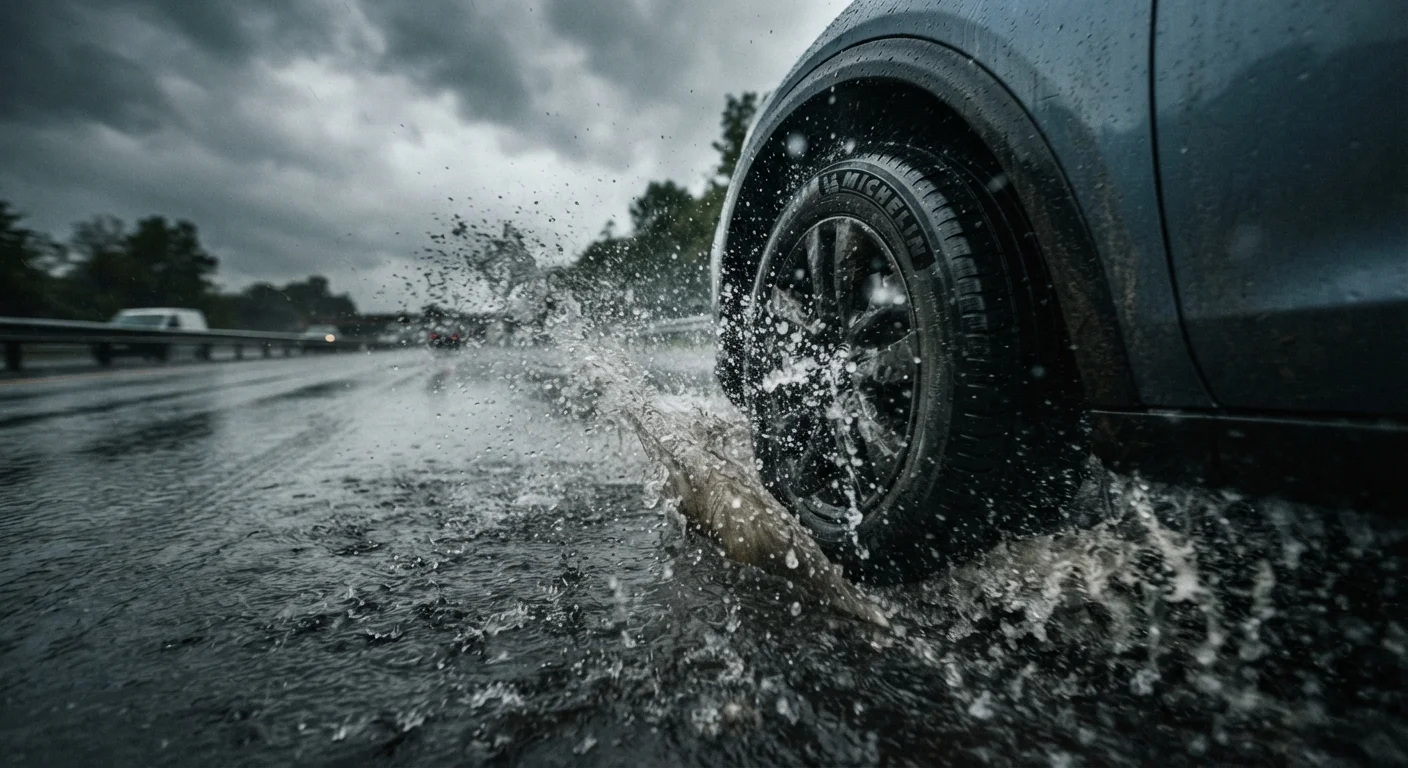
Hydroplaning happens when a tire encounters water faster than its tread can channel it away from the contact patch - the small area where rubber meets road. When water builds up under the tire faster than it disperses, the tire rides up onto a thin film of water and loses direct contact with the pavement. At that point, steering and braking inputs have very little effect.
Three factors drive the risk:
- Speed: Higher speeds give tires less time to move water out of the way. Research from transportation safety bodies consistently identifies speeds above 35 mph as a threshold where the risk increases measurably, and the risk rises sharply above 55 mph.
- Tire condition: Tread grooves are specifically designed to channel water away. Worn tires with shallow grooves are far more vulnerable. Similarly, under-inflated tires deform in a way that reduces their ability to shed water efficiently.
- Water depth: Even a thin sheet of standing water can cause hydroplaning at speed. Deeper puddles - especially in road depressions or near poorly maintained drainage - dramatically increase the risk.
Understanding these three variables helps drivers make smarter real-time decisions. For example, knowing that speed is the most controllable factor reinforces why slowing down in rain is always the right call - not just cautious instinct.
Follow Existing Tire Tracks When Possible
Vehicles ahead of you displace water and leave slightly drier paths in their lane. In heavy rain, positioning your tires within the tracks of the vehicle in front reduces the depth of water your tires must manage. Keep a safe following distance to allow time to react - do not tailgate just to use their tracks.
Before You Drive: Prevention Matters Most
The most effective hydroplaning strategy happens before you ever hit a wet road. Two maintenance checks make a measurable difference:
Tire tread depth gauge
Measures remaining tread depth to determine whether tires can adequately channel water away from the contact patch.
Tire pressure gauge
Confirms tires are inflated to the vehicle manufacturer's recommended PSI, which directly affects hydroplaning resistance.
Tread depth: Tires that meet the legal minimum tread depth of 2/32 of an inch are still at meaningfully higher hydroplaning risk than tires at 4/32 or above. If you drive frequently in rainy climates, consider replacing tires earlier than the legal minimum requires.
Tire inflation: Under-inflated tires bulge outward, reducing the effectiveness of tread grooves at the center of the contact patch. Check your inflation at least monthly and before long trips.
Wet-weather preparedness also extends beyond tires. Winter driving preparation covers additional vehicle checks that overlap with rainy-season readiness, including wiper blade condition and ensuring your vehicle's lighting system is fully functional for low-visibility conditions.
Never Slam the Brakes While Hydroplaning
Hard braking during hydroplaning can lock the wheels or overwhelm ABS on a vehicle with no road grip, making steering impossible and extending the loss of control. The correct response is to gradually release the accelerator, not to brake aggressively. Only apply gentle, steady brake pressure once you feel the tires regain road contact.
How to Respond: Step-by-Step
Hydroplaning often lasts only a few seconds, but those seconds can feel disorienting. The steps below represent the sequence most recommended by driver safety educators. Practice visualizing this response before you need it - familiarity helps override panic instincts.
Ease off the accelerator immediately
The moment you feel the steering go light, vibration disappear, or the vehicle begin to drift without input, your tires have likely lost contact with the road. Do not panic. Gradually lift your foot off the accelerator - do not stomp the brake. Reducing power allows the tires to slow naturally and gives them a chance to re-engage the road surface.
Hold the steering wheel firmly and steer straight
Keep both hands on the wheel and maintain the direction you were already travelling. Avoid sharp steering inputs in either direction - at this moment your tires are not gripping the road and any aggressive turn can cause a spin once traction suddenly returns. Small, smooth corrections are acceptable if you're drifting toward a lane edge.
Apply brakes gently once traction returns
When you feel the steering weight return and the vibration of normal road contact resume, apply the brakes with steady, light pressure. Modern vehicles with ABS will manage brake force automatically. If your vehicle does not have ABS and wheels start to lock, ease off brake pressure slightly. Continue slowing to a safe speed before resuming normal driving.
Reduce speed and increase following distance
After regaining control, slow down to a speed appropriate for conditions. Most hydroplaning events on highways occur above 45 mph, but standing water at lower speeds can still cause problems with worn tires. Double your normal following distance so you have more time to react to standing water, braking vehicles ahead, or debris.
Inspect your tires when it is safe to do so
At your earliest safe opportunity - a rest stop or after reaching your destination - check tire pressure and tread depth. Use a tread depth gauge: tires worn below 4/32 of an inch are at significantly elevated hydroplaning risk. The penny test (inserting a penny into the tread groove head-first; if Lincoln's full head is visible, the tread is too worn) is a commonly used rough check. Proper tire maintenance is the most effective long-term prevention.
Hydroplaning shares some surface-level characteristics with other traction-loss events, but the correct response differs in important ways. For comparison, see our article on what actually happens during a vehicle skid on ice, where the physics and recovery techniques diverge from a wet-road hydroplaning event.
Cruise Control Increases Hydroplaning Risk
Using cruise control on wet roads can delay your vehicle's response when tires begin to lose traction, because the system may try to maintain speed rather than letting you naturally ease off the throttle. Disengage cruise control any time rain is heavy or standing water is visible. See how cruise control and adaptive cruise control differ for a fuller explanation of when each mode increases risk.
What you will need