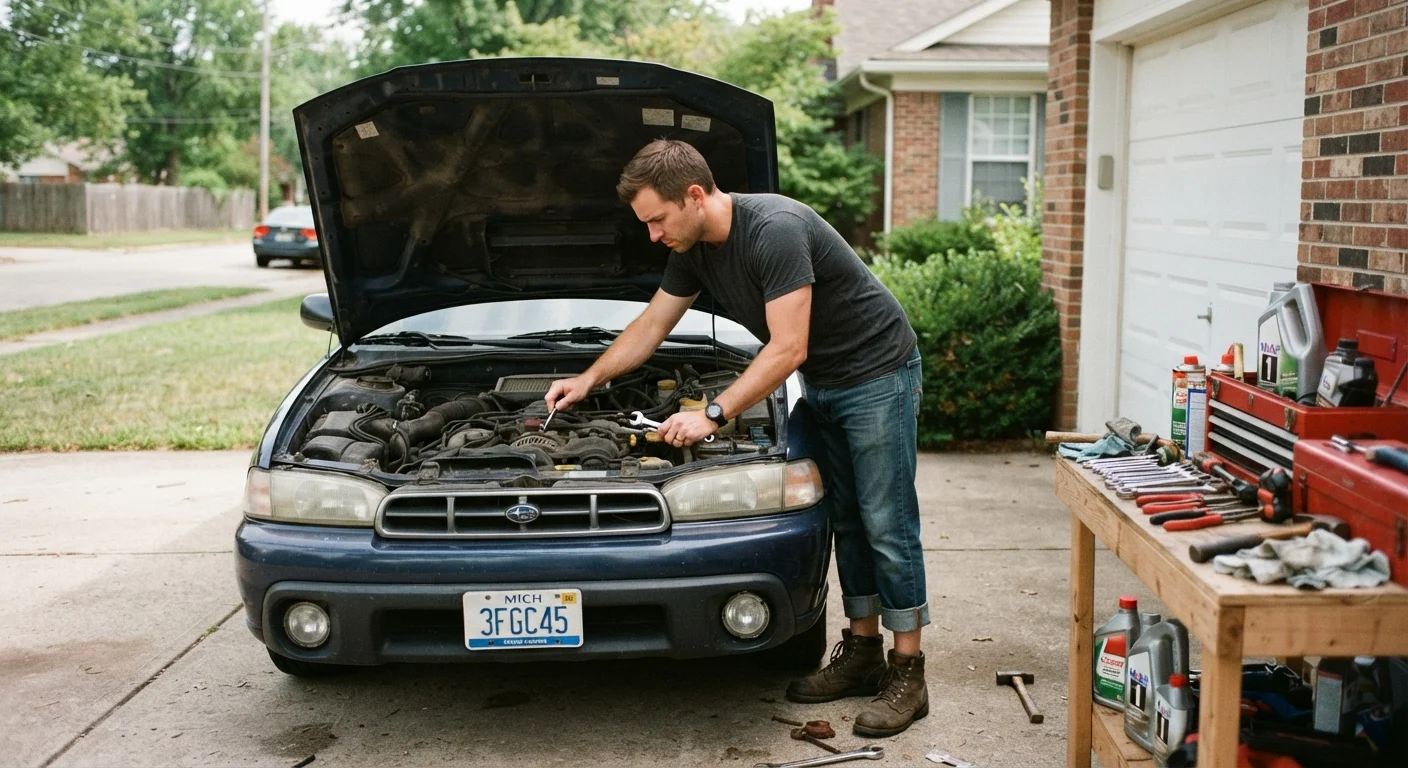
The Real Case for (and Against) DIY Car Maintenance
For many drivers, handling basic car maintenance at home feels like a reasonable way to control costs and stay more connected to how their vehicle operates. In some situations, that instinct is well-founded. In others, it creates risk that far outweighs any money saved.
The honest answer isn't that DIY is always smart or always risky - it depends entirely on the specific task, your actual skill level, the tools you have on hand, and the consequences of getting it wrong. Understanding that distinction is what separates confident, informed ownership from expensive guesswork.
As a useful reference point, the same decision-making framework that applies to home projects also applies here. Weighing skill, safety, and risk before starting is just as relevant under the hood as it is on a ladder.
Tasks Most Owners Can Handle Safely
A number of routine maintenance items require only basic tools, carry low risk if done improperly, and are well-documented in owner's manuals and manufacturer resources. These are reasonable candidates for a careful, patient DIY approach:
- Engine air filter replacement: Typically involves unclipping a housing and swapping a filter. No specialized tools needed, and the consequences of an error are minimal.
- Windshield wiper replacement: Straightforward on most vehicles, with clear instructions on packaging and in-car guides.
- Cabin air filter swap: Usually accessible behind the glove box. Improves air quality and HVAC performance.
- Tire pressure checks and inflation: A pressure gauge and a nearby air source are all that's required. Correct tire pressure affects fuel economy and handling.
- Checking and topping off fluids: Windshield washer fluid, coolant (when the engine is cold), and brake fluid reservoirs are generally accessible and clearly labeled.
- Battery terminal cleaning: Corroded terminals can cause starting problems. Cleaning with a wire brush and baking soda solution is manageable, though always disconnect the negative terminal first.
Always Verify Before You Start
Check your owner's manual before attempting any maintenance task - it contains vehicle-specific instructions, fluid specifications, and torque values that generic guides may not reflect. If your manual recommends professional service for a particular item, take that guidance seriously. Manufacturer recommendations exist for good reason.
Even simple tasks benefit from documentation. Keeping accurate car maintenance records protects resale value and helps you track service intervals with confidence.
When the Risk Outweighs the Savings
Some repairs look approachable on video but carry serious consequences if performed incorrectly. These tasks should be handled by a qualified mechanic:
| DIY Maintenance | Professional Mechanic | |
|---|---|---|
| Typical tasks | Filters, wipers, fluid top-offs, tire pressure | Brakes, suspension, diagnostics, SRS, transmission |
| Tools required | Basic hand tools, owner's manual | Specialized diagnostic and torque equipment |
| Skill level needed | Minimal to moderate | Trained and certified |
| Cost | Lower (parts only) | Higher (labor + parts) |
| Safety risk if done wrong | Low to moderate | High for complex systems |
| Warranty implications | May affect warranty if done incorrectly | Typically preserves warranty coverage |
Brake system work - including pad replacement, rotor resurfacing, and caliper servicing - requires precise torque specs and functional verification. An error here directly affects stopping distance. Similarly, suspension and steering components affect vehicle stability at speed; improper reassembly can cause handling failures.
Airbag and supplemental restraint systems (SRS) should never be touched by an untrained person. Accidental deployment can cause serious injury. Work on these systems requires specialized training and equipment.
Transmission service and internal engine repairs demand diagnostic tools, precision equipment, and experience that most home mechanics don't have. Attempting these without the right training risks compounding the original problem significantly.
Modern vehicles also rely heavily on onboard diagnostics and software. Many repairs now require dealer-level or professional scan tools to complete calibration - replacing a tire-pressure sensor, for example, often needs a TPMS reset tool. If your check engine light is on, reading the code is just the start; proper diagnosis requires understanding what that code actually means in context. Even neglected oil changes can lead to engine damage that only a professional can correctly assess and repair.
Building a Smarter Maintenance Strategy
The most cost-effective approach for most drivers is a hybrid one: handle the genuinely simple tasks yourself, and use professional service for anything involving safety systems, complex diagnostics, or work requiring specialized equipment.
Before starting any task, ask three questions: Do I have the right tools? Do I understand what could go wrong? Can I verify the result is correct and safe? If the answer to any of these is uncertain, that's a strong signal to consult a professional.
It's also worth thinking about the financial side. Unexpected repair bills are a near-certainty over a vehicle's life. Building a dedicated car emergency fund reduces the financial pressure that sometimes pushes drivers toward risky DIY attempts they're not equipped to handle. Separately, if you're weighing whether a service contract makes sense, the trade-offs between extended warranties and self-insuring repair costs are worth understanding before you decide.
Confident car ownership isn't about doing everything yourself - it's about knowing what you can do well, maintaining thorough records, and building a relationship with a trustworthy shop for the rest.
This article is for general informational purposes only. Always consult your vehicle's owner's manual and, where appropriate, a qualified mechanic before performing maintenance or repairs.