What Each Approach Actually Means
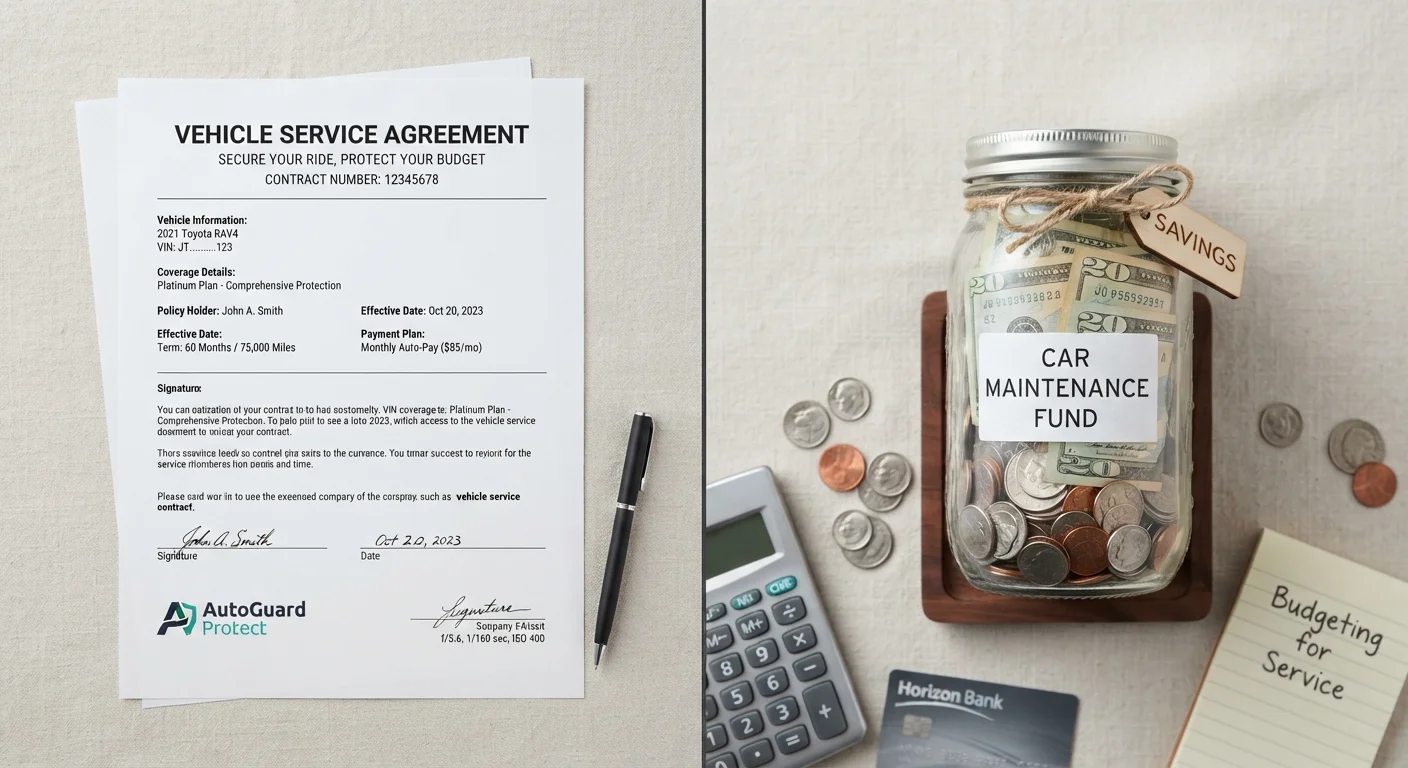
An extended warranty - more precisely called a vehicle service contract - is a paid agreement that covers certain repair costs after a manufacturer's factory warranty expires. You pay a set amount (upfront or rolled into financing), and the contract administrator pays eligible claims, subject to exclusions, deductibles, and approved repair facilities. Understanding how extended warranties differ from manufacturer warranties is essential before evaluating whether one is worth purchasing.
Self-insuring means deliberately setting aside money - typically in a dedicated savings account - to pay for repairs out of pocket when they arise. You are, in effect, your own insurer: you bear the risk, but you also keep every dollar that goes unspent. This approach requires upfront financial discipline but offers complete flexibility and no contractual exclusions.
Neither strategy eliminates repair costs. They simply determine who holds the money and under what conditions it gets spent.
Side-by-Side: How the Two Strategies Compare
The table below contrasts the key characteristics of each approach across the dimensions that matter most to everyday drivers.
| Criterion | Extended Warranty | Self-Insuring (Repair Fund) |
|---|---|---|
| Cost structure | Fixed premium paid upfront or financed | Flexible contributions you control |
| Unused funds | Kept by the warranty provider | Remain in your account |
| Coverage scope | Defined by contract; exclusions apply | Any repair, any shop, no exclusions |
| Claims process | Pre-authorization and approved shops required | Pay directly; no approval needed |
| Protection against large, early failures | Strong if repair exceeds premium paid | Weak until fund is adequately built |
| Financial discipline required | Low - coverage is automatic | High - requires consistent contributions |
| Long-term expected value | Often negative (seller margin built in) | Positive if repairs remain modest |
One factor not easily captured in a table is claims friction. Extended warranties typically require pre-authorization, use of approved shops, and documentation reviews - adding time and potential disputes to an already stressful situation. A self-funded repair, by contrast, gives you immediate purchasing power at any qualified mechanic. See our guide on when to DIY and when to call a mechanic for context on controlling routine costs either way.
The Real Math Behind Extended Warranties
Extended warranties are a profit center for sellers. The gap between premium collected and claims paid is their margin - which means, on average across a large population, policyholders pay more than they receive. That doesn't make them wrong for every buyer; insurance products are valued precisely because individual outcomes vary. A single major transmission or engine failure can cost $3,000-$6,000 or more, easily exceeding years of warranty premiums.
$3,000-$6,000+
Typical cost of major powertrain repair
Transmission and engine repairs routinely reach this range at independent and dealership service centers across the U.S.
55%
Extended warranty buyers who never file a claim
Consumer Reports analysis has historically found a majority of extended warranty purchasers receive no claim payout during the contract term.
The critical variables are your specific vehicle's failure probability and the actual contract terms. Powertrain-only contracts are narrower than bumper-to-bumper agreements; many exclude wear-and-tear items, pre-existing conditions, and specific high-cost components. Always read the exclusions list - not the marketing summary - before deciding. Our editorial overview of when extended warranties make sense and when they don't offers a useful framework for that evaluation.
Building Your Own Repair Fund: The Self-Insurance Case
Self-insuring is not passive; it requires intentional saving. The foundational step is treating monthly repair contributions the same as any recurring bill. For guidance on sizing that fund realistically, see our practical framework for building a car emergency fund.
Self-Insuring Requires a Separate Account
For self-insuring to work, the repair fund must be kept separate from your general emergency savings and day-to-day checking. Commingling funds dramatically increases the likelihood of raiding the balance for non-repair expenses. A dedicated, labeled savings account creates the psychological and practical boundary needed to make this strategy reliable.
A key advantage of this approach: unused funds accumulate. If three years pass without a major repair, that money remains yours - earning interest if held in a high-yield savings account, and available for any purpose. Extended warranty premiums, once paid, are gone regardless of claims activity.
The principal risk is a large repair bill arriving before the fund is adequately built. This is why timing matters: starting a repair fund while your vehicle is still under factory warranty, and contributing consistently, reduces the window of vulnerability significantly. Understanding how much emergency savings is actually enough can help you integrate vehicle repair reserves into your broader household financial plan.