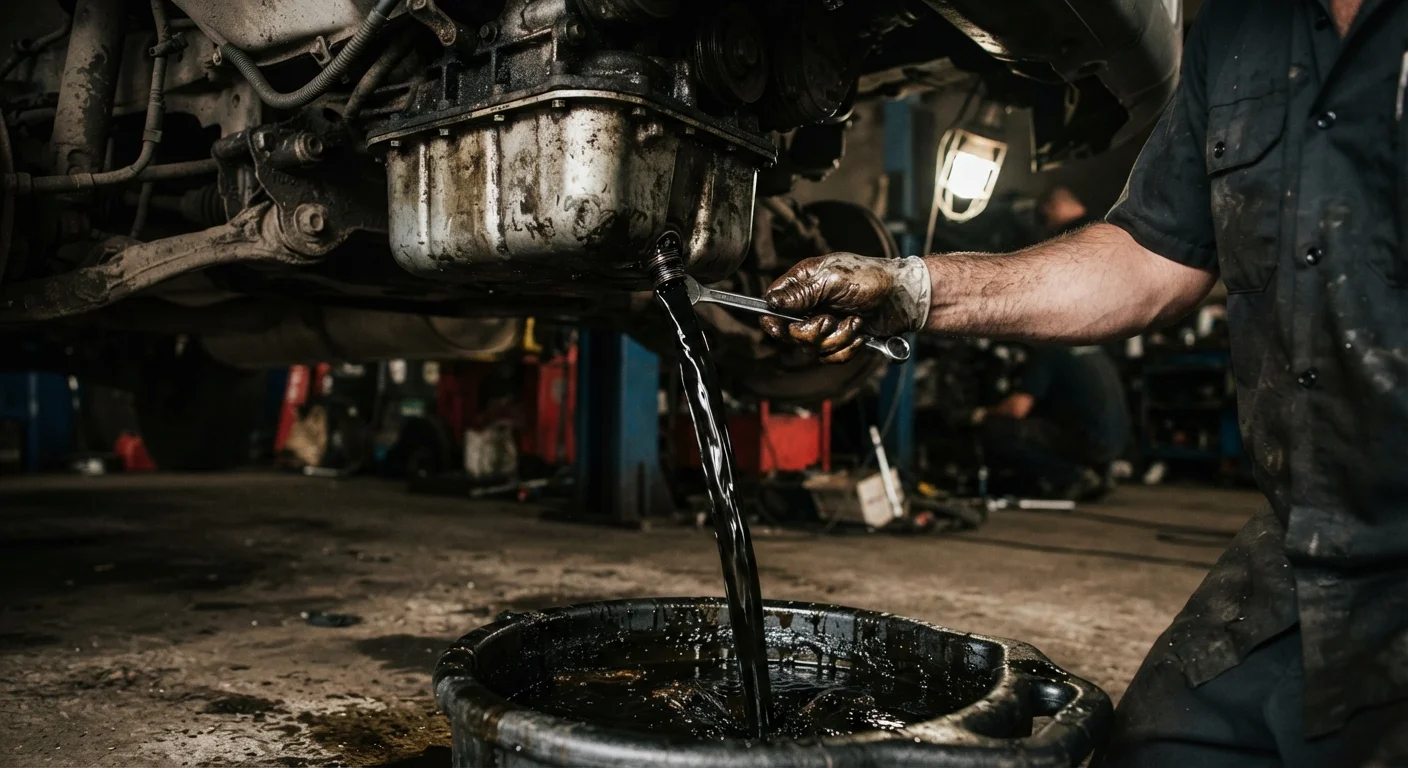
What Oil Actually Does Inside Your Engine
Motor oil performs several critical jobs simultaneously: it lubricates moving metal parts to reduce friction, carries heat away from the combustion chamber, suspends and transports contaminants to the filter, and helps prevent corrosion on internal surfaces. When oil is fresh and clean, it handles these tasks efficiently. As it ages and accumulates heat cycles, its molecular structure breaks down and its additive package - the chemistry that makes it effective - depletes.
The result is oil that's thicker, darker, and far less capable. What was once a protective film between metal surfaces becomes a liability. And unlike a flat tire or a warning light, degraded oil gives drivers almost no immediate, visible signal that damage is accumulating with every mile.
For a full reference on when oil changes and other services are typically due, see our routine maintenance intervals guide.
Common Mistakes Drivers Make With Oil Changes
Even well-intentioned drivers routinely make errors that shorten engine life. Understanding the most common ones - and why they happen - is the first step toward avoiding them.
Waiting for the oil light to come on before scheduling a change.
Why it happens: Drivers often treat the oil pressure warning light as an oil-change reminder, but it's actually an alert for critically low oil pressure - a far more serious condition than simply overdue oil.
Assuming extended-interval oils mean maintenance can be indefinitely delayed.
Why it happens: The rise of synthetic oils with 7,500- to 10,000-mile change intervals has led some drivers to interpret "longer lasting" as "I can ignore it" - particularly when life gets busy.
Ignoring oil level between scheduled changes.
Why it happens: Drivers often assume that because they had an oil change recently, the level must be fine. But some engines consume a small amount of oil normally, and leaks can develop between services.
Using the wrong oil viscosity or type for the engine.
Why it happens: Grabbing whatever is on sale or available is common, especially when topping off in a pinch. Different engines are engineered to precise oil specifications, and substituting an incorrect viscosity disrupts the intended lubrication film.
Skipping oil changes during periods of low driving activity.
Why it happens: When a vehicle sits unused for months - as many did during extended remote work periods - some owners assume the oil is still fine since the car was barely driven.
If you're unsure whether certain maintenance tasks are worth doing yourself or better left to a professional, our guide on when DIY car maintenance makes sense can help you decide.
The Real Cost of Putting It Off
~$4,000-$8,000+
Typical engine repair or replacement cost
Engine damage resulting from oil neglect often falls into this range, compared with routine oil changes that typically cost under $100 depending on oil type and vehicle.
3-12 months
Time-based oil change interval (typical range)
Most manufacturers specify a time-based interval alongside a mileage limit; whichever comes first should trigger a change, especially for vehicles driven infrequently.
The financial logic of skipping oil changes doesn't hold up under scrutiny. A routine oil change typically costs a fraction of what a single engine repair runs - and engine damage from oil neglect often isn't covered under warranty if service records show gaps in maintenance. More critically, sludge-related engine failure can render a vehicle undrivable, turning a minor expense into a major one with little warning.
Sludge Buildup Can Be Irreversible
When oil is left too long, it oxidizes and breaks down into a thick, tar-like sludge that coats internal engine passages and restricts oil flow. Once sludge accumulates significantly, it can block oil pickup screens and starve critical components of lubrication - damage that often cannot be fully reversed with a simple flush. In severe cases, the only solution is a partial or complete engine rebuild.
It's also worth noting that oil maintenance interacts with other vehicle systems. For example, running low-quality or degraded oil stresses seals and gaskets, which in turn can cause leaks that affect other components. Keeping up with oil changes is part of a broader maintenance discipline - one that includes tire care habits and seasonal readiness checks like those covered in our winter driving preparation guide.
Short Trips Are Harder on Oil Than Highway Driving
Frequent short trips - where the engine never fully reaches operating temperature - are particularly harsh on oil. Moisture and fuel byproducts that would normally burn off during longer drives accumulate in the oil instead, accelerating degradation. Drivers who primarily make short, local trips should consider changing oil closer to the shorter end of their manufacturer's recommended interval range.