Why Tire Maintenance Pays Off
Tires are the only point of contact between your vehicle and the road, yet they're among the most neglected items in routine car care. Worn or improperly maintained tires affect braking distance, wet-weather grip, and fuel economy - all of which have real safety consequences. The good news is that a few consistent habits can add thousands of miles to tire life and meaningfully reduce risk on the road.
For a broader look at how tires fit into overall vehicle readiness, see our guide to routine maintenance intervals and our pre-trip checklist for long drives.
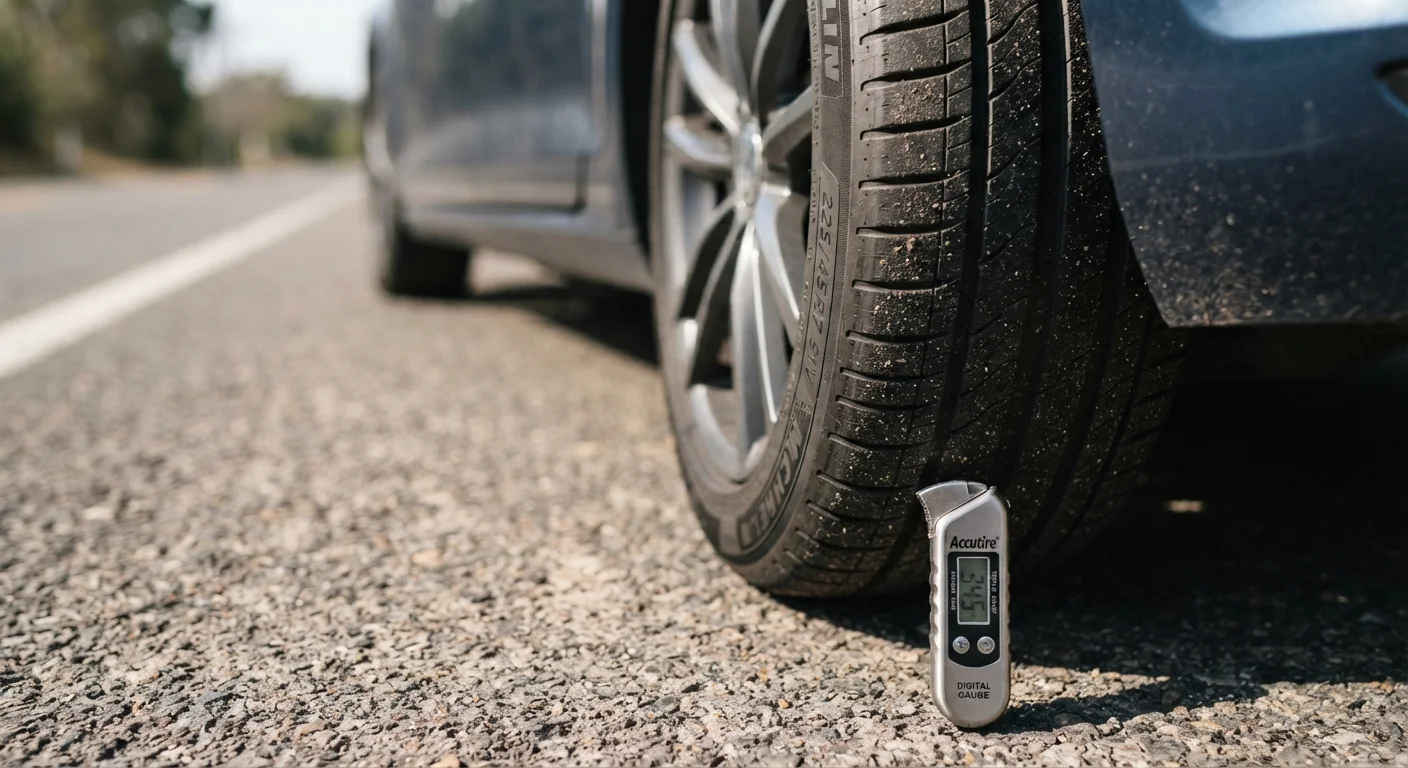
Check tire pressure at least once a month and before long trips
Tires naturally lose one to two PSI per month, and pressure also drops with temperature - roughly one PSI for every 10°F decrease. Running tires underinflated increases rolling resistance, generates excess heat, and accelerates shoulder wear. Overinflation stiffens the tire and concentrates wear in the center tread.
Rotate tires every 5,000 to 7,500 miles
Front tires on front-wheel-drive vehicles carry the engine weight and handle steering forces, so they wear faster than rears. Regular rotation redistributes that load so all four tires wear at a similar rate, maximizing the mileage from a full set.
Have wheel alignment checked annually or after a significant impact
Hitting a pothole or curb can knock suspension geometry out of specification. Even small misalignment causes tires to scrub against the road at a slight angle continuously, creating rapid one-sided or feathered wear that can't be reversed once it appears.
Inspect tires visually every time you fuel up
Brief visual checks take seconds and can catch embedded nails, sidewall bulges, or cracking before they lead to a flat or blowout. Sidewall damage in particular is often not repairable and signals a tire that should be replaced.
Keep tires properly balanced when mounting or after noticing vibration
Imbalanced tires create vibration that is transmitted through the steering wheel and floorboard. Beyond driver discomfort, that vibration causes uneven wear called cupping, which shortens tire life and can mask or worsen suspension wear.
Quick Actions You Can Take Today
Not every tire care habit requires a shop visit. Several of the most impactful steps take only minutes and cost nothing beyond a basic gauge or a few moments of attention in your driveway.
Understanding Wear Patterns and What They Signal
Uneven tread wear is one of the clearest indicators that something is off with your vehicle's setup. Center wear typically points to chronic overinflation; edge wear suggests underinflation. Cupping or scalloping - a wave-like pattern around the tire - often signals worn shocks or struts. One-sided wear is a classic sign of misalignment.
~25%
Fuel economy loss from underinflated tires
The U.S. Department of Energy estimates that tires underinflated by just 1 PSI can reduce fuel economy by about 0.2%, with losses compounding across multiple PSI of deficit.
1-2 PSI
Pressure lost per month naturally
Tire industry guidance consistently notes that passenger tires lose approximately one to two PSI monthly through normal permeation, independent of any puncture or valve issue.
Learning to read these patterns gives you early warning before damage becomes irreversible. If you notice unusual wear, have a qualified mechanic check alignment and suspension components promptly. For winter-specific tread concerns, our article on winter driving preparation covers what to look for before cold weather arrives.
Understanding tread compound differences also matters - our comparison of all-season vs. winter tires explains how construction affects real-world performance.
Use the Penny Test for Tread Depth
Insert a penny into the tread groove with Lincoln's head facing down. If you can see the top of Lincoln's head, the tread depth is below 2/32 of an inch - the legal minimum in most U.S. states and the point at which wet-weather braking distance increases significantly. For added margin, many safety organizations recommend replacing tires at 4/32 inch. This simple check requires no tools and takes about 30 seconds per tire.
Driving Habits That Protect Your Tires
Maintenance procedures matter, but how you drive has a significant effect on wear rate. Hard acceleration spins tires against the pavement; aggressive braking generates friction that scrubs tread off the contact patch. Fast cornering loads the outer edges unevenly. These forces are multiplied on rough or unpaved surfaces.
“The way you drive determines how quickly your tires wear far more than the brand name on the sidewall. Smooth, consistent inputs are the cheapest tire upgrade available.”
— Tire Industry Association, U.S. trade association representing tire manufacturers, retailers, and service professionals
Smoother inputs - gradual acceleration, early braking, wider cornering lines - distribute stress more evenly and preserve tread depth over time. This is especially relevant when towing, where load weight increases tire stress considerably. See our guide to towing safely for tire and load guidance specific to that situation.
If you ever experience a sudden tire failure at speed, knowing how to respond calmly is critical - our article on handling a blowout at highway speed walks through the safest response steps.