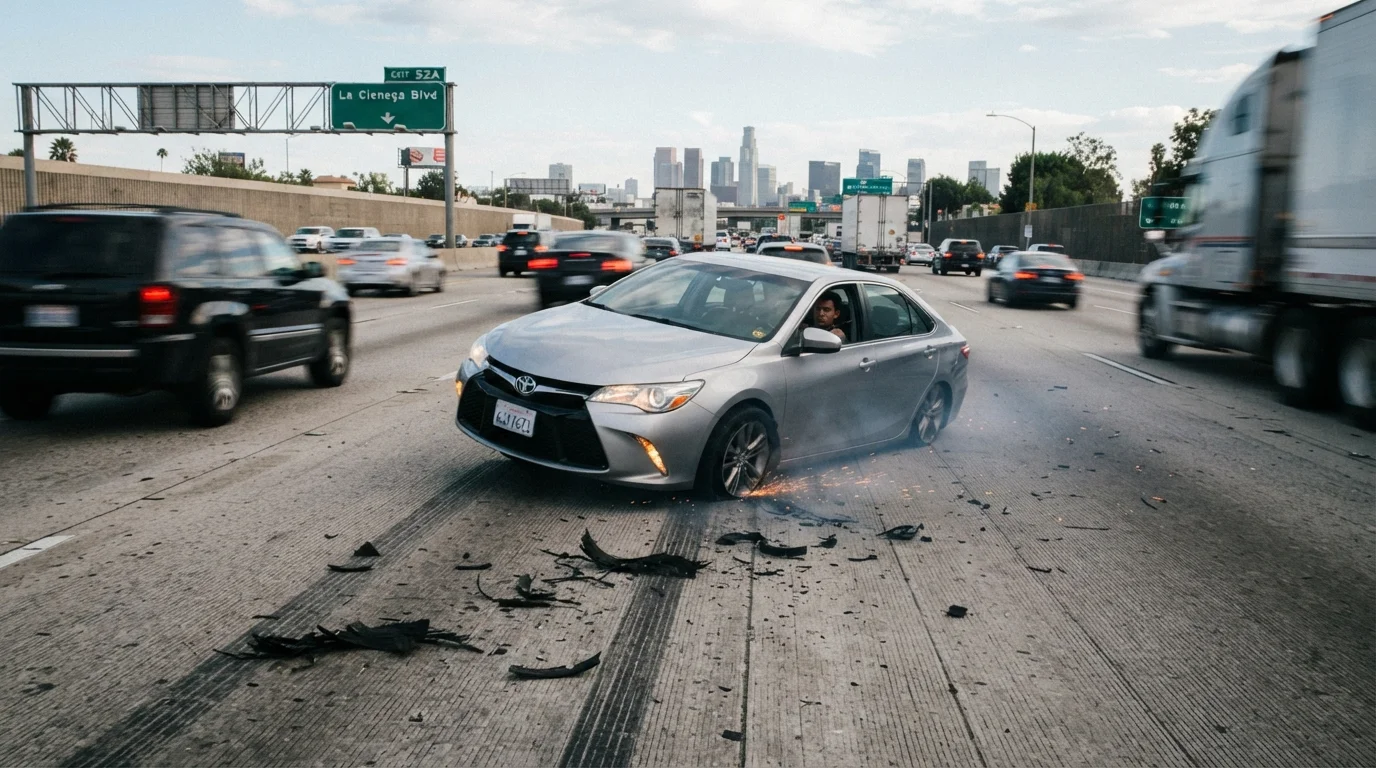
Why Blowouts Are So Dangerous - and So Mishandled
A tire blowout at highway speed is one of the most startling events a driver can experience. The explosive sound, the sudden vibration, and the immediate pull on the steering wheel all conspire to trigger panic - and panic almost always produces the wrong response. Studies by the National Highway Traffic Safety Administration (NHTSA) have consistently identified loss of vehicle control after a tire failure as a leading contributor to serious highway crashes, particularly rollovers.
What makes blowouts uniquely dangerous is that the correct response runs counter to every instinct. When a car pulls hard or shakes violently, the natural reaction is to brake and turn away from the problem. Both actions can be catastrophic at speed. Sudden hard braking after a blowout transfers weight dramatically to the front wheels and can cause the vehicle to spin. Jerking the wheel amplifies the vehicle's yaw and can initiate a rollover, especially in taller vehicles like SUVs and trucks.
Understanding why blowouts behave the way they do - and how vehicle dynamics change when a tire suddenly loses pressure - is the foundation of responding correctly. This is similar to other sudden-loss-of-control situations on the road. For example, hydroplaning requires a similarly counterintuitive response, where braking instincts also make the situation worse.
Prevention Is the Best Defense
Most highway blowouts are preventable. Maintaining proper tire inflation, checking tread depth regularly, and replacing tires that show sidewall cracking or are over six years old all reduce blowout risk significantly. See our tire care habits guide for a full maintenance checklist.
What to Do After You've Stopped Safely
Once your vehicle is secured on the shoulder, your priority shifts from vehicle control to personal safety and getting help. Keep hazard lights running at all times. If you have reflective triangles, deploy them behind the vehicle - most traffic safety guidance recommends placing them at intervals of roughly 100, 200, and 300 feet behind your car to give approaching drivers adequate warning.
Before attempting to change the tire yourself, confirm the surface is stable and level, traffic is not an immediate hazard, and you have all necessary equipment. If any of those conditions are not met, staying in the vehicle and calling roadside assistance is the right call. Roadside deaths from being struck while outside a disabled vehicle are a documented and serious hazard.
If you do change the tire and fit a compact spare - sometimes called a "donut" - be aware that these spares typically have a maximum speed rating of 50 mph and a limited mileage range before they must be replaced. Check your owner's manual for your specific vehicle's spare tire limitations.
Do Not Change the Tire in a Live Lane
Once you reach the shoulder, never attempt to change a tire while partially in a travel lane or on a narrow roadway shoulder with fast-moving traffic nearby. Move as far off the road as possible, activate hazard lights, and if conditions are unsafe, stay in the vehicle with your seatbelt fastened and call for roadside assistance. Standing outside a vehicle on a busy highway shoulder carries serious injury risk.
Finally, once you are safely back on the road, it is worth considering what caused the blowout in the first place. Certain driving habits - like ignoring tire pressure warnings or consistently overloading a vehicle - quietly increase blowout risk over time. And if you want to avoid ending up in this situation again, our guide to tire care habits walks through the maintenance steps that keep tires in safe condition for the long haul. Vehicle control emergencies, whether a blowout, a skid, or a spinout, all reward the same quality: a driver who has thought through the correct response before crisis strikes.