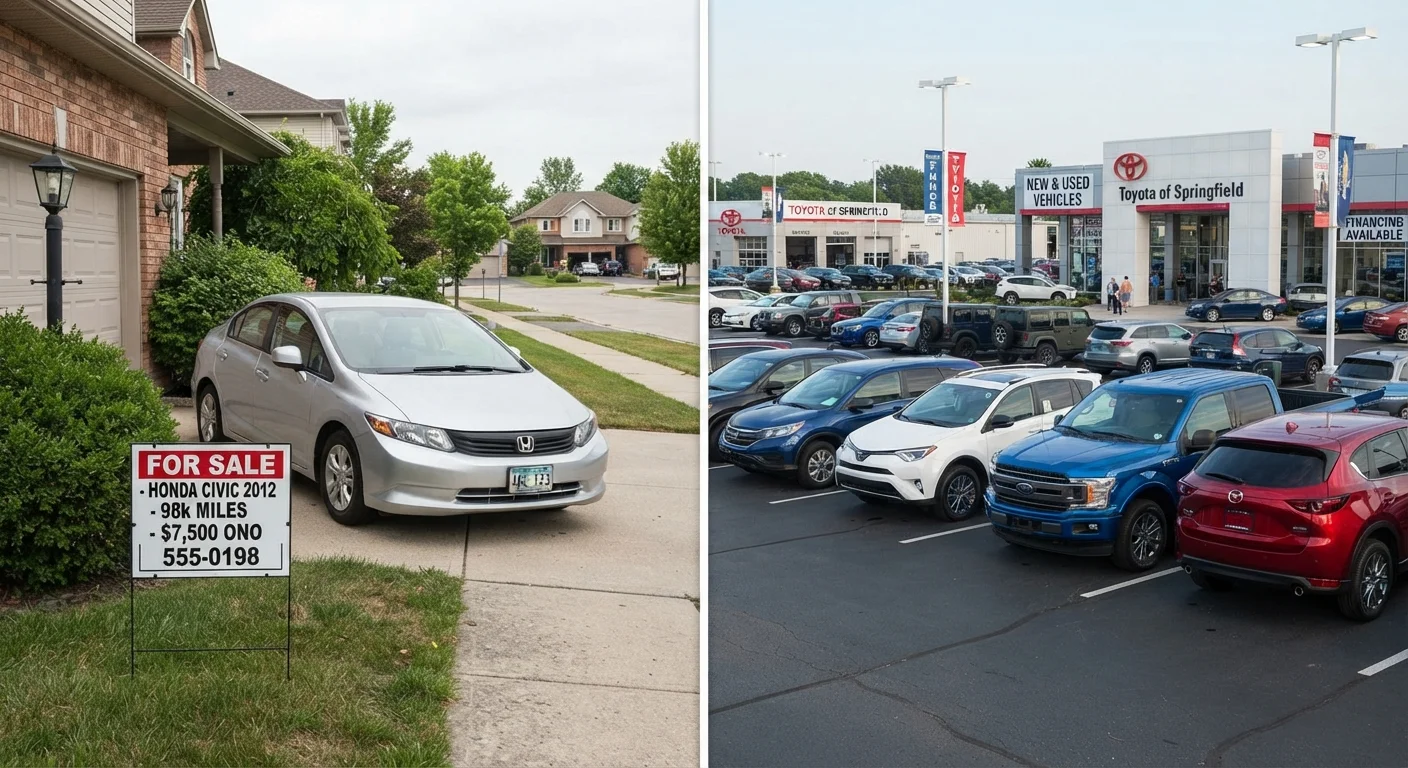
Price and Negotiation: Where the Real Difference Starts
Private sellers generally list vehicles closer to or below market value because they aren't covering overhead costs - no lot rent, no reconditioning labor, no sales commissions. That gap can translate to real savings, sometimes several hundred to a few thousand dollars depending on the vehicle.
Dealerships build margin into their used car prices to cover inspection, detailing, and the cost of carrying inventory. They may also add documentation fees, dealer prep charges, and certification fees that aren't always visible in the advertised price. That said, dealers are accustomed to negotiating, and their pricing is often based on market data tools that give you a reasonable benchmark. For a deeper look at how dealer pricing works, see how dealer invoice and MSRP differ.
With a private seller, negotiation is more personal and can be more flexible - but it also requires the buyer to do more homework on fair market value independently.
Consumer Protections and Legal Recourse
This is one of the starkest differences between the two channels. Licensed dealerships operate under state and federal regulations, including the FTC's Used Car Rule, which requires dealers to display a Buyers Guide disclosing warranty terms on every used vehicle. Many states also give buyers limited recourse through consumer protection statutes if a dealer engages in deceptive practices.
Private sales carry almost no built-in consumer protections. Most are completed "as-is," meaning the seller has no legal obligation to disclose defects they weren't aware of - and in many states, even known defects carry limited liability once the sale is complete. Understanding exactly what "as-is" means before you sign is critical; what 'as-is' really means when buying a used car breaks this down in detail.
Never Skip the Pre-Purchase Inspection
Regardless of whether you're buying from a private individual or a licensed dealer, always have the vehicle inspected by an independent mechanic before finalizing the sale. A dealer's in-house inspection serves the dealer's interests, not yours. Budget roughly $100-$200 for a qualified inspection - it can reveal hidden problems that could cost thousands to repair.
Neither a private sale nor a dealer sale eliminates the need for a vehicle history report and an independent pre-purchase inspection. These steps apply regardless of who's selling.
Financing, Warranties, and Added Services
Dealerships offer on-site financing, which can simplify the purchase - but it comes with trade-offs. Dealer-arranged loans may carry higher interest rates than what you'd secure directly through a bank or credit union. It's worth exploring both before you commit. Financing through a dealer vs. your own lender explains the structural differences clearly.
Certified Pre-Owned (CPO) programs - available only through franchised dealers - add manufacturer-backed warranties and multi-point inspections, which can provide meaningful peace of mind on higher-mileage purchases. Independent dealers may offer their own limited warranties, though these vary widely in scope.
Private sellers do not offer financing or warranties. Buyers typically need to arrange their own financing in advance and accept the vehicle entirely at their own risk after the transaction closes.
| Private Seller | Dealership | |
|---|---|---|
| Typical Price | Often lower; less overhead | Higher; includes markup and fees |
| Consumer Protections | Minimal; mostly as-is | Regulated; FTC Buyers Guide required |
| Warranty | None typically | Limited, extended, or CPO options |
| Financing | Must arrange independently | On-site financing available |
| Paperwork Support | Buyer manages most steps | Dealer handles title and registration |
| Negotiation Flexibility | Often more flexible | Structured but negotiable |
| Vehicle Inspection | Buyer arranges entirely | Dealer inspection done; independent still advised |
Paperwork, Title, and the Closing Process
Dealers handle the bulk of the paperwork - title transfer, registration, sales tax collection, and any lien releases. For many buyers, especially those buying a used car for the first time, this is a genuine convenience. First-time used car buyers will find this support particularly valuable.
In a private sale, both parties are responsible for managing the transfer correctly. This typically means the seller provides a clean, lien-free title; the buyer pays sales tax directly at the DMV; and both sign the title according to state requirements. Errors in this process can create legal complications, including title disputes or registration delays.
Before completing any private purchase, verify the seller's name matches the title, check for any outstanding liens using a vehicle history service, and confirm your state's specific title transfer requirements. Title issues - especially salvage or rebuilt designations - can affect insurability and resale value. Understanding rebuilt vs. salvage titles is a useful companion read if you encounter either.
This article is for general informational purposes only and does not constitute legal, financial, or professional automotive advice. Consult qualified professionals for decisions specific to your circumstances.