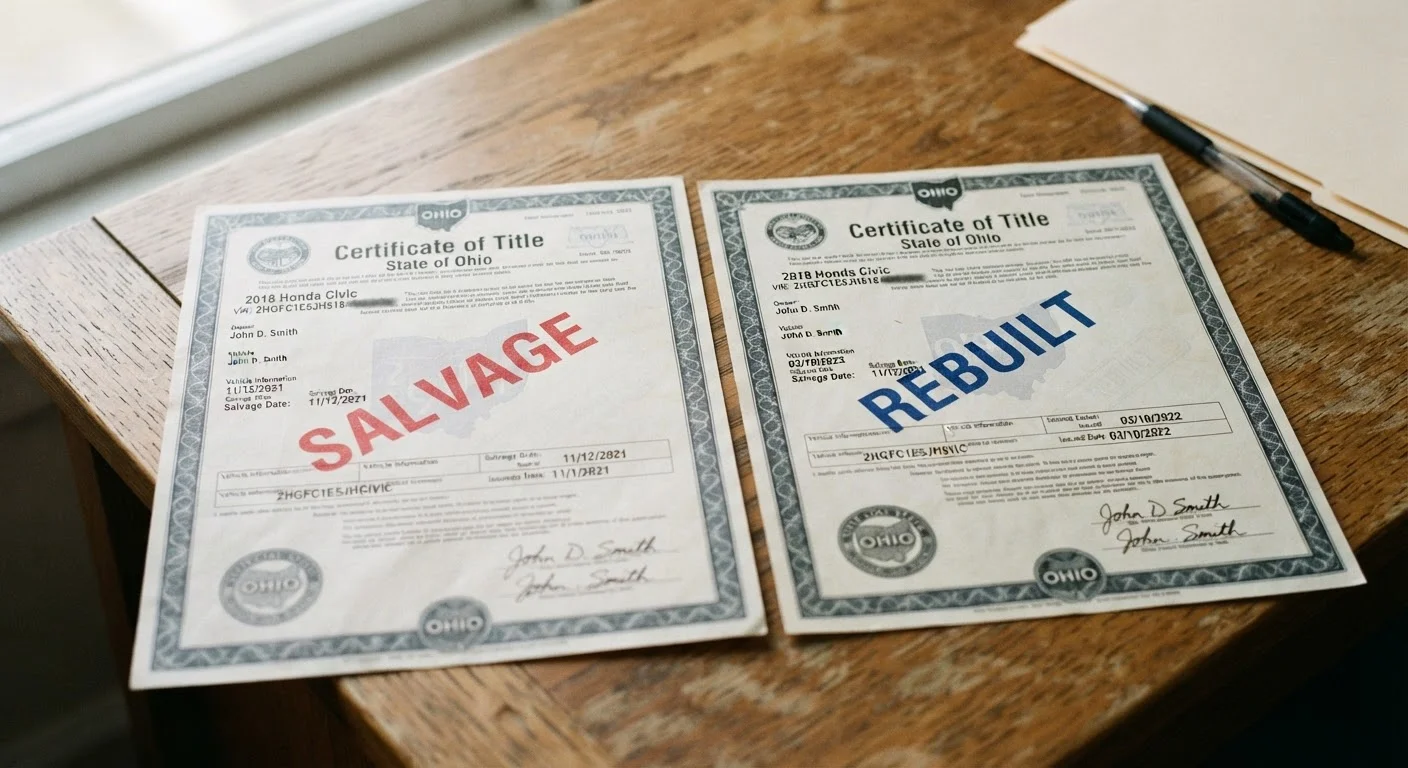
What Each Title Type Actually Means
When an insurer decides the cost to repair a damaged vehicle exceeds a certain percentage of its pre-damage value - typically somewhere between 75% and 100%, depending on the state - it declares the vehicle a total loss and takes ownership. The state then brands the title as salvage. At that point, the vehicle cannot be registered for road use. It cannot legally be driven on public roads, and its value as a conventional used car is effectively gone.
A rebuilt title - sometimes called a rebuilt salvage title - comes later, after a salvage vehicle has been repaired and passed a state-mandated inspection. The inspection is meant to confirm the car is roadworthy, though the depth and rigor of that process varies considerably from one state to another. Once cleared, the state issues a new title branded as rebuilt or reconstructed. The vehicle can now be registered and driven legally.
The important thing to understand is that the rebuilt designation doesn't erase the history - it replaces one brand with another. Any future buyer can still see that the vehicle was once a total loss. For more context on how damaged vehicles are categorized and sold, see our guide on flood-damaged and salvage title cars.
| Criterion | Salvage Title | Rebuilt Title |
|---|---|---|
| Road Legal | No - cannot be registered | Yes - passes state inspection |
| Damage History | Total loss declared by insurer | Total loss, subsequently repaired |
| Traditional Financing | Generally not available | Rarely available |
| Full Coverage Insurance | Not applicable | Often declined by insurers |
| Typical Price vs. Clean Title | Deeply discounted | 20%-40% below market |
| State Inspection Required | No (pre-repair) | Yes (post-repair) |
| Resale Viability | Very limited | Possible but discounted |
How These Titles Affect Financing, Insurance, and Resale
The practical consequences of each title type extend well beyond the purchase price. Financing is a major obstacle: most traditional lenders - banks, credit unions, and auto finance companies - will not issue loans on salvage or rebuilt-title vehicles. This means buyers often need to pay cash or seek alternative financing arrangements, which narrows the pool of potential buyers significantly.
Insurance presents a similar challenge. For a salvage-titled car, standard coverage isn't applicable because the vehicle isn't road-legal. For rebuilt-title vehicles, many insurers will offer liability coverage but decline to write comprehensive or collision coverage. Without full coverage, a lender won't finance the car - another reason financing is so difficult.
20%-40%
Rebuilt title discount vs. clean title
Industry estimates consistently place rebuilt-title vehicles well below clean-title equivalents in private and dealer markets.
75%-100%
Damage threshold triggering total loss
States set their own total-loss thresholds; most fall somewhere between 75% and 100% of the vehicle's pre-damage value.
Resale value is also persistently affected. Even after a vehicle receives a rebuilt title and passes inspection, it typically sells for 20%-40% less than a comparable clean-title car. That discount can seem attractive, but it's worth weighing against the potential costs of unknown residual damage, higher out-of-pocket repair bills, and the difficulty of reselling the car again in the future.
If you're comparing your overall used car options, our breakdown of new versus certified pre-owned vehicles may help frame where rebuilt-title cars fit into the broader market.
What Buyers Should Do Before Purchasing Either Type
Due diligence is non-negotiable when a salvage or rebuilt title is on the table. Start with a vehicle history report from a recognized data provider - this will show the original total-loss event, any prior ownership, and whether the rebuilt designation was properly recorded. It won't show everything, but it establishes a baseline.
For rebuilt-title vehicles specifically, request documentation of the repairs: what was replaced, what parts were used, and which shop performed the work. Aftermarket or salvage parts are commonly used in rebuilt vehicles, and quality can vary significantly. A pre-purchase inspection by an independent, qualified mechanic is strongly advisable - ideally one with experience in collision repair or structural assessment.
Also verify the inspection process in the specific state where the vehicle was rebuilt. Some states conduct thorough VIN verification and safety checks; others have minimal requirements. A rebuilt title in one state may not reflect the same scrutiny as one from another.
Whether you're dealing with a private seller or a dealer, the same caution applies. Our article on buying from a private seller versus a dealership covers what to expect from each transaction type and where the risks differ.
This article provides general educational information about vehicle title types and is not legal or financial advice. Regulations governing title branding and inspection requirements vary by state. Consult your state's DMV and a qualified professional for guidance specific to your situation.