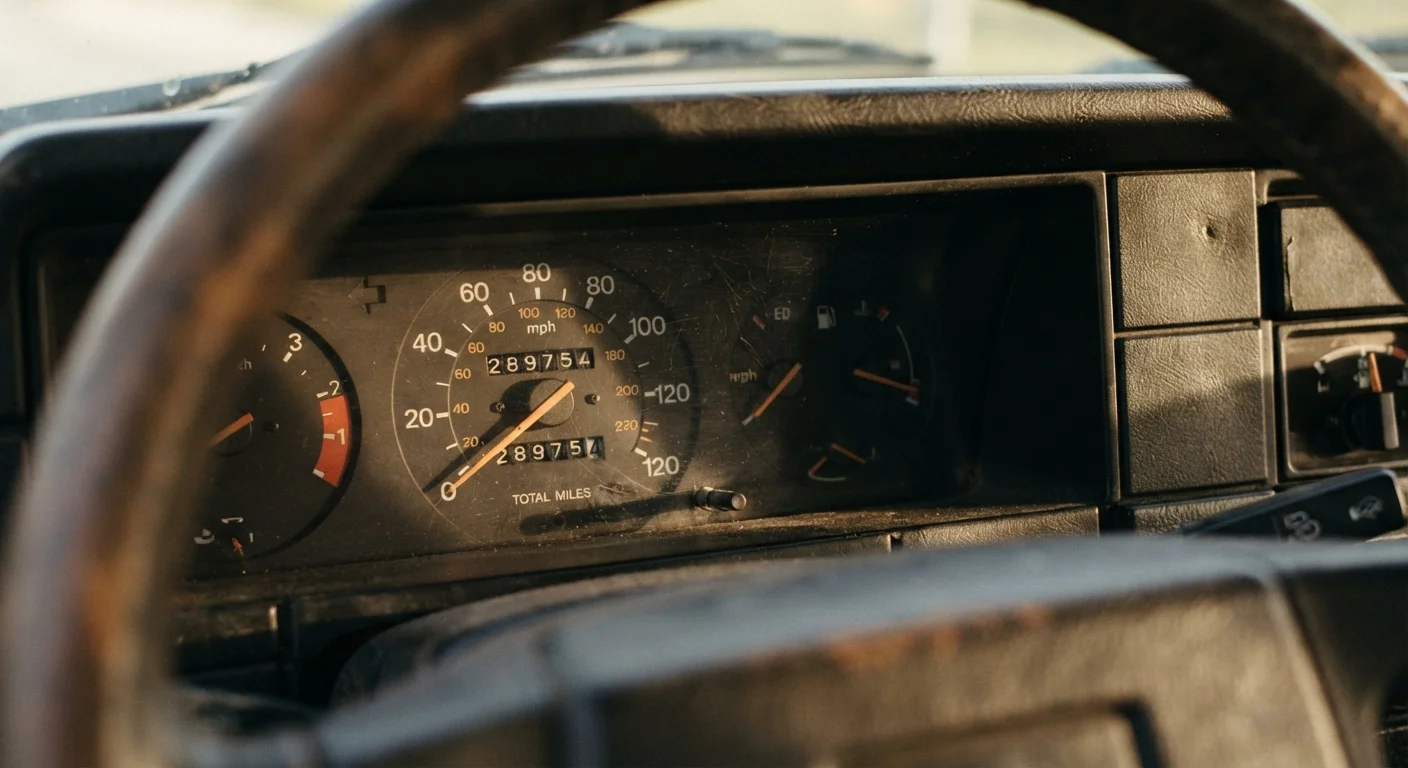
Why Mileage Influences Price - But Not Evenly
Every mile driven adds wear to an engine, transmission, brakes, and suspension. That accumulated use translates into a shorter remaining service life, which is exactly what a buyer is purchasing when they buy used. Logically, more miles should mean less value - and broadly, that holds true. But the relationship is far from linear.
A car going from 10,000 to 20,000 miles loses relatively little in percentage terms because the vehicle is still essentially new. The same 10,000-mile increase from 90,000 to 100,000 miles can trigger a meaningful price drop, even if the car is in identical mechanical shape. What changes is buyer psychology and the proximity to major maintenance milestones.
This means two sellers with cars in similar condition but on either side of a round-number threshold - say, 98,000 versus 102,000 miles - can face noticeably different buyer expectations. Understanding where those thresholds sit helps both buyers and sellers approach negotiations with realistic context. For a broader look at how vehicles lose value over time, see our guide to car depreciation.
~15,000
Average miles driven annually by U.S. drivers
According to U.S. Department of Transportation data, the national average hovers around 14,000-15,000 miles per year, making it a useful benchmark for assessing whether a used car's mileage is above or below average for its age.
100,000
Miles at which buyer hesitation peaks
Industry pricing analysts and consumer surveys consistently identify six figures on the odometer as the single most psychologically significant threshold in the used-car market.
~20%
Typical price discount for crossing 100K miles
Used-car pricing data generally reflects a noticeable drop in appraised value when a vehicle crosses the 100,000-mile mark, though the exact figure varies by make, model, and condition.
The Key Mileage Thresholds That Move the Needle
While every vehicle and market is different, certain mileage bands consistently influence used-car pricing:
- Under 30,000 miles: A car in this range is still considered low mileage and commands near-new pricing for its model year. Buyers expect minimal wear and few near-term maintenance costs.
- 30,000-60,000 miles: This is the sweet spot for many used-car buyers - some depreciation has already occurred, yet major systems are generally in good shape. Pricing remains relatively strong.
- 60,000-100,000 miles: Value continues to decline. Buyers become more cautious as timing belt intervals, transmission services, and other maintenance items approach. A well-documented service history matters more here.
- 100,000+ miles: This is the most psychologically significant threshold. Many buyers either avoid it entirely or demand a steep discount. However, vehicles from manufacturers with strong reliability reputations can hold value better than average past this mark.
Calculate Mileage Relative to Vehicle Age
Divide the total mileage by the vehicle's age in years to get an average annual figure. If a 7-year-old car has 63,000 miles, that's about 9,000 miles per year - well below average. If a 5-year-old car has 90,000 miles, that's 18,000 per year - above average. This context makes the raw odometer number far more meaningful.
It is worth noting that average annual mileage in the U.S. runs roughly 12,000-15,000 miles per year according to federal transportation data. A vehicle's mileage relative to its age is often more telling than the raw number alone.
When Mileage Stops Being the Dominant Factor
Beyond roughly 150,000 miles, the dynamic shifts. At this stage, buyers are already heavily discounting for high mileage, and the difference between 155,000 and 175,000 miles rarely produces a proportional price gap. What buyers focus on instead is condition - does the car run well, is the interior intact, and is there a service record to support the seller's claims?
Maintenance history can meaningfully offset high mileage at any stage, but it becomes especially important past 100,000 miles. A vehicle with documented oil changes, timing belt replacements, and known repair history is a fundamentally different purchase risk than one with a blank folder. What mileage really tells you about a used car's condition explores this relationship in more depth.
“Mileage is a proxy for wear, but it's an imperfect one. The real question is how those miles were accumulated and whether the vehicle was maintained. A well-kept car with 120,000 miles can be a better buy than a neglected one with 60,000.”
— Automotive Consumer Advisory Panel, Industry consumer education resource
Market demand also plays a role. Popular models with strong reliability reputations in segments with limited used inventory can sustain higher prices even at elevated mileage levels. A rare configuration or in-demand body style adds another variable that can partially override mileage-based discounting.
What Sellers and Buyers Should Take Away
If you are selling, try to time a sale before crossing a major threshold if it is practical to do so. Crossing from 99,000 to 101,000 miles between the time you decide to sell and when you list can cost more than the miles themselves suggest. Presenting complete maintenance records, a clean interior, and an honest condition description also helps buyers feel confident despite the odometer reading.
If you are buying, avoid letting mileage be your only filter. A lower-mileage vehicle with no service history or a prior accident may represent more financial risk than a higher-mileage car with a clean record. Use mileage as a starting point for your evaluation, not a final verdict.
For sellers preparing a vehicle for market, what actually moves the needle before listing covers where to focus your time and money. If you are already managing a high-mileage vehicle, setting realistic expectations for a high-mileage sale provides a grounded framework for pricing and positioning.