Why Clothing Is Never Just Clothing
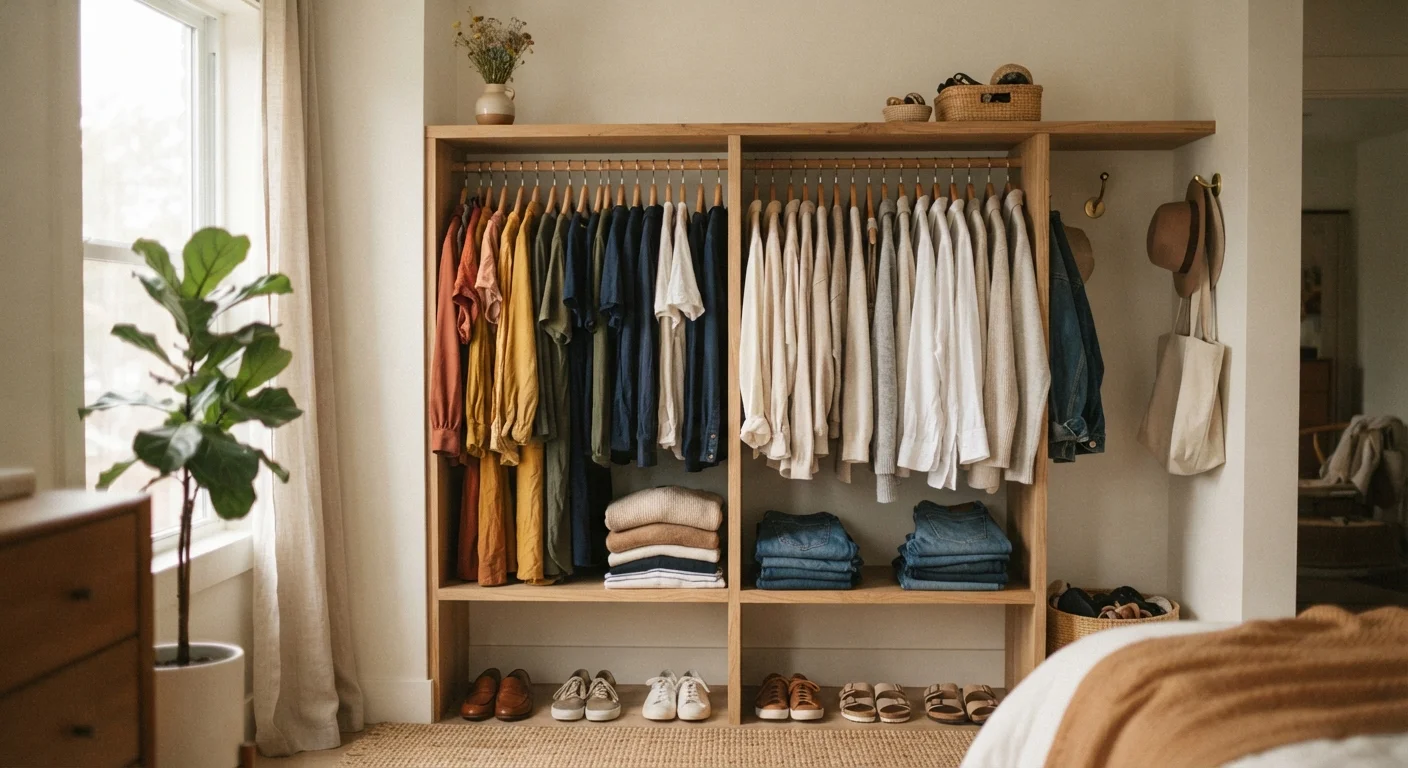
Every morning, even when it feels automatic, you make choices. That worn-in denim jacket you grab without thinking? The dress you keep pushing to the back of the rack? Neither decision is random. Across decades of psychological research, clothing has emerged as one of the most consistent outward signals of inner identity - shaped by mood, memory, aspiration, and self-worth.
What makes this fascinating - and useful - is that your wardrobe doesn't only reflect who you are right now. It also captures who you wanted to be when you bought something, who you're afraid of becoming, and which version of yourself you feel most comfortable letting the world see. That's a lot of emotional weight for a closet to carry.
Explore the everyday fashion hub if you're ready to start thinking practically about what a wardrobe that works for your real life could look like.
~20%
Clothes worn regularly from an average wardrobe
Consumer behavior researchers and wardrobe consultants consistently observe that most people regularly reach for roughly a fifth of what they own.
57%
People who feel more confident in planned outfits
A survey by a U.S. fashion psychology researcher found that intentional outfit planning correlated with higher reported confidence during the day.
The Gap Between Aspiration and Reality
Most of us wear a surprisingly small percentage of what we own - studies in consumer behavior consistently point to this pattern. The rest hangs there as a kind of aspirational archive: the blazer for the confident professional you were planning to become, the floral dress from a trip you took years ago, the workout gear purchased alongside good intentions.
This gap between the wardrobe you have and the wardrobe you use is one of the most revealing things a closet can tell you. It's not a character flaw - it's simply data. When you look at those unused items honestly, you can start to ask: Does my wardrobe reflect my actual life, or an imagined one?
Our guide to dressing for the life you actually live walks through how to bridge that gap practically, so your clothes start working with your real routine rather than against it.
Try the One-Week Wear Test
For one week, hang a ribbon or clip on every item you actually wear. At the end of the week, look at what's unmarked - those are your aspiration pieces. Asking yourself why you're not reaching for them is far more revealing than any style quiz.
What a Wardrobe Audit Actually Reveals
A wardrobe audit - pulling everything out, being honest about what gets worn and what doesn't - does something more than tidy your closet. It creates a clear picture of the relationship between your self-image and your style choices. Patterns emerge quickly: Do you gravitate toward colors that feel safe? Do you own formal pieces you never reach for, because your actual day-to-day is more casual? Are there items that always make you feel good versus ones that quietly undermine your confidence?
These patterns are useful, non-judgmental data. They don't mean you need to overhaul everything - they simply help you understand what's actually working. A style audit checklist can structure this process if you find the open-ended version overwhelming.
Building a Wardrobe That Reflects the Real You
Once you understand what your wardrobe reveals, you can start making more intentional choices. That doesn't mean buying more - often, it means buying less, but better-aligned with who you actually are and how you actually spend your days. A capsule wardrobe versus a full wardrobe breakdown can help you figure out which approach fits your personality and lifestyle best.
If you feel like your closet needs a more complete reset, our guide to building a wardrobe from scratch offers a grounded starting point. And if you want a structured method for figuring out what's worth keeping, our closet audit guide walks you through it step by step.
Style isn't about meeting a standard - it's a tool for self-expression and everyday confidence. When your wardrobe reflects you clearly, getting dressed stops feeling like a guessing game and starts feeling like an act of intention.
“Clothes are never a frivolity: they always mean something. The way we dress is a form of self-expression that reaches back to the beginning of human culture.”
— James Laver, Historian and museum curator, Victoria and Albert Museum