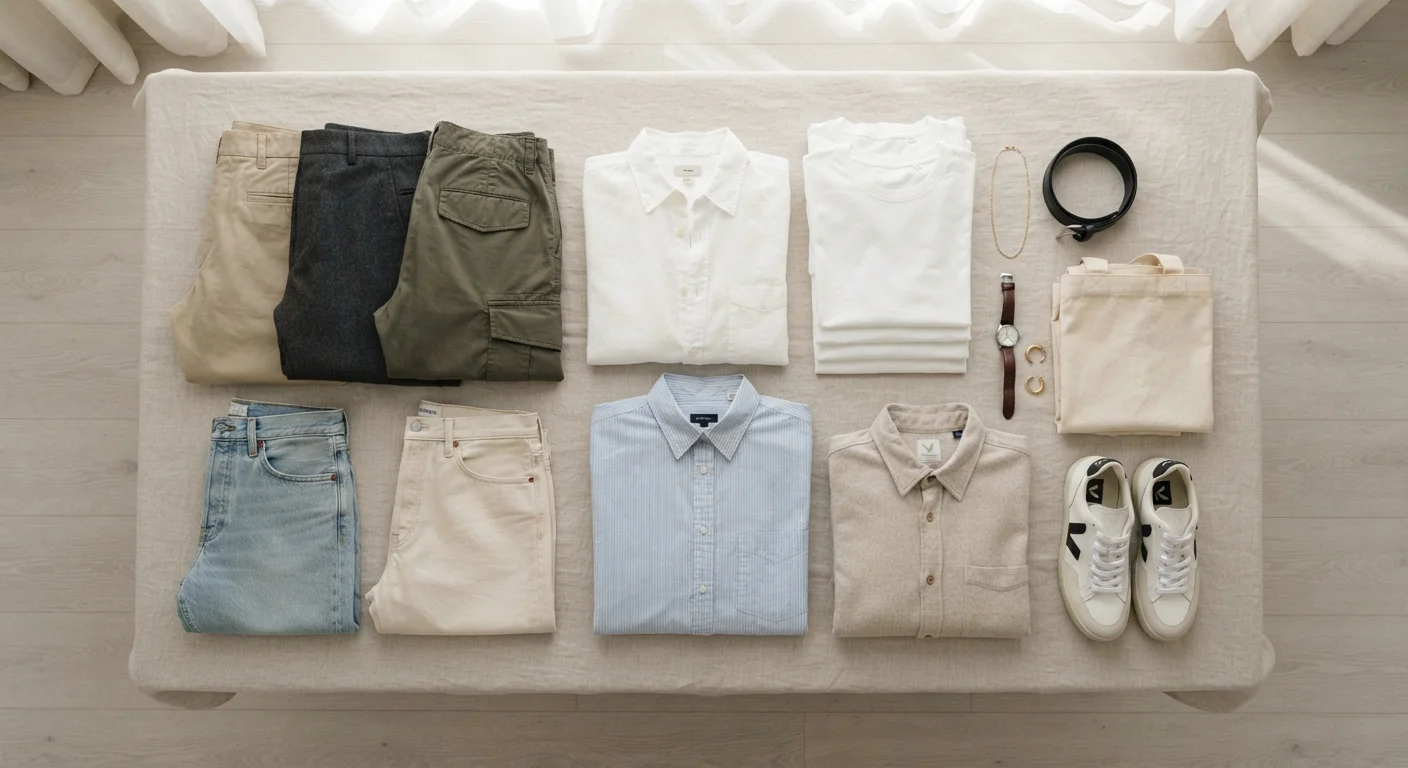
What Gender-Neutral Style Actually Means
Gender-neutral style isn't a trend with a defined look or a political statement you have to sign onto. At its core, it's simply the practice of choosing clothing based on what you actually like - how it fits your body, how it makes you feel, and what it communicates about your personality - rather than what gender category it was designed for.
For decades, mainstream fashion has sorted clothing into rigid bins: women's and men's, each with their own silhouettes, colors, and expectations. Gender-neutral dressing pushes back against that framework by asking a simpler question: does this work for me? That shift in perspective opens up the full range of what's available - structured blazers, relaxed trousers, minimalist basics, utility pieces - without restriction.
It's worth noting that this approach is genuinely inclusive. Whether you're a woman who prefers the cut of men's Oxford shirts, a man who loves the drape of wide-leg trousers from any section of a store, or someone who doesn't identify within the binary at all, gender-neutral style meets you where you are.
Style and Identity Are Separate Things
Exploring gender-neutral clothing doesn't require you to identify in any particular way, or to explain your choices to anyone. What you wear is a personal decision shaped by comfort, aesthetics, and self-expression. Style is one tool among many for communicating who you are - it doesn't have to carry more weight than that.
Key Building Blocks of a Gender-Neutral Wardrobe
The foundation of gender-neutral dressing is a palette of versatile, well-made pieces that aren't anchored to a specific gender expression. Here's what tends to show up consistently:
- Neutral basics: White, black, grey, navy, and camel tones form the backbone of a flexible wardrobe that mixes across any aesthetic direction.
- Tailored trousers: A well-cut pair of trousers - straight-leg, wide-leg, or cropped - works across countless contexts without leaning masculine or feminine.
- Oversized or relaxed shirts: Button-downs, denim shirts, and linen tops in roomier fits are wardrobe workhorses that suit a wide range of body types.
- Layering pieces: Structured blazers, bombers, and unstructured jackets add definition and polish without gendered coding.
- Simple footwear: Clean sneakers, loafers, boots, and minimalist sandals all work well and don't pull a look in a strongly gendered direction.
The goal isn't to own only shapeless pieces - it's to build a wardrobe where fit, fabric, and color carry the conversation instead of category. See how dressing with intention can help you build that kind of coherent wardrobe.
56%
Young adults open to gender-neutral clothing
A 2019 survey by J. Walter Thompson Intelligence found that 56% of Gen Z respondents shopped outside their own gender's clothing section.
Growing
Gender-neutral fashion market segment
Multiple industry analysts have identified gender-neutral and genderless fashion as a sustained growth category, driven by consumer demand for versatility and inclusivity.
How to Explore It on Your Own Terms
The best place to start is with your existing wardrobe. Pull out the pieces you reach for most often and look at what they have in common. Are you drawn to relaxed silhouettes? Clean lines? Utility details? That honest self-inventory tells you more about your real style than any trend guide can.
From there, experiment with shopping across sections. Trying a pair of men's chinos or a women's blazer purely based on how it fits your body - not its marketing label - is a low-stakes way to expand your options. Pay attention to sizing: men's and women's garments often measure differently, so look for pieces that list actual measurements when possible.
Start With One Piece, Not a Full Overhaul
You don't need to rebuild your wardrobe to explore gender-neutral dressing. Pick one category - trousers, outerwear, or basics - and experiment there first. Getting comfortable with one type of choice makes the broader approach feel natural rather than overwhelming.
If you're building from scratch or on a budget, secondhand shopping is an especially strong move here. Because you're not restricted to one section, the entire inventory of a thrift store or resale app becomes relevant. Secondhand shopping for personal style has real advantages, though it takes patience and a clear sense of what you're looking for.
For a broader roadmap on building any personal style from the ground up, the complete approach to developing a personal style covers the full process from visual inspiration to wardrobe decisions.
Fit, Fabric, and Confidence: The Real Differentiators
Here's the truth that experienced dressers know: fit and fabric quality are what separate a put-together look from a thrown-together one, regardless of what gender the item was made for. A beautifully cut blazer that fits your shoulders well reads as intentional and polished. The same blazer swimming in excess fabric reads as an accident.
This is especially relevant in gender-neutral dressing, where you might be working with garments cut for a different body type. Basic tailoring - taking in a waist, shortening sleeves, hemming trousers - can make almost any piece work for your proportions. It's a small investment that dramatically improves how clothes feel and look.
Fabric choice matters too. Heavier, structured fabrics (canvas, wool, denim) hold shape and tend to feel more deliberate. Lighter, fluid fabrics (linen, viscose, tencel) drape naturally and can soften a look. Both have a place in a gender-neutral wardrobe - it comes down to the mood you're going for.
Finally, confidence is the element that ties everything together. Style - gender-neutral or otherwise - is most effective when it feels genuinely like you. Personal style on a realistic budget is a good reminder that how you wear something matters more than how much you spent on it.
“Style is a way to say who you are without having to speak. When you remove the gender rules from the equation, you actually get closer to what style is really for.”
— Rachel Zoe, Fashion designer and stylist