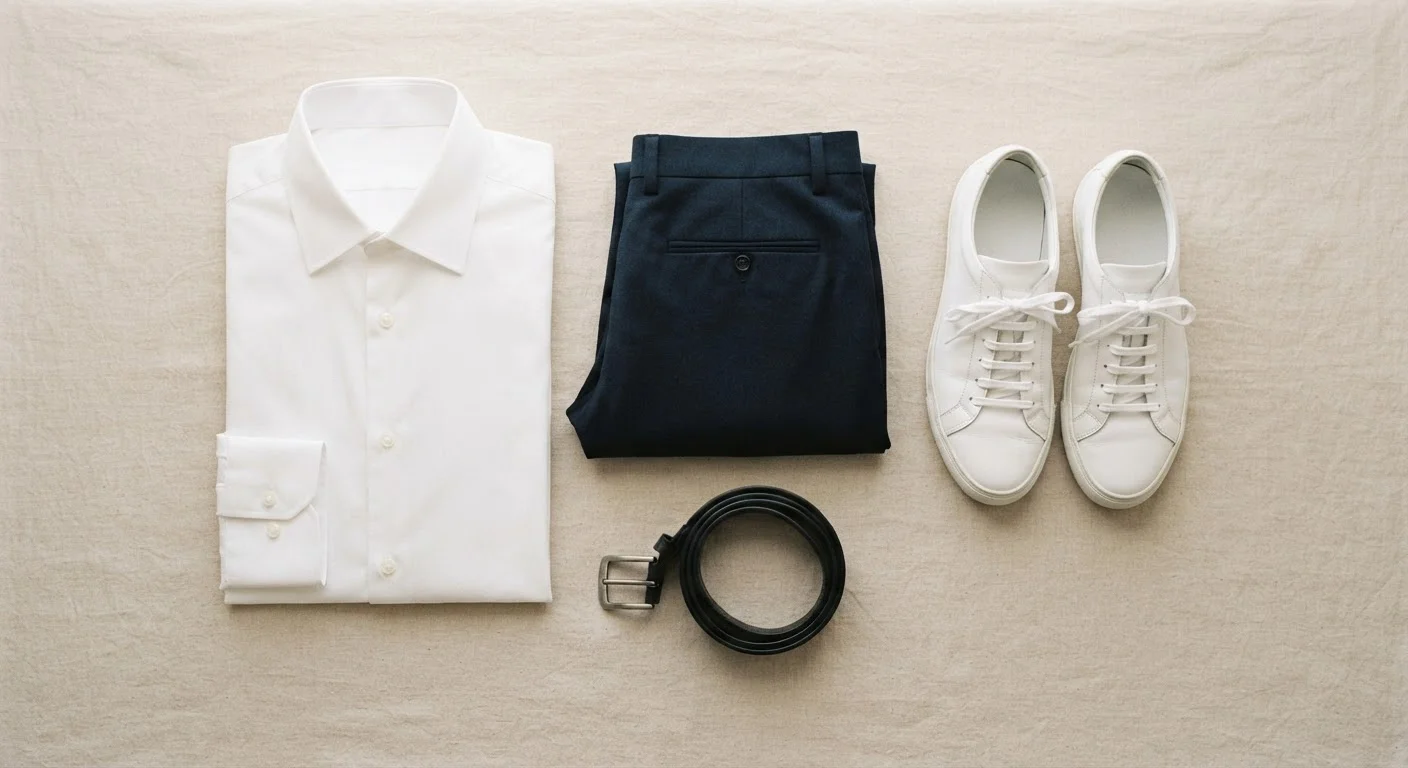
The Phrase Gets Thrown Around a Lot - Here's What It Actually Means
Open any style guide and you'll find "timeless" used freely - as a compliment, a marketing cue, even a vague virtue. But the word earns its keep when applied precisely. Timeless style isn't about a capsule wardrobe checklist or a specific color palette. It refers to a set of dressing principles that hold up across years because they're rooted in proportion, fit, and visual simplicity rather than novelty.
Think of it this way: certain ways of putting clothes together just keep reading as put-together - a well-fitted silhouette in a balanced color story, pieces that don't fight each other for attention. That quality isn't accidental. It's the result of choices that prioritize wearability and coherence over the thrill of the new. That's the core of what timeless style actually refers to.
If you're curious about the broader framework this fits into, our piece on what personal style actually means is a useful companion read.
66%
Americans who say getting dressed causes daily stress
A survey by clothing subscription service Stitch Fix found that roughly two-thirds of American adults feel stressed about what to wear at least occasionally, often linked to wardrobe overwhelm.
~$1,700
Average annual U.S. household spend on apparel
According to the U.S. Bureau of Labor Statistics Consumer Expenditure Survey, American households spend roughly this amount on clothing and apparel each year on average.
What Timeless Style Is Not
Clearing up the misconceptions matters just as much as defining the concept itself.
- It's not the same as boring. Minimalism and neutrals can be timeless, but so can a bold-color blazer worn in a balanced way. Timelessness lives in the principle, not the palette.
- It's not anti-trend. Incorporating a trend-driven piece into an otherwise grounded outfit is a completely valid choice. The distinction is whether your look depends on the trend to work.
- It's not expensive by nature. Price is not a proxy for timelessness. Good fit and thoughtful combination can be achieved at any budget. Personal style on a realistic budget explores exactly that.
- It's not one-size-fits-all. Body shape, skin tone, lifestyle, and identity all influence how timeless principles are applied. There's no single timeless uniform.
A Simple Test for Timeless Potential
Before adding a new piece to your wardrobe, ask: does this work with at least three things I already own, and would I still want to wear it in two years? If the answer to both is yes, it's likely rooted in durable principles rather than pure trend appeal. This isn't a strict rule - it's a useful gut-check that keeps your wardrobe intentional.
The Principles That Make Something 'Timeless'
If it's not a list of garments, what is it? A handful of recurring principles show up in clothing combinations that consistently hold visual relevance:
- Fit over fashion. Clothes that fit the actual body wearing them read as intentional in any era. Proportion - how a garment relates to your frame - matters more than the label.
- Simplicity as a starting point. Outfits that don't compete with themselves visually tend to age better. That doesn't mean no detail, just that detail serves a purpose.
- Versatility across contexts. A timeless piece earns its place by working in more than one setting or combination. Flexibility is part of what makes something durable.
- Color relationships that work. Whether you're drawn to neutrals or saturated tones, combinations that balance rather than clash create a visual coherence that transcends the moment.
These principles can show up in a tailored trouser just as easily as a well-proportioned graphic tee. The category matters less than how the principles are applied. For a deeper dive into building a consistent look around these ideas, see what a signature style actually is.
Applying This in Practice Without Overthinking It
Understanding the concept is one thing; making it work in your daily getting-dressed routine is another. The good news: applying timeless principles doesn't require a wardrobe overhaul or a style education.
Start by noticing what you actually reach for repeatedly. The items you wear on rotation - regardless of whether they're "classic" by any definition - probably share some quality you find consistently useful. That's your personal version of the principle at work.
From there, the goal isn't to build a static wardrobe frozen in time. It's to make choices with slightly longer-term thinking: Will this still feel right to wear two years from now? Not because trends are bad, but because a mix of durable choices and occasional trend-driven pieces gives your wardrobe more flexibility. And flexibility, ultimately, is what makes getting dressed feel easy rather than exhausting.
Knowing the difference between drawing inspiration from others and losing your own voice is part of this too - style inspiration vs. style imitation breaks that down clearly. Explore more foundational guidance in our personal style tips hub.
“Style is a way to say who you are without having to speak. The pieces that endure are the ones that serve the person wearing them, not the moment they were sold in.”
— Rachel Zoe, Fashion designer and stylist