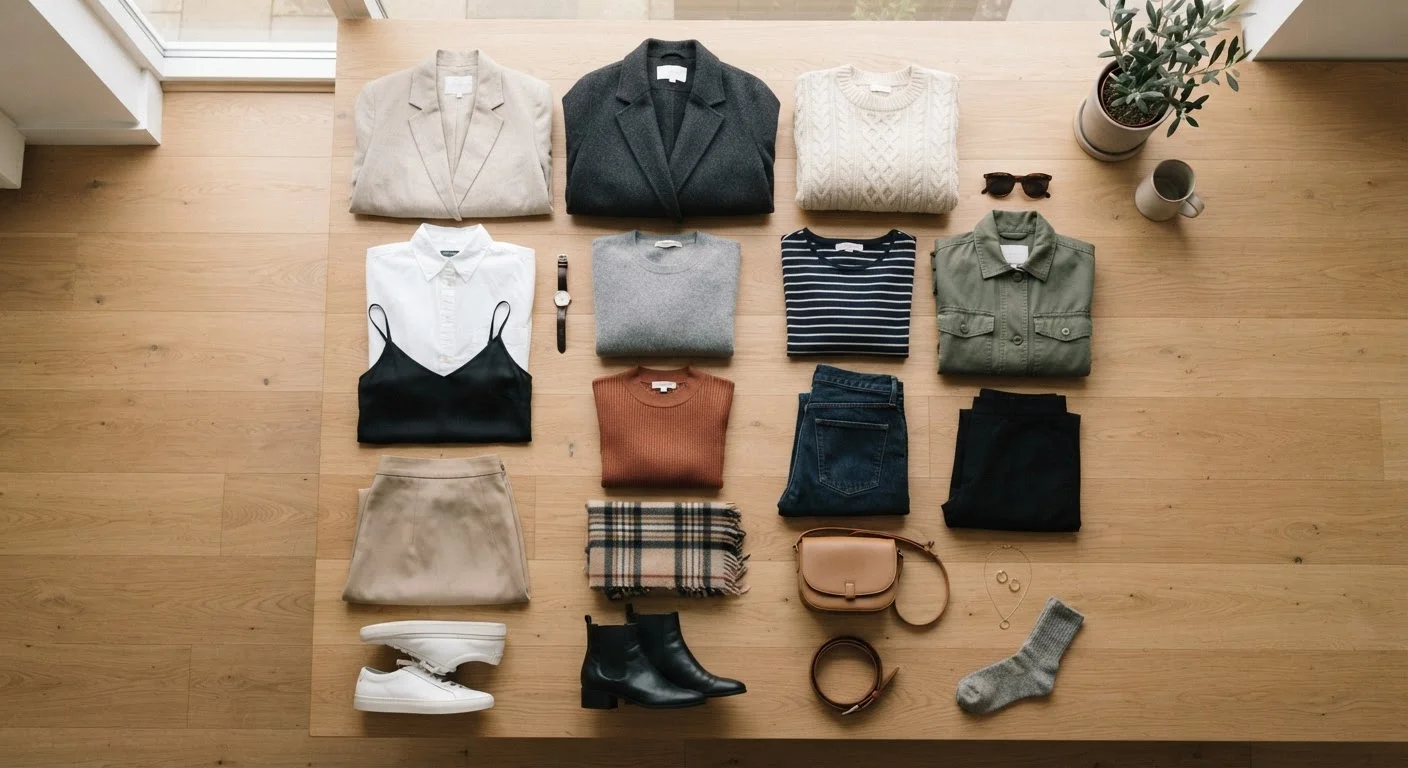
What 'Signature Style' Really Means
When most people hear "signature style," they picture a celebrity who wears the same silhouette every single day. But that's a misconception worth clearing up right away. A signature style isn't a costume - it's a consistent aesthetic identity that shows up across different outfits, occasions, and seasons.
Think of it this way: if someone flipped through a month's worth of photos of you and could identify recurring visual themes - maybe you gravitate toward monochromatic outfits, always add a structured bag, or lean into relaxed, oversized layers - that throughline is your signature style. It's the visual language your wardrobe speaks, even when individual pieces change.
The personal style tips space often conflates style with fashion, but they're genuinely different things. Fashion is external and seasonal; style is internal and enduring. Your signature style is yours regardless of what's trending this month.
Style vs. Fashion: A Useful Distinction
Fashion refers to what's trending in the broader culture at any given moment. Style - and specifically, signature style - is personal and relatively stable over time. You can engage with fashion trends selectively, incorporating ones that align with your existing aesthetic while skipping the rest. That selective engagement is itself a hallmark of a well-developed signature style.
Why Having One Actually Simplifies Your Life
Here's the counterintuitive truth: more clarity equals less effort. When you understand your aesthetic, getting dressed stops being a daily puzzle. You stop buying things that don't work with anything else you own. You stop standing in front of a full closet feeling like you have nothing to wear.
A well-developed signature style acts like an internal filter. When you're shopping or choosing an outfit, you can quickly ask: Does this fit the aesthetic I've built? If the answer is no, you can pass on it without second-guessing yourself.
80%
Of wardrobe items go unworn regularly
Research on consumer wardrobe habits consistently finds that most people wear only a small fraction of what they own on a regular basis, suggesting a gap between purchases and personal aesthetic alignment.
3-5
Core aesthetic anchors in most cohesive wardrobes
Style educators commonly observe that people with a strong, consistent look rely on just a handful of recurring elements - a color family, a silhouette preference, and one or two texture or fabric choices.
For a deeper look at building that kind of intentional wardrobe, the practices behind a coherent personal style is a great next read.
How to Start Identifying Your Own
Developing a signature style is less about shopping and more about paying attention. Here are the most reliable starting points:
- Audit what you actually wear. Pull out everything you've worn in the last three months. What colors, cuts, and fabrics keep showing up? Those repetitions are clues.
- Notice what you feel good in. Not just visually - physically. Comfort and confidence are part of your style, too.
- Save images that appeal to you. Not to copy outfits, but to spot patterns. After 20 or 30 saved images, themes usually emerge: maybe it's always relaxed tailoring, or always saturated color, or always minimal and monochrome.
- Identify your non-negotiables. Most people with a defined style have a few anchors - a silhouette they always return to, a color family they never stray from. Find yours.
If you're starting from zero, the guide to finding your style identity from scratch walks through every stage of this discovery process in detail.
Try a 'Wear-Again' Test
After wearing an outfit, ask yourself: Would I wear this exact combination again without hesitation? If yes, document it - photo, note, whatever works. Over a few weeks, your documented repeats will start to reveal your actual aesthetic preferences far more accurately than any style quiz or mood board exercise.
Building It Over Time Without Overthinking It
One of the biggest mistakes people make is treating signature style as something to decide rather than something to discover. You don't sit down one afternoon and declare yourself a "classic minimalist." It emerges through choices made over time - what you buy, what you keep, and especially what you let go.
Start editing rather than adding. When a piece doesn't align with the aesthetic you're gravitating toward, releasing it makes room for pieces that do. And remember: budget isn't a barrier here. The guide to personal style on a realistic budget makes clear that clarity of vision always matters more than spending power.
For a comprehensive, end-to-end roadmap - from understanding your influences to building a wardrobe that holds together across every context - see the complete approach to developing a personal style. Your signature style is already in there. The work is simply uncovering it.