Why Shoes Make or Break an Outfit
You've probably experienced it: a look that seemed solid in the mirror until you glanced down. The wrong shoes don't just distract - they can shift the entire tone of an outfit, making polished feel sloppy or casual feel try-hard. Footwear sits at the visual foundation of a look, and the eye naturally travels there.
The good news is that shoe-outfit pairing doesn't require fashion expertise. It responds to a handful of consistent principles that, once understood, make getting dressed faster and more confident. If your outfits have been feeling slightly off, this breakdown of subtle outfit misalignments is a useful companion read.
74%
People who judge outfit success by shoe choice
A survey conducted by OnePoll found that nearly three-quarters of respondents said shoes significantly impact their overall impression of an outfit.
3-5
Versatile shoes needed for most wardrobes
Style researchers and wardrobe consultants commonly suggest a core of three to five shoe types covers the majority of everyday American lifestyle scenarios.
The Core Pairing Principles
These practices form the practical foundation of shoe-outfit logic. They apply across styles, body types, and budgets - because they're about relationship dynamics within a look, not about specific products or trends.
Match the formality level of your shoes to the register of your outfit.
Formality mismatch is the most common shoe mistake. When the shoes are significantly dressier or more casual than the clothing, the eye notices the disconnect before anything else. Alignment in formality signals that the look was intentional.
Use shoe color to either anchor or echo tones already in your outfit.
Shoes sit at the visual base of an outfit, which gives them outsized influence on overall color balance. A shoe that echoes an existing color creates harmony; a shoe in a neutral grounds the look without competing. Random color contrast tends to fracture cohesion.
Consider proportion between the shoe's visual weight and the clothing's silhouette.
A chunky platform under a flowy maxi skirt can visually overwhelm a delicate hemline, while a slim-soled flat might disappear beneath wide-leg trousers. Proportion shapes how balanced and intentional an outfit appears from head to toe.
Let the occasion's practical demands inform the shoe choice first.
Style decisions made in conflict with real-world demands - long walks, outdoor events, dress codes - tend to produce discomfort or embarrassment. Practicality isn't the opposite of style; it's the foundation that makes style sustainable.
Build a small core of versatile shoes before adding statement pairs.
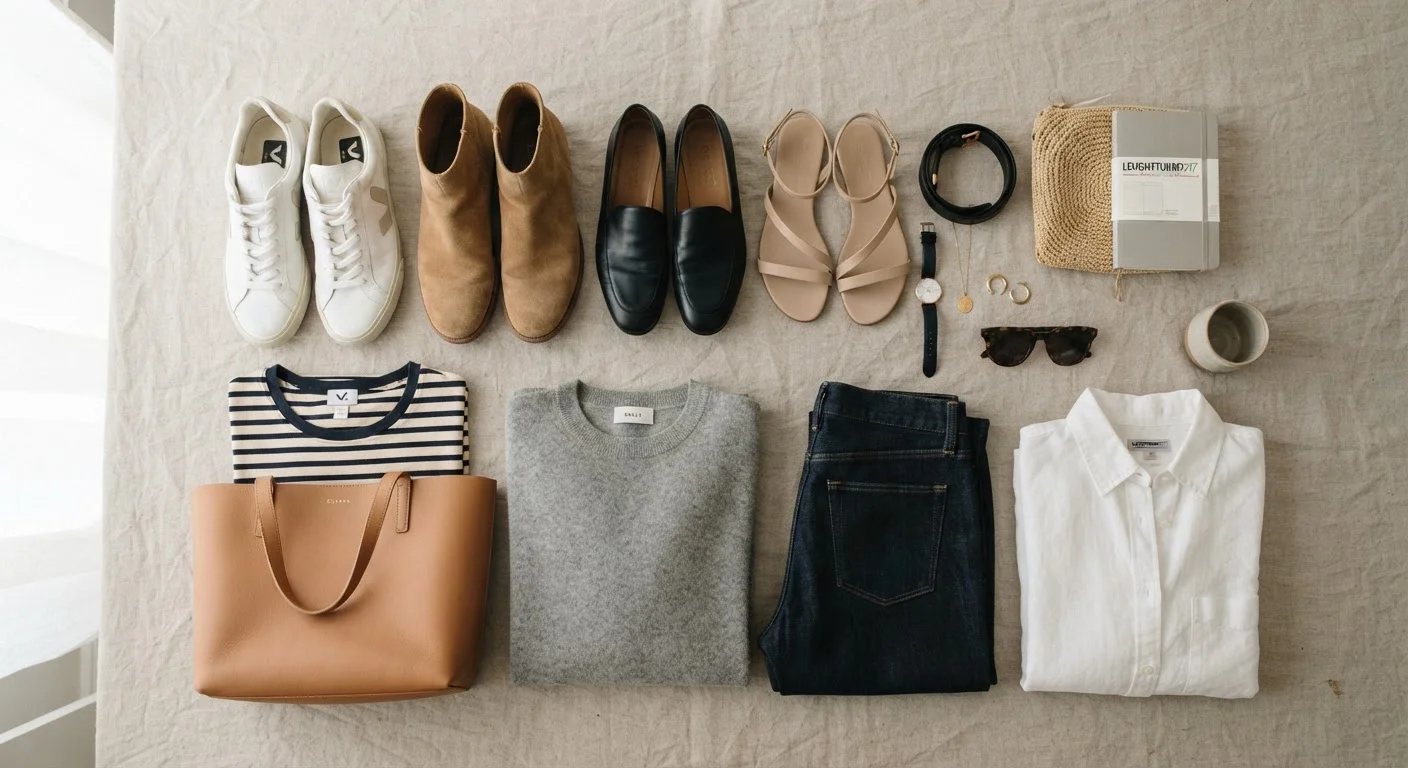
A few high-utility shoes - a clean white sneaker, a neutral ankle boot, a simple leather flat or loafer - cover a wide range of outfit scenarios without requiring constant decision-making. Statement shoes work best when the basics are already handled.
For more ways to apply these ideas across your whole wardrobe, outfit formulas that take the guesswork out of getting dressed can help you put the principles into repeatable combinations.
Quick Wins: Apply the Principles Today
Understanding pairing logic is one thing - putting it to use is another. Start with these fast, low-effort experiments that surface insight from what's already in your closet.
Match Shoe Finish to Fabric Weight
Beyond color and silhouette, fabric weight is a useful guide. Lightweight fabrics like linen or chiffon tend to pair well with lighter-sole shoes or minimalist silhouettes. Heavier fabrics - denim, wool, leather - can support a shoe with more visual weight or structure. When in doubt, aim for similar visual density between fabric and footwear.
Shoes are one piece of a larger styling conversation. How accessories punctuate a look follows similar logic - every element either adds to or undermines the outfit's overall coherence. And if you're building more consistency into how you dress, these styling habits that simplify the process over time are worth bookmarking.
When 'Breaking the Rules' Works
Deliberate contrast - like a hiking boot with a midi dress - can absolutely work when everything else in the outfit reads as intentional. The key word is deliberate. If the contrast serves a clear styling purpose and the rest of the look is cohesive, it registers as a choice rather than a mistake. These principles are guides, not mandates.