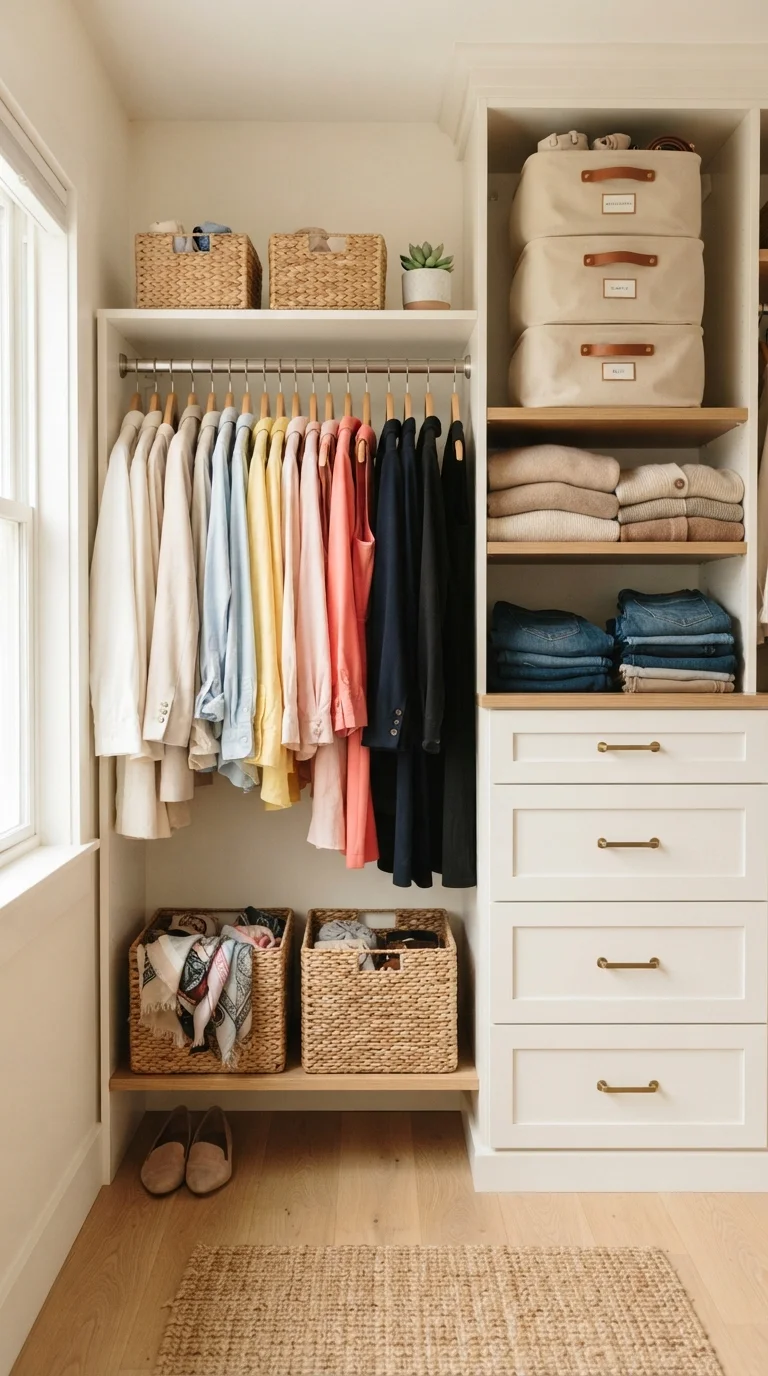
Why a Disorganized Closet Costs You More Than Time
Standing in front of a crammed closet every morning is genuinely stressful. When you can't see what you own, you default to the same few items, forget about pieces you actually love, and sometimes buy duplicates of things already buried in the back. A well-organized small closet doesn't require a renovation - it requires a system that matches how you actually get dressed.
The good news: most small closets have more usable space than their owners realize. The bad news: that space gets swallowed by items that don't belong there, poor folding habits, and no clear logic for what goes where. This guide walks you through a practical reset that you can do in an afternoon. Once you're done, consider pairing these changes with the styling habits that make getting dressed easier over time to keep momentum going.
What you will need
What You'll Need Before You Start
You don't need expensive organizers to get results. A few practical tools make the process smoother and the outcome more durable.
Uniform hangers
Matching hangers eliminate visual clutter and let clothes hang at the same height, making the rod easier to scan.
Shelf dividers
Keep folded stacks from toppling sideways, especially useful for sweaters and jeans on open shelves.
Over-the-door organizer
Adds pockets or hooks to the back of the closet door, capturing shoes, accessories, or small folded items.
Stackable bins or baskets
Corral loose items - scarves, belts, workout gear - that would otherwise pile up on shelves.
Donation bags
Having bags ready during the sort makes it easier to commit to removing items rather than setting them aside.
Step-by-Step: Organizing Your Closet
Work through these steps in order - skipping ahead tends to create new piles rather than solve the original problem.
Take everything out
Remove every single item from the closet - clothes, shoes, accessories, anything stored on the floor or on shelves. This gives you an honest view of total volume and lets you clean the space before putting anything back. Pile items on your bed or a nearby floor area.
Sort into clear categories
Before evaluating what to keep, group everything by type: tops, bottoms, dresses, outerwear, shoes, and accessories. Seeing six nearly identical black t-shirts in a pile makes the decision to pare down much easier than encountering them one at a time on a hanger.
Edit ruthlessly - but kindly
Go through each category and set aside anything that doesn't fit, is damaged beyond repair, or hasn't been worn in over a year. You don't need to justify keeping something you genuinely love, but be honest about items you're keeping out of obligation or vague future plans. Bag discards and donations immediately so they don't creep back in.
Assign zones before you return anything
Decide which area of the closet belongs to which category before hanging or folding anything back. Most-worn items should be at eye level and within easy reach. Less-frequent pieces - formal wear, off-season items - can move to higher shelves or far ends of the rod. Shoes work well on the floor or in a door organizer.
Hang and fold with color logic
Within each category, arrange by color - light to dark, or warm to cool, whichever feels intuitive. This single step makes it dramatically faster to grab what you need and spot gaps in your wardrobe. Fold bulky knits rather than hanging them; hanging stretches out the shoulders over time.
Use vertical space intentionally
The area above the main rod and the back of the door are almost always underused. Add a second hanging rod below shorter items like jackets and folded trousers. Mount hooks on the door interior for bags or belts. Stack bins on high shelves for seasonal or rarely-used items, and label them so you're not pulling everything down to find one thing.
Photograph Your Closet When It's Done
Snapping a photo of your organized closet right after the reset gives you a visual reference to return to. When things start to drift - and they will - that photo reminds you what the standard looks like. It also helps you plan outfits when traveling, so you know exactly what's waiting at home.
Keeping It Organized After the Reset
The biggest challenge with closet organization isn't the initial sort - it's what happens the following week. A few low-effort habits make the difference between a system that lasts and one that collapses by Thursday.
The most effective rule is simple: when something new comes in, something old goes out. This one-in-one-out approach keeps volume manageable without requiring ongoing purges. If you're genuinely reconsidering how much you own in the first place, the honest pros and cons of owning a very small wardrobe is worth a read before scaling back significantly.
Return items to their designated spot after every wear or wash - not just when the closet looks full. That single habit, practiced consistently, does more for long-term organization than any basket or bin.
Avoid Over-Organizing at First
It's tempting to add labels, color-coded dividers, and elaborate bin systems right away. Start with the basics - clear zones, uniform hangers, and a sorted rod - and live with the system for a few weeks before adding more structure. Over-engineered systems are harder to maintain and often abandoned quickly.