Why Concealer Creases in the First Place
Before fixing the problem, it helps to understand what's actually happening. Concealer creases when product collects in the fine lines and folds of skin - typically under the eyes or around the mouth. This can happen for several reasons: too much product applied at once, a formula that's too thick or too dry for your skin type, insufficient skin prep, or skipping a setting step at the end.
Caking is a related but slightly different issue. It usually signals that layers of product have built up without properly adhering to skin, creating a dry, flaky, or patchy appearance. Both problems are fixable - and almost always come down to technique or formula, not a personal flaw in your skin.
Just like blending eyeshadow seamlessly, the mechanics of how you apply concealer matter far more than the price tag on the product.
Step-by-Step: Concealer That Actually Stays Put
Follow these steps in order. Each one builds on the last, so skipping ahead often undoes the benefits of earlier stages.
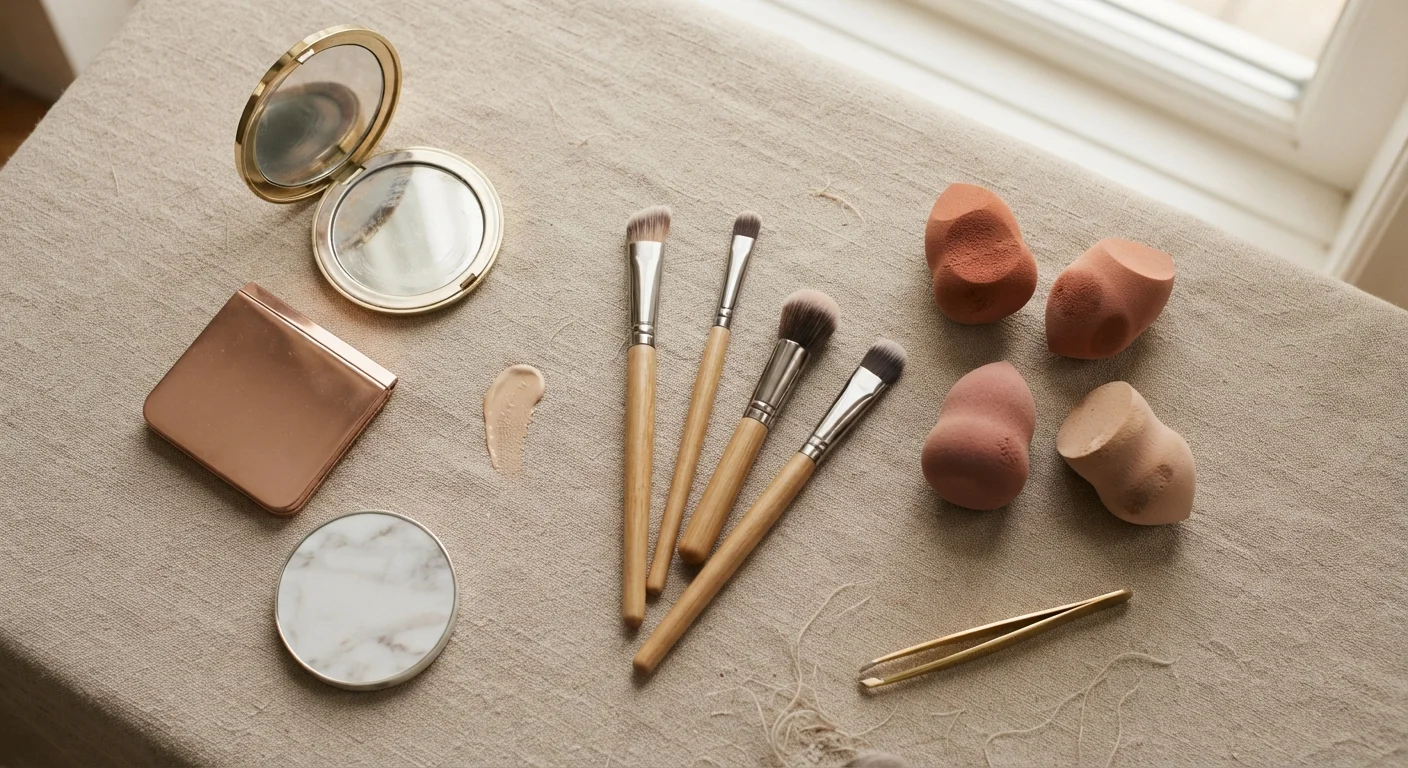
What you will need
Prep skin with moisturizer first
Apply your regular moisturizer and allow it to absorb for at least two to three minutes before reaching for any makeup. Under-eye skin is especially thin and benefits from adequate hydration - dry skin is actually more prone to fine lines catching product than well-moisturized skin is. Don't rush this step.
Apply a thin layer of primer if needed
A dedicated eye primer or a thin layer of face primer can extend wear significantly, especially on oily lids or in humid conditions. Apply a tiny amount and blend fully before moving on. This creates a smoother base and helps concealer adhere rather than slide.
Dot - don't draw - concealer onto the area
Use a small brush or your fingertip to place two or three small dots of product directly onto the area you want to cover. Less is genuinely more here. You can always add a second thin layer, but removing excess once it's worked into skin is difficult without disturbing coverage.
Pat and press - never drag or rub
Use a damp makeup sponge or a synthetic brush to blend concealer using a gentle pressing and tapping motion. Dragging product across skin pushes it into lines and wrinkles. Patting builds coverage without disrupting the skin's surface texture and gives a more natural finish.
Let it set for 30 seconds before powdering
Give the concealer a brief moment to grip the skin before reaching for powder. This 30-second pause makes a noticeable difference in how evenly the powder adheres.
Set with a light press of finely-milled powder
Pick up a small amount of setting powder on a fluffy brush, tap off the excess, then press - not sweep - the powder gently over the concealed area. Sweeping can shift product. Pressing locks it in place. Use only as much powder as needed; too much creates the cakey look we're trying to avoid.
The Baking Technique: Worth Trying?
"Baking" - leaving a generous layer of powder under the eyes for several minutes before dusting away - can deliver a longer-lasting finish for some skin types. It works well for oilier skin but can be drying and emphasize texture on drier skin. If you try it, use a hydrating setting powder and skip this technique on days when your skin feels tight or flaky.
One more consideration: if your eye area also deals with oiliness that causes smudging in other products, you may find our article on why mascara smudges useful - many of the underlying causes overlap.
Choosing the Right Formula for Your Skin Type
Technique can only go so far if the formula is working against your skin. Here's a quick framework:
- Dry or mature skin: Look for hydrating, liquid formulas. Very full-coverage, matte concealers tend to cling to dry patches and emphasize texture.
- Oily skin: A longer-wear or slightly drier formula resists slipping. Avoid intensely creamy concealers around the T-zone, which can migrate quickly.
- Combination skin: You may find it helpful to use different approaches in different zones - lighter application and powder setting under the eyes, slightly more product on the cheeks or chin where coverage is needed.
No single formula works for every person, and some experimentation is normal. The goal is a product that blends easily, doesn't tug at skin, and doesn't feel uncomfortably thick or watery on application.
Too Much Product Causes Most Creasing
The most common concealer mistake is applying more product to improve coverage. In reality, layering thick amounts causes creasing far more reliably than any formula or tool choice. Build coverage gradually with two thin layers rather than one heavy application.