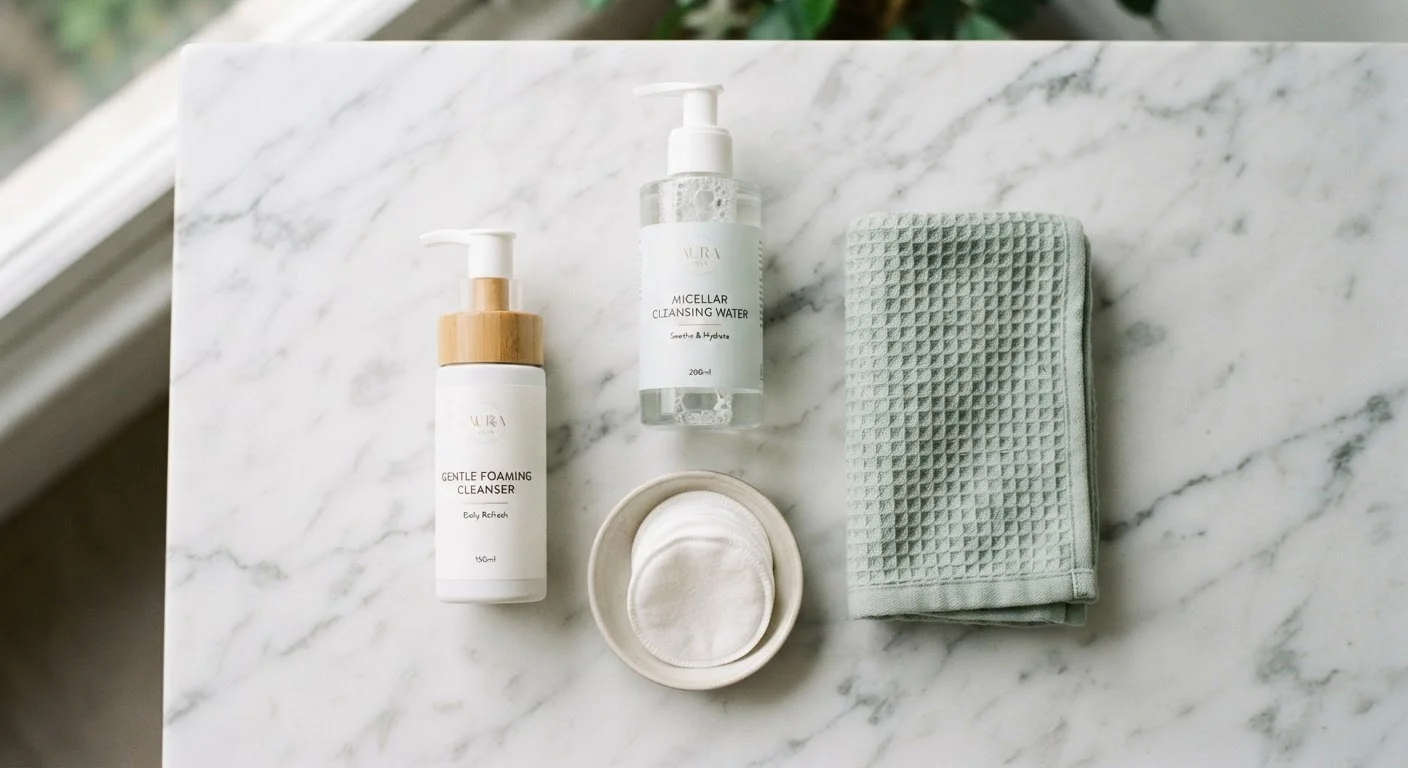
What Each Product Is Actually Doing to Your Skin
Before declaring a winner, it helps to understand the science - and it's genuinely interesting. Micellar water contains tiny structures called micelles suspended in soft water. Micelles are oil molecules arranged in clusters that act like magnets: the oily "tails" attract makeup and sebum, while the water-loving "heads" allow the whole thing to be wiped away with a cotton pad. No rinsing needed.
Face cleansers - whether gel, cream, balm, or foam - work through a combination of surfactants (cleansing agents) and, in some formulas, oils or emulsifiers. Massage them onto damp skin and they actively break apart the bonds between makeup, sunscreen, and skin before being rinsed away with water. That physical rinsing step matters more than it might seem.
The key difference: micellar water lifts and relocates debris onto a cotton pad; a face wash dissolves and flushes it away. Both cleanse - but they cleanse differently, and that gap becomes significant when you're wearing a full face of makeup.
How Well Does Each One Actually Remove Makeup?
Honest answer: it depends on the makeup. Micellar water handles light-coverage products - tinted moisturisers, blush, eyeshadow without primer - impressively well. Run a soaked cotton pad across your face and you'll see the colour transfer. Satisfying, but not the whole story.
Where micellar water runs into limits is with waterproof mascara, long-wear foundation, and transfer-proof lip colour. These formulas are engineered to resist water and oil, meaning you'll often need multiple passes, more product, and more friction - which can irritate skin and still leave residue. If you've ever followed up micellar water with a cleanser and watched more colour come off on your hands, that's exactly why.
A face cleanser - especially a cleansing balm or oil-based wash - breaks down even stubborn, film-forming pigments more completely. The rinse step then carries everything away rather than just moving it around. For anyone wearing full SPF (which you absolutely should), a rinse-off cleanser is generally more reliable at clearing that layer too. Want to understand how your cleansing step sets up the rest of your routine? morning vs. nighttime skincare routines explores how cleansing fits differently into each.
| Criterion | Face Cleanser | Micellar Water |
|---|---|---|
| Makeup removal strength | High - effective on all types | Moderate - best for light makeup |
| Waterproof formula removal | Strong, especially oil-based cleansers | Limited - requires multiple passes |
| Rinsing required | Yes | No |
| Skin sensitivity | Varies by formula | Generally gentle |
| Travel convenience | Needs water access | Fully portable, no rinse |
| SPF removal | Reliable with thorough rinsing | Less reliable for full SPF removal |
| Best role in a routine | Complete second-step or solo cleanse | First-step pre-cleanse or light-day cleanse |
The Case for Double-Cleansing - and When to Skip It
Double-cleansing - using micellar water or a cleansing oil first, then following with a face wash - is a method with genuine logic behind it. The first step dissolves and lifts the bulk of makeup and SPF; the second step cleans the skin itself. The result is a genuinely thorough cleanse without the aggressive scrubbing that single-step cleansing sometimes requires.
That said, double-cleansing isn't mandatory for everyone. If you wear minimal or no makeup and use a lightweight SPF, a single well-formulated face wash is likely sufficient. Over-cleansing can strip the skin's natural moisture barrier - something worth being mindful of, particularly for dry or sensitive skin types.
A Note on Skin Barrier Health
Cleansing more than twice a day, or using particularly stripping formulas, can disrupt the skin's natural moisture barrier over time. General dermatological guidance suggests cleansing once or twice daily is typically sufficient for most people. If your skin regularly feels tight or irritated after cleansing, it may be worth reassessing the formula you're using rather than cleansing less frequently - a gentler cleanser can often resolve the issue without changing your routine structure.
If you're building out or rethinking your full routine, what comes after cleansing - toners, essences, and mists is worth understanding next.
Choosing What Works for Your Routine
There's no universal answer here, and that's actually freeing. A few honest considerations:
- Skin type matters. Very dry or sensitive skin may respond better to a gentle micellar water plus a mild, cream-based cleanser rather than a foaming wash that can feel stripping.
- Your makeup habits matter. Light makeup days? Micellar water alone may be plenty. Regular mascara-and-foundation days call for a more thorough approach.
- Your water supply matters. If you live somewhere with very hard tap water, a rinse-off cleanser can sometimes leave a slightly uncomfortable residue. In those cases, some people prefer micellar water as a standalone - especially at night.
For those just starting to build a routine, beginning with makeup essentials pairs well with understanding how to properly remove what you apply. And if mascara removal is specifically your nemesis, why mascara smudges and how to fix it digs into that particular challenge.
The bottom line: micellar water and face cleanser aren't rivals - they're teammates. Used together thoughtfully, they form one of the most effective cleansing routines you can build.