What a Manufacturer Guarantee Actually Is
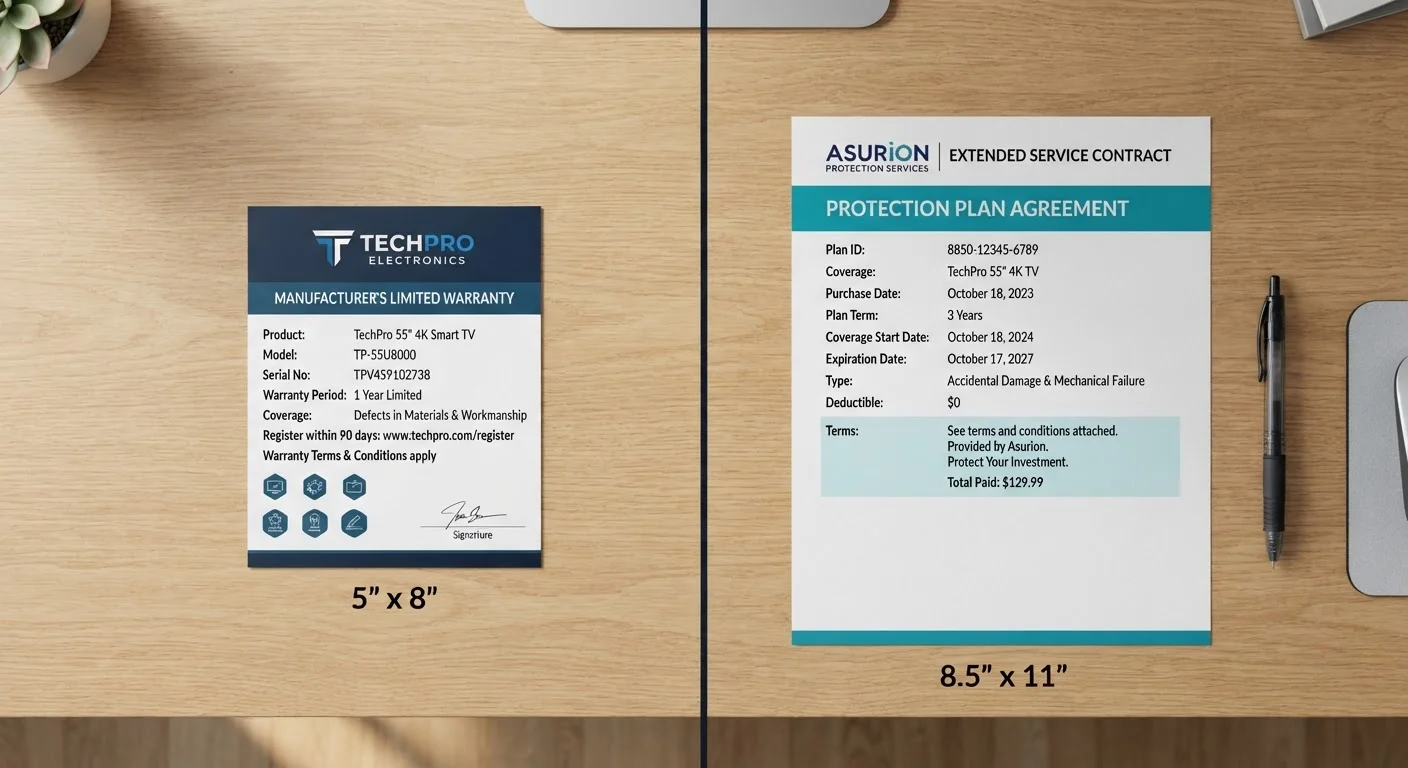
A manufacturer guarantee - more formally called a manufacturer's warranty - is a written promise from the company that made a product. It is included in the purchase price at no extra charge and typically covers defects in materials or workmanship for a defined period. If a product fails because of how it was built or the components used, the manufacturer is responsible for repair or replacement under its terms.
Scope is narrower than many buyers expect. Standard manufacturer coverage generally excludes normal wear, accidental damage, cosmetic issues, and damage caused by misuse or unauthorized modifications. The duration varies by product category - commonly 90 days to one year for consumer electronics, one to three years for appliances, and longer for vehicles or structural components.
Importantly, the Magnuson-Moss Warranty Act governs written warranties on consumer products in the United States, requiring manufacturers to make warranty terms available before purchase. For context on how these written promises relate to other legal protections, see the distinction between express and implied warranties.
Request the Full Warranty Document Before Purchase
Under the Magnuson-Moss Warranty Act, written warranty terms must be available to you before you buy. Ask to see the complete document - not a summary brochure - and pay particular attention to the exclusions and remedy sections. If a seller cannot or will not provide the full text, treat that as a meaningful signal about the contract's quality.
What an Extended Warranty Actually Is
Despite its name, an extended warranty is not technically a warranty in the legal sense. It is a service contract - a separate agreement, usually sold by a retailer, dealer, or third-party administrator, that promises to cover certain repair costs beyond the manufacturer's period. You pay for it either upfront or rolled into financing, and it is governed by contract law, not warranty law.
This distinction matters. Service contracts are regulated differently by state, which affects how disputes are handled and what cancellation rights you have. Coverage terms vary dramatically: some contracts are comprehensive, others exclude the most common failure points - motors, compressors, or electronic control boards - using specific language buried in the exclusions section.
Common cost structures include a one-time premium, a deductible per claim, or both. Some contracts also limit the total payout to the original purchase price or impose per-incident caps. When extended warranties make financial sense depends heavily on reading these terms carefully before signing.
| Manufacturer Guarantee | Extended Warranty | |
|---|---|---|
| Cost to consumer | Included in purchase price | Additional premium required |
| Who backs it | Product manufacturer | Retailer or third-party administrator |
| Governing law | Federal & state warranty law (Magnuson-Moss) | State service contract regulations |
| Typical coverage | Defects in materials or workmanship | Varies - mechanical/electrical failure after manufacturer period |
| Common exclusions | Wear, accidental damage, misuse | Often extensive; varies by contract |
| Claim process | Direct to manufacturer/authorized center | Through contract administrator or approved network |
| Duration | Fixed term set by manufacturer | Negotiated at purchase; varies widely |
Key Differences That Affect Real-World Claims
When something breaks, the differences that seemed abstract become concrete. A manufacturer claim typically goes directly to the brand's customer service or an authorized service center, with repair or replacement as the standard remedy. An extended warranty claim usually requires contacting the service contract administrator - a separate company - which may dispatch its own technicians or require you to use a network of approved repair shops.
Exclusions are where many extended warranty claims are denied. Phrases like "not caused by mechanical failure" or "excluded components" can cover a surprising range of real failures. Several widespread warranty beliefs are simply wrong, and assuming coverage exists without verifying the contract language is a consistent source of consumer frustration.
It's also worth noting that extended warranties purchased during a manufacturer's active coverage period create overlap. You are paying for coverage you already have for that overlapping window - a detail rarely highlighted at the point of sale. For a broader view of post-purchase protection options, understanding how warranties differ from return policies is a useful foundation.
Overlap Coverage Is Money You Don't Get Back
Extended warranties sold at the point of purchase often begin on the purchase date, not when the manufacturer's coverage ends. This means you may pay for one or more years of duplicate protection. Ask explicitly when the extended contract's coverage activates relative to the manufacturer's expiration date, and request a prorated premium if the start date is delayed.
How to Evaluate Whether Extended Coverage Adds Value
The core question is whether the contract covers the failures most likely to occur, at a cost lower than the probable repair bill. A few practical steps help answer that:
- Read the exclusions list first. This section - not the marketing summary - defines what the contract actually covers.
- Check the claim process. Who authorizes repairs? Are there approved-network restrictions? What are turnaround time expectations?
- Calculate overlap. If the manufacturer covers the product for one year and the extended warranty begins at purchase, you may be paying for a year of redundant coverage.
- Assess the deductible structure. A low premium with a high per-claim deductible can make most small repairs uneconomical to claim.
- Confirm the administrator's financial standing. Third-party administrators can go out of business; check whether the contract is backed by a licensed insurer.
Products with high average repair costs and known failure rates - certain appliances or vehicles with complex electronics - are more likely to generate a return on extended coverage than low-cost, low-failure-rate items. For vehicle-specific considerations, understanding total car ownership costs provides helpful context on where warranty coverage fits within the broader expense picture.
~55%
Extended warranty claims denied or disputed
Consumer advocacy research has consistently found that a significant share of extended warranty claims are partially or fully denied due to exclusion clauses, though figures vary by product category and provider.
2-4×
Typical retailer markup on service contracts
Industry analyses of service contract economics suggest that retail-sold extended warranties carry among the highest profit margins of any in-store product, indicating the premium often exceeds actuarial risk.