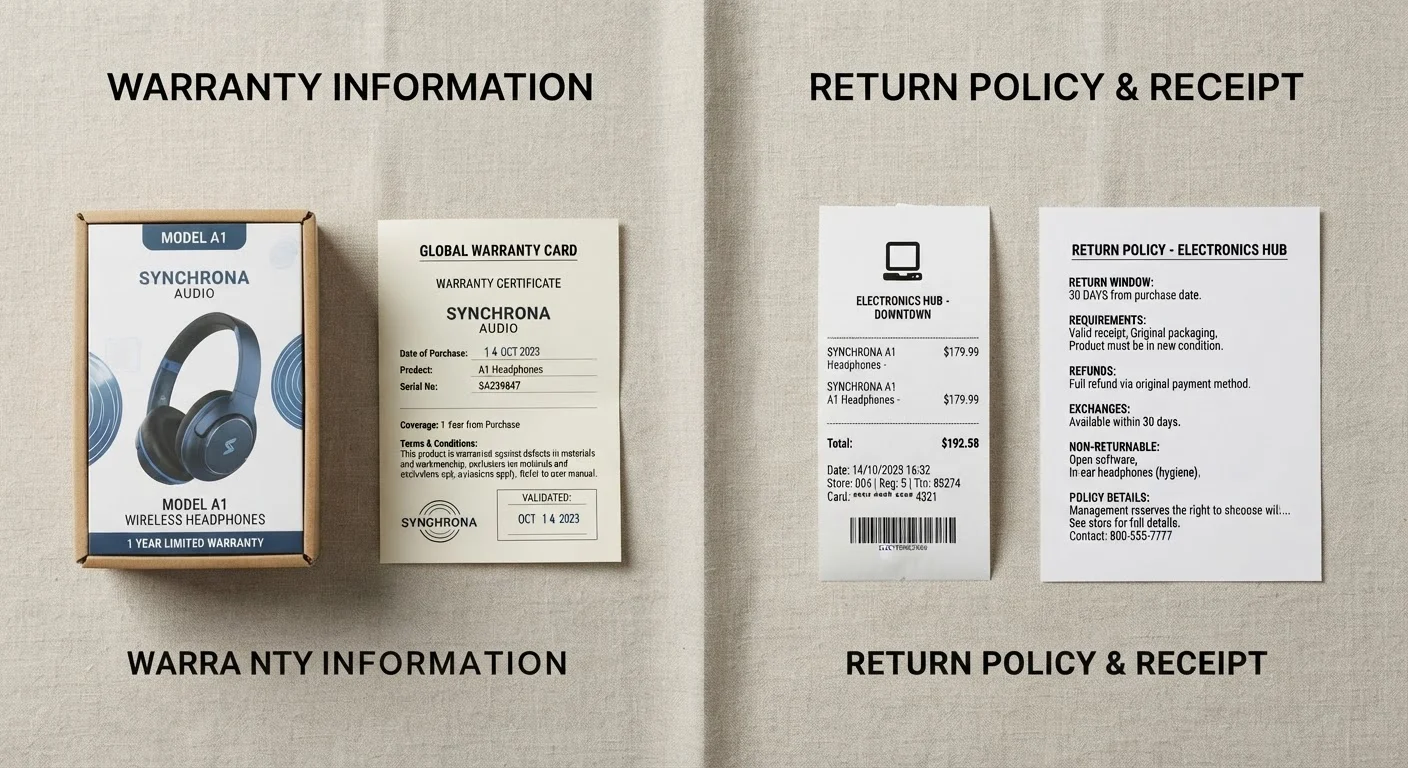
Two Different Promises, Two Different Sources
Consumers often treat warranties and return policies as interchangeable - both seem like safety nets after a purchase. In practice, they are distinct legal instruments issued by different parties for different purposes.
A warranty is a promise made by the manufacturer (or sometimes a seller) that a product will function as described for a defined period. If it doesn't, the warrantor agrees to repair, replace, or refund it. Warranties are governed in part by federal law - specifically the Magnuson-Moss Warranty Act - which sets disclosure requirements for written warranties on consumer products. See our overview of the Magnuson-Moss Act for a detailed look at what that law requires of sellers.
A return policy is a retailer's internal policy that governs whether - and under what conditions - it will accept merchandise back. It is not a warranty, carries no federal mandate in most cases, and typically expires within days or weeks. To understand how these policies are structured in practice, see how store return policies are typically written.
Understanding who issued each protection, and what triggers it, is the foundation of any smart post-purchase strategy.
| Criterion | Warranty | Return Policy |
|---|---|---|
| Issued by | Manufacturer (or seller) | Retailer |
| What it covers | Defects in materials or workmanship | Unwanted, wrong, or damaged items |
| Typical duration | 1-3 years from purchase | 15-90 days from purchase |
| Legal framework | Magnuson-Moss Warranty Act (federal) | Retailer discretion; state law varies |
| Common exclusions | Misuse, accidents, normal wear | Opened items, final sale, missing packaging |
| Remedy provided | Repair, replacement, or refund | Refund or store credit |
| Proof required | Proof of purchase, serial number | Receipt or order confirmation |
What Each One Actually Covers - and What It Doesn't
Warranties cover defects in materials or workmanship - meaning the product fails because of how it was made, not because of how you used it. Accidental damage, normal wear and tear, misuse, and unauthorized modifications are standard exclusions. There are also two distinct warranty types worth knowing: express warranties (explicitly stated terms) and implied warranties (unwritten legal minimums). Our article on express vs. implied warranties walks through what each actually promises.
Return policies cover a broader but time-limited set of scenarios: wrong size, unwanted gifts, buyer's remorse, or visible damage at unboxing. However, retailers can set nearly any terms they choose - restocking fees, store-credit-only refunds, and "final sale" designations are all legal and common. Understanding these terms before you buy is critical; our guide to decoding return policies before purchase explains what each restriction typically means.
One important nuance: a return policy can sometimes overlap with warranty territory. If you notice a defect within the return window, the retailer's policy may offer a faster resolution than filing a warranty claim - particularly for electronics.
Online Purchases May Have Different Rules
When you buy online, return rights can differ from in-store purchases. The FTC's Mail or Telephone Order Merchandise Rule requires sellers to ship within stated timeframes and offer refunds when they can't, but it doesn't mandate generous return windows. Some states have additional consumer-protection statutes. For a full breakdown, see our article on how the law treats e-commerce purchases differently.
Timeframes: The Most Misunderstood Gap
The single most common consumer mistake is assuming that a warranty and a return policy cover the same period. They almost never do.
Return windows typically run 15 to 90 days from date of purchase, depending on the retailer and product category. Some categories - such as opened software, mattresses, or personal care items - may carry even shorter or non-existent return eligibility.
Manufacturer warranties commonly begin where the return window ends, offering one to three years of coverage for defects. But that coverage is conditional: you typically need proof of purchase, must report the defect within the warranty period, and may be required to ship the product to an authorized service center at your own expense for shipping.
30 days
Typical default return window at major U.S. retailers
Many large U.S. retailers set a standard 30-day return window, though this varies by product category and membership status.
1 year
Minimum warranty period common for consumer electronics
One year is the most commonly offered manufacturer warranty period for electronics and appliances sold in the U.S. market.
This gap between the two timeframes is where many consumers feel unprotected - they've missed the return window but aren't sure if the warranty applies. The answer almost always depends on the nature of the problem: retailer error or change of mind belongs with the return policy; product malfunction belongs with the warranty. For a broader look at the remedies available when products fail, see refund, replacement, or repair options.
How to Use Both Protections Effectively
The most practical consumer habit is to read both documents - the warranty card and the return policy - before completing a purchase, not after something goes wrong. Key questions to ask:
- How long is the return window, and what conditions apply? Note whether items must be unopened, whether original packaging is required, and whether you receive cash back or store credit.
- Who backs the warranty - the retailer or the manufacturer? Retailer-backed warranties can be easier to resolve locally; manufacturer warranties may require more steps.
- What exactly does the warranty exclude? Physical damage, liquid damage, and unauthorized repairs are nearly universal exclusions.
If you're considering an extended service plan on top of the standard warranty, our comparison of extended warranties vs. manufacturer warranties helps clarify whether the additional cost is justified. Also relevant: common warranty myths that cost consumers money - several widely held beliefs about warranty coverage are simply incorrect under federal law.
For gift purchases specifically, the rules around who can make a claim get more complicated. Our piece on return and warranty rights for gifts covers how receipt requirements and gift receipts typically interact with both protections.
This article provides general consumer information and is not legal advice. Terms of warranties and return policies vary by seller, manufacturer, and state. Consult the actual policy documents or a qualified consumer-law professional for guidance specific to your situation.