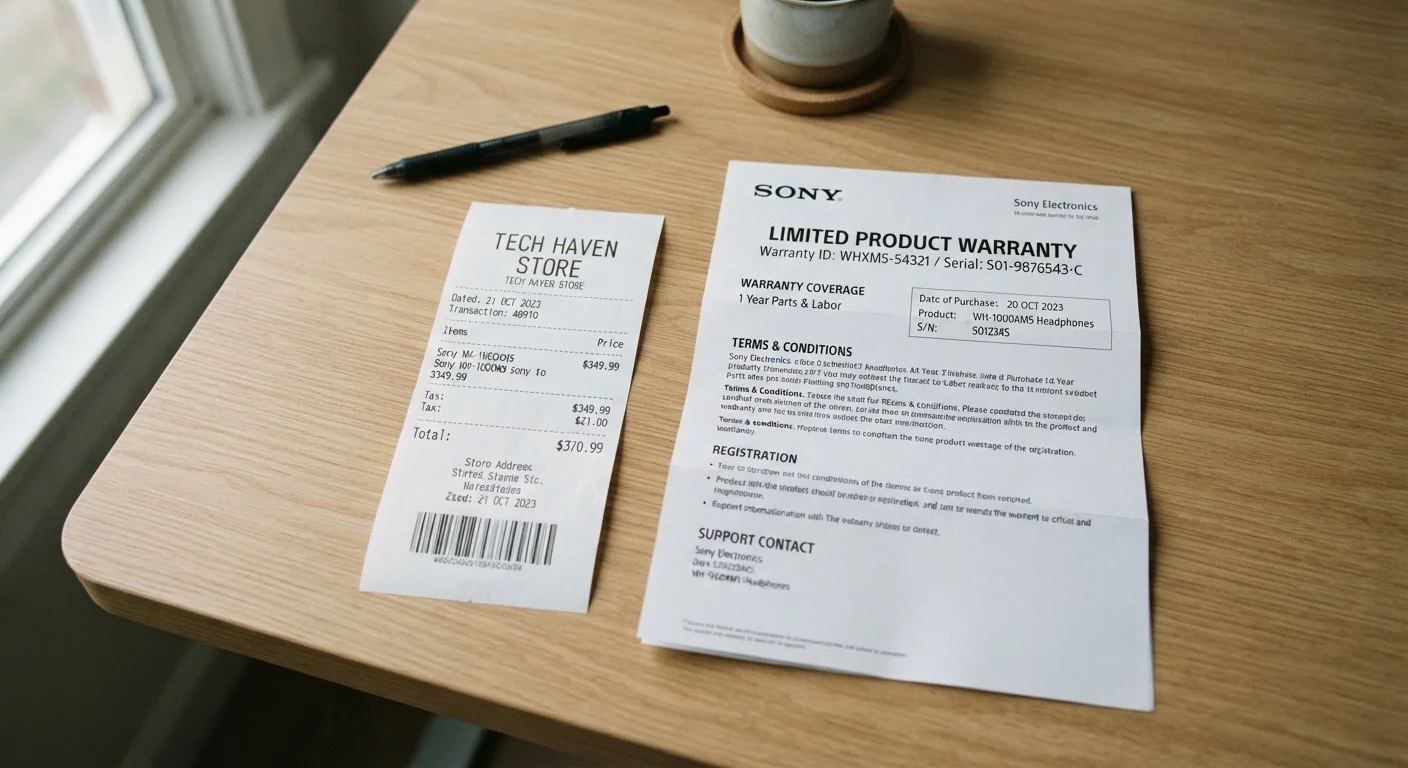
Defining Each Type of Warranty
A warranty is a legally enforceable promise about a product's condition or performance. Two fundamentally different categories exist, and knowing which applies to your situation is the first step in asserting your rights as a consumer.
An express warranty is any affirmation of fact, promise, description, or sample that a seller or manufacturer voluntarily makes about a product. It can be written - in a manual, on product packaging, or in an advertisement - or it can be spoken by a salesperson. Under the Uniform Commercial Code (UCC), which most U.S. states have adopted, an express warranty is created whenever a seller's statement becomes part of the basis of the bargain between seller and buyer.
An implied warranty, by contrast, is not written or stated at all. It exists automatically under law whenever a merchant sells goods. The most important type is the implied warranty of merchantability: a baseline guarantee that goods will work the way a reasonable person would expect them to. A second type - the implied warranty of fitness for a particular purpose - arises when a seller knows a buyer has a specific use in mind and recommends a product for that purpose.
| Criterion | Express Warranty | Implied Warranty |
|---|---|---|
| How it's created | Voluntarily stated or written by seller | Automatically created by law |
| Documentation required | Written or verbal statement | None - applies by default |
| Scope of coverage | Defined by the seller's specific terms | Ordinary, reasonable use of the product |
| Duration | Set by the warranty terms | Varies by state law |
| Can it be disclaimed? | Yes, within legal limits | Limited; many states restrict disclaimers |
| Federal regulation | Magnuson-Moss Warranty Act applies | Governed by state UCC adoption |
| Common example | "Defect-free for 2 years" on packaging | Product must work for its intended purpose |
How Each Warranty Works in Practice
Express warranties set the specific rules of engagement. A manufacturer might promise that a washing machine is free from defects in materials and workmanship for two years, or that a laptop battery will hold at least 80 percent of its original capacity after 500 charge cycles. These terms define exactly what qualifies as a warranty claim, what the remedy is (repair, replacement, or refund), and who bears the cost. The Federal Magnuson-Moss Warranty Act requires that any written warranty on a consumer product costing more than $15 be labeled either "full" or "limited," with specific disclosure requirements for each.
Implied warranties operate as a legal floor. Even if a retailer provides no paperwork whatsoever, a toaster that won't heat, a pair of boots that fall apart in normal conditions, or a bicycle that arrives structurally unsound may still be covered under the implied warranty of merchantability. The standard is not perfection - it is whether the product meets ordinary, reasonable expectations for its category.
"As Is" Disclaimers Have Limits
A seller's attempt to disclaim implied warranties through "as is" or "with all faults" language is not always enforceable. Many U.S. states, including California and Massachusetts, give consumers stronger implied warranty protections that cannot be fully waived in a standard retail transaction. If a written warranty accompanies the product, federal law under the Magnuson-Moss Warranty Act prohibits disclaiming implied warranties entirely for the duration of that written warranty.
One critical nuance: sellers can attempt to disclaim implied warranties, typically by including language such as "sold as is" in a contract. However, many states - including California, Massachusetts, and others - prohibit or significantly restrict such disclaimers for consumer purchases. Always check the laws in your state before accepting a disclaimer as absolute. For products covered by a written warranty, the Magnuson-Moss Act actually prohibits disclaiming implied warranties entirely.
To understand how these foundational protections compare to third-party coverage plans, see how extended and manufacturer warranties differ.
When Each Type of Warranty Matters Most
Express warranties matter most when a product's failure falls within a clearly documented defect category. If your refrigerator's compressor fails within a stated coverage window, the express warranty gives you a direct, documented path to remedy - usually repair or replacement at no cost. Keep warranty cards, receipts, and any written promises made at point of sale.
Implied warranties become critical when no express warranty exists or when an express warranty has expired. They are also the relevant protection when a product fails in a way that's not covered by the written terms but is nonetheless a basic functional failure. Courts generally assess implied warranty claims by asking whether a reasonable consumer would expect the product to perform as it did.
50
U.S. states that have adopted the Uniform Commercial Code
All 50 states (and D.C.) have adopted some version of the UCC, which forms the legal foundation for implied warranty of merchantability protections in consumer transactions.
$15
Minimum product cost triggering Magnuson-Moss disclosure rules
Under the federal Magnuson-Moss Warranty Act, written warranties on consumer products costing more than $15 must meet specific labeling and disclosure requirements.
Consumers who understand both layers of protection are better equipped during disputes. If a seller insists no warranty applies because the written terms have lapsed, the implied warranty of merchantability may still be in play - depending on your state and the timeline of the failure. Before assuming you have no recourse, it is worth consulting a consumer protection attorney or your state attorney general's office.
If you're weighing whether additional coverage makes sense after reviewing your existing warranties, this analysis of extended warranties walks through the real trade-offs. And for a side-by-side look at how manufacturer guarantees stack up against add-on plans, see what extended warranties and manufacturer guarantees actually cover.