How Each Approach Actually Works
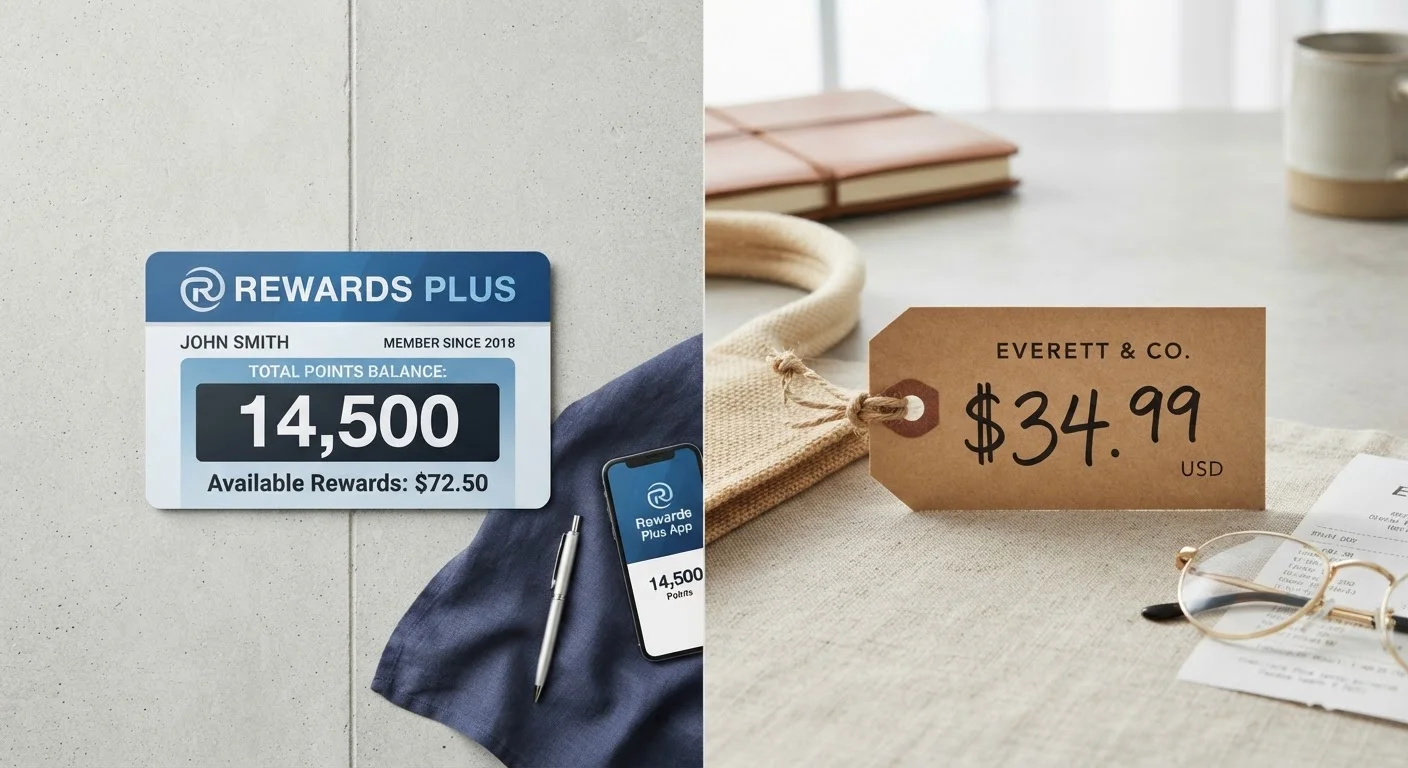
Loyalty programs operate on a deferred-value model: you spend money today and accumulate points, miles, or credits that can be redeemed later - usually within a narrow set of conditions. Simply paying less operates on immediate value: the price you see is what you keep in your pocket, with no future steps required.
The practical difference matters more than it sounds. Deferred value depends on the program's terms remaining stable, on you remembering to redeem before expiry, and on the redemption options still being available when you're ready to use them. For a deeper look at how redemption rates are often misunderstood, see our article on treating loyalty points like cash.
Lower prices, by contrast, are value you hold immediately. There's no intermediary structure, no expiry condition, and no behavioral requirement. The savings are certain at the moment of purchase.
| Criterion | Loyalty Programs | Simply Paying Less |
|---|---|---|
| When savings are realized | Deferred - upon redemption | Immediate - at point of purchase |
| Conditions required | Earn minimums, expiry dates, eligible categories | None - price is what it is |
| Typical effective return | 1%-3% on eligible spend | Varies by channel; often 5%-20% vs. full-price retailers |
| Behavioral influence on spending | Encourages higher frequency and larger baskets | No built-in incentive to spend more |
| Data exchange required | Yes - purchase history tracked | Generally no - standard transaction |
| Complexity | Moderate - requires tracking and active redemption | Low - compare prices, purchase |
| Risk of losing value | Yes - point expiry, program changes | No - savings are already realized |
The Real Cost of 'Earning' Rewards
Loyalty programs are not neutral systems - they are retention tools designed by retailers to increase visit frequency and average transaction size. Research consistently shows that consumers enrolled in loyalty programs tend to spend more per trip and visit more often. That means the rewards you earn may be partially or wholly offset by the extra spending the program encouraged.
The effective return rate on most grocery and retail loyalty programs typically sits between 1% and 3% on eligible purchases - and that's before accounting for points that expire, categories that don't earn, or redemption minimums that prevent you from accessing smaller balances. Our companion piece on loyalty program myths examines the gap between what members expect and what programs actually deliver.
~1-3%
Typical loyalty program cash-equivalent return rate
Consumer finance researchers generally estimate the effective return on most retail loyalty programs in this range, before accounting for unredeemed or expired points.
~54%
Loyalty points that go unredeemed annually
Industry analyses of loyalty program data have consistently found that a large share of earned points are never redeemed, often due to expiry or inattention.
3-5x
Higher perceived vs. actual redemption value
Behavioral economics research suggests consumers routinely overestimate the cash value of their points relative to what they can actually redeem them for.
By contrast, shopping at a channel that structurally prices items lower - such as discount grocers, warehouse formats, or less-marketed alternatives - can deliver consistent savings on every transaction with no behavioral overhead. See where everyday prices are consistently lower for a practical overview of those channels.
A Framework for Evaluating Any Program
Before deciding whether a loyalty program is worth your participation, calculate its actual return rate using this straightforward framework:
- Determine the redemption value per point. Divide the dollar value of what you can redeem (not the nominal value, the actual redemption value) by the number of points required.
- Calculate your realistic earn rate. Multiply your expected annual spend in qualifying categories by the points-per-dollar rate.
- Apply realistic expiry and restriction assumptions. Estimate what percentage of earned points you will realistically redeem based on past behavior, not best-case behavior.
- Compare to the alternative. Could you purchase the same items at a lower base price elsewhere, without needing the program?
If the effective return - after restrictions and behavior adjustments - is less than the price difference available through straightforward price comparison, the program is not delivering a genuine advantage for your situation. For related reading, cashback vs. instant discount walks through a similar framework for timing-based comparisons.
Paid Loyalty Tiers Add Another Variable
Some retailers now offer paid membership tiers that promise enhanced rewards or immediate member pricing. In these cases, the annual fee becomes part of the calculation - you need to earn back that fee in genuine savings before you break even. Evaluate these programs by tallying your realistic annual savings against the membership cost, not the advertised maximum benefit.
It's also worth noting that loyalty program memberships typically require sharing purchase data with the retailer. That data has commercial value to the business. The exchange isn't just financial - it's informational. Factor that into your evaluation alongside the dollar return rate.
When Loyalty Programs Can Work in Your Favor
Loyalty programs aren't universally poor value - but the conditions under which they deliver genuine savings are specific and worth naming clearly. You're more likely to benefit when:
- You consolidate most of your spending in one category with a single provider (for example, a frequent traveler using one airline consistently).
- The program offers meaningful base discounts to members - not just point accumulation - at the point of purchase.
- Redemption options are flexible and widely available, so points don't trap you into specific products or dates.
- You have a consistent habit of checking balances and redeeming before expiry windows close.
Outside these conditions, the default advantage shifts toward simply paying less. Programs structured around accumulation without immediate price relief are primarily retention tools for the retailer, not savings tools for the consumer. For consumers evaluating subscription-based loyalty variants (such as paid membership tiers), hidden costs inside subscription savings offers covers the added layer of cancellation friction and auto-renewal risk.
This article is for general informational purposes only and does not constitute financial advice. Savings outcomes vary based on individual spending patterns, program terms, and retailer pricing. Consult a qualified financial professional for advice tailored to your circumstances.