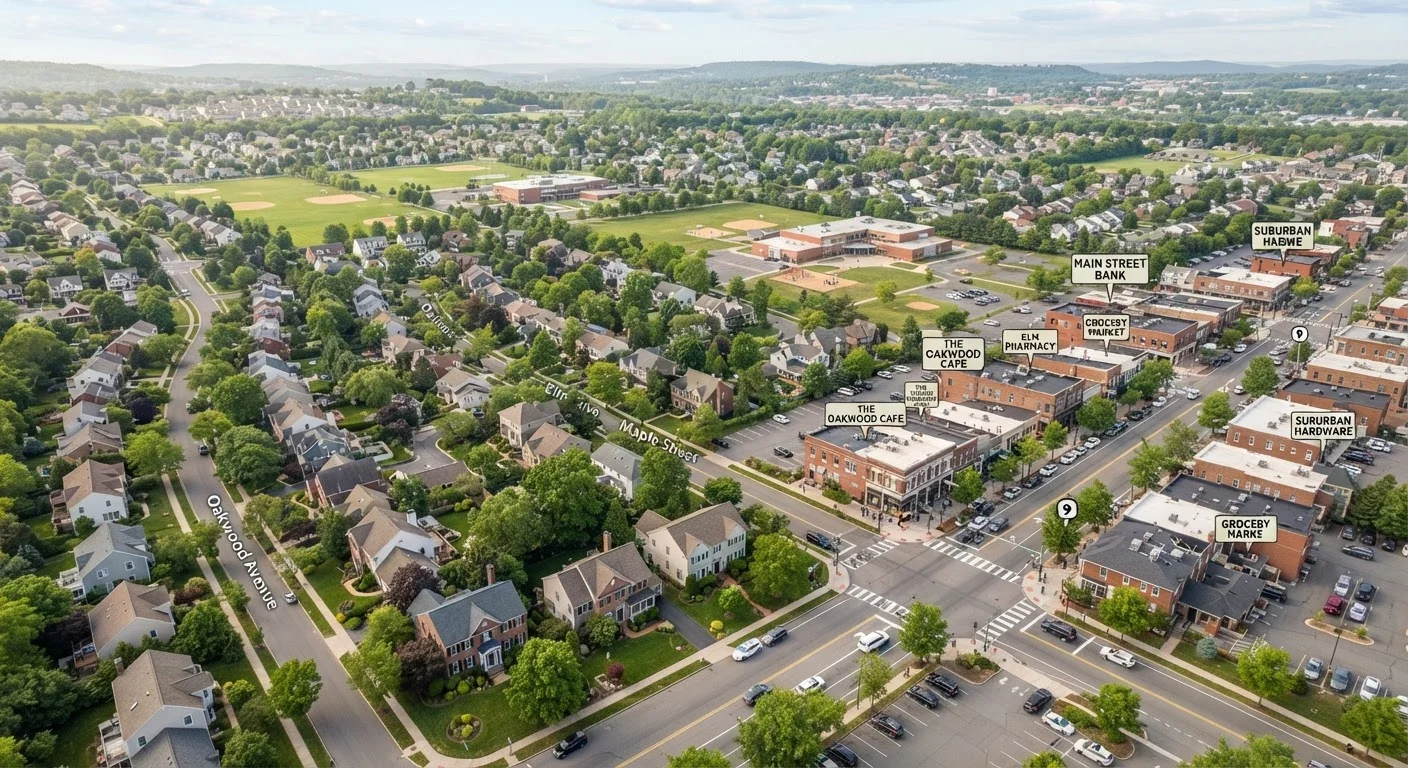
What Zoning Laws Actually Are
Zoning laws are local government ordinances that divide land within a jurisdiction into designated zones - each with its own set of rules about what can be built there and how property can be used. A parcel zoned for single-family residential use, for example, generally cannot be converted into a warehouse or a convenience store without going through a formal process to change that designation.
These rules are created and enforced at the municipal or county level, which means zoning can look quite different from one city to the next. The authority to zone land in the United States derives from each state's enabling legislation, and local governments exercise that power through their planning and zoning departments.
Zoning ordinance
A local law that divides a city or county into zones and specifies what types of buildings and activities are permitted in each zone.
Setback
The minimum required distance between a building and a property line, road, or other feature - zoning codes set these limits to control how buildings are positioned on a lot.
Variance
An official exception granted by a zoning authority that allows a property owner to deviate from one or more standard zoning requirements.
Rezoning
The formal process of changing a property's zoning designation, requiring government review, public hearings, and approval by a local governing body.
Accessory Dwelling Unit (ADU)
A secondary housing unit on the same lot as a primary residence - such as a basement apartment or backyard cottage - permitted only where local zoning allows it.
Mixed-use zoning
A zoning designation that allows residential and commercial uses to coexist in the same area or building, common in walkable urban neighborhoods.
Understanding zoning is foundational to evaluating any neighborhood. It answers the question: what could legally be built next door? For a deeper look at other factors that define a neighborhood's quality, see our guide on what makes a neighborhood good.
Common Zoning Categories You'll Encounter
Most zoning codes organize land into a handful of broad categories, then subdivide them further.
- Residential (R): Covers housing. Sub-designations like R-1, R-2, or R-3 typically indicate permitted density - from single-family homes on large lots to small apartment buildings. Higher numbers generally mean higher density is allowed.
- Commercial (C): Permits retail, offices, restaurants, and other businesses. Intensity varies widely - a C-1 zone might allow only small shops, while a C-3 zone could permit big-box stores or auto dealerships.
- Industrial (I): Allows manufacturing, warehousing, and distribution. Light industrial zones may exist adjacent to residential areas; heavy industrial zones are typically buffered farther away.
- Mixed-Use: Increasingly common in urban areas, these zones allow residential and commercial activity to coexist in the same buildings or blocks - think apartments above storefronts.
- Agricultural (A): Protects farmland and limits development intensity, common in rural and exurban areas.
If you're planning any future improvements to a property, zoning categories directly constrain what you can do. Our article on home addition planning and zoning setbacks covers this in detail.
How Zoning Shapes the Feel of a Neighborhood
Zoning isn't just an administrative formality - it's the invisible hand behind neighborhood character. When an area is zoned exclusively for low-density single-family homes, that designation keeps apartment buildings, drive-throughs, and light industrial facilities out. The result is a quieter, lower-traffic environment with a consistent housing scale.
Conversely, a neighborhood with mixed-use or higher-density residential zoning will tend to feel more urban: more foot traffic, more businesses within walking distance, and a wider variety of housing types. Neither profile is inherently better - it depends on what a buyer or renter values.
Drive the Area at Different Times of Day
A neighborhood's feel can shift dramatically between a weekday morning and a Friday evening. Visit at multiple times to observe traffic patterns, noise levels, and how the streetscape actually functions - details that a zoning map alone won't reveal.
Zoning also governs subtler details: how tall buildings can be, how much of a lot can be covered by structures (lot coverage), how far buildings must sit from property lines (setbacks), and whether accessory dwelling units (ADUs) are permitted. These rules compound to shape the streetscape you see and live within.
HOA covenants can layer additional restrictions on top of zoning. For a comparison of what those look like in practice, see how HOA communities work.
How to Check Zoning Before You Buy or Rent
Checking zoning is a concrete, accessible step in any home search. Here's how to do it:
- Visit the local planning department's website. Most municipalities maintain interactive online zoning maps where you can enter an address and see its current designation and permitted uses.
- Call the planning or zoning office directly. Staff can confirm a property's designation and answer questions about pending applications in the surrounding area.
- Review the zoning code itself. Once you know a parcel's designation (e.g., R-2), you can look up exactly what that designation allows and prohibits in the municipality's published code.
- Ask about pending rezoning applications. A parcel might be zoned residential today but have an active rezoning petition in process. Planning staff can tell you if any nearby parcels have open applications.
- Check the general or comprehensive plan. Most jurisdictions maintain a long-range land use plan that signals the intended future direction for different areas - a useful signal of what development pressure may look like over the next decade.
For a full framework on assessing a neighborhood before committing, see our neighborhood evaluation checklist.
Zoning Can Change - Here's What to Watch For
Zoning is not static. Property owners, developers, and governments can initiate changes through several formal mechanisms:
- Rezoning: A request to change a parcel's designated zone - for example, from single-family residential to mixed-use. Rezonings require public hearings and governing body approval.
- Variances: Exceptions to specific zoning rules for individual properties, typically granted by a zoning board of appeals when an owner demonstrates genuine hardship under the current rules.
- Overlay districts: Additional layers of regulations applied on top of base zoning - common for historic preservation areas, flood zones, or transit corridors.
- Comprehensive plan amendments: Changes to the long-range land use plan that often precede formal rezoning efforts.
Public notice requirements mean that most zoning changes generate official notifications, public hearings, and comment periods. Residents who want to stay informed can sign up for planning department mailing lists, monitor local government meeting agendas, or attend community meetings.
A Vacant Lot Is Not Necessarily Safe from Development
An empty parcel next to a home you're considering isn't proof that the view or quiet will last. Check its zoning designation and any pending applications before assuming it will remain undeveloped. What's permitted by zoning today can be built there tomorrow without further notice to neighbors.
School district boundaries are closely related to the planning decisions that shape a neighborhood's population over time. If you have children or are considering future resale value, our article on school district boundaries for homebuyers and renters is worth reading alongside this one.
This article is for general informational purposes only and does not constitute legal, financial, or real estate advice. Zoning laws and procedures vary by jurisdiction. Consult a licensed real estate professional or local planning authority for guidance specific to your situation.