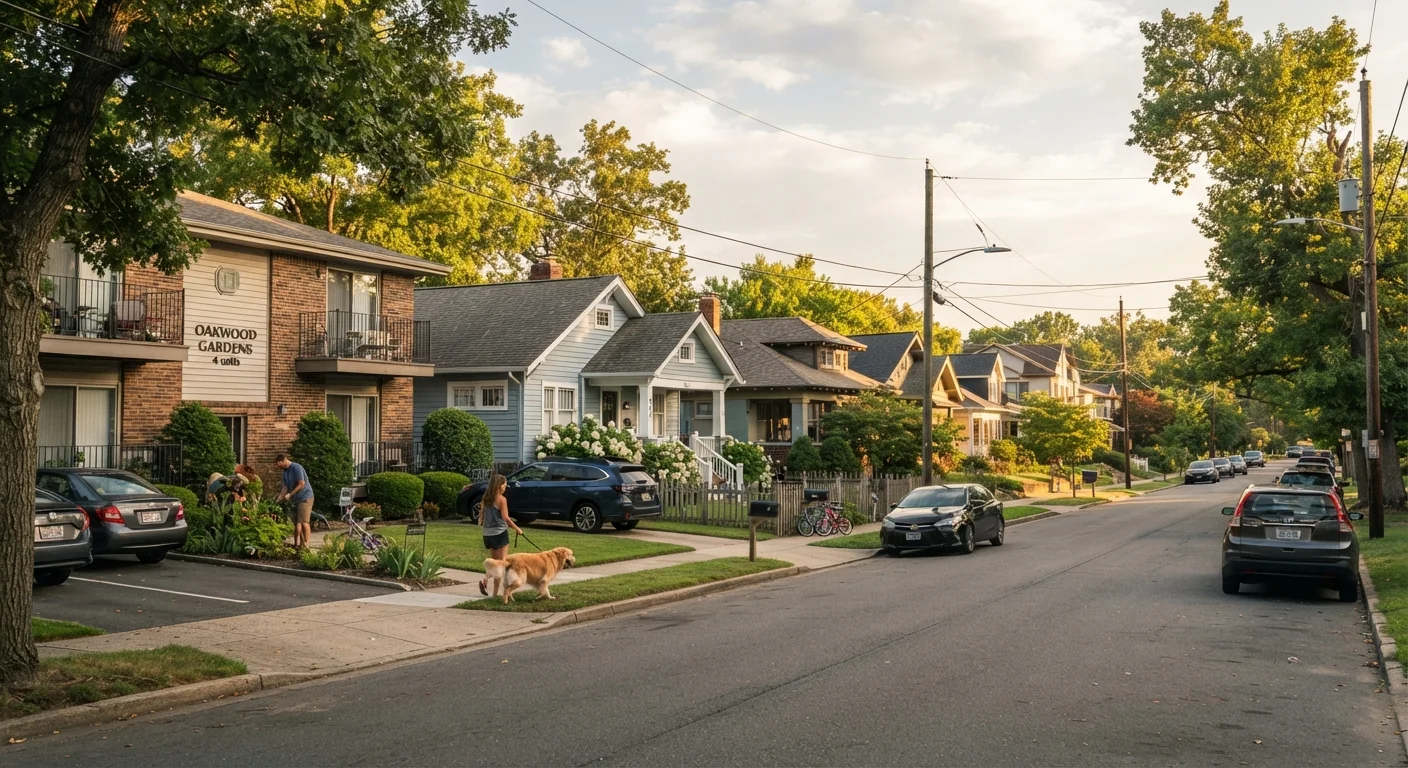
Why Tenure Status Shapes Community Experience
Two households can share the same zip code, walk the same sidewalks, and send their children to the same school - yet experience that neighborhood in meaningfully different ways depending on whether they rent or own. This isn't about commitment or character; it's about the structural differences that tenure status creates.
Homeowners have a financial stake in the neighborhood's trajectory. Rising property values, school ratings, crime rates, and zoning decisions all affect their balance sheet directly. That tangible interest tends to translate into greater civic engagement - attending city council meetings, participating in homeowners associations, and staying informed about local policy. Renters, whose financial fortunes aren't tied to local property values, often face fewer institutional incentives to plug in - though many do so anyway, out of genuine attachment to place.
Understanding these dynamics is especially valuable if you're weighing the rent-or-buy decision for a specific neighborhood you're considering.
| Criterion | Renting | Owning |
|---|---|---|
| Financial stake in neighborhood | Indirect (via rent) | Direct (property value) |
| HOA voting rights | Typically none | Full membership vote |
| Average tenure length | Shorter; more variable | Longer; more stable |
| School board engagement | Can vote; less financial incentive | Can vote; direct tax impact |
| Ability to modify property | Limited by lease terms | Subject only to code and HOA |
| Civic organization access | Open; often underutilized | Open; more frequently used |
| Sensitivity to local market shifts | Affects rent renewal | Affects net worth directly |
Civic Participation and Local Governance
One of the clearest structural differences between renting and owning is access to formal civic mechanisms. In most jurisdictions, property tax bills fund local schools, roads, and services - and property owners have a more direct stake in how those dollars are spent. Homeowners can vote in school board and municipal elections that directly affect their investment; renters can too, though the financial feedback loop is less immediate.
HOA governance is another arena where owners hold structural advantages. If you own in an HOA-governed community, you have voting rights on board decisions, rule changes, and budget allocations. Renters in the same development typically don't. Their landlord votes on their behalf - or doesn't vote at all.
Block associations and neighborhood organizations are more accessible to everyone, and renters who proactively join these groups can develop real influence. But the default pathways into neighborhood governance are more open to owners.
~2 years
Median renter tenure in a unit
According to U.S. Census Bureau data, renters move significantly more often than homeowners, whose median tenure exceeds eight years.
~27%
Renters who participate in community organizations
Research consistently shows renters participate in civic and neighborhood organizations at lower rates than owners, though gaps vary by income and housing stability.
Schools, Stability, and Long-Term Ties
Tenure length profoundly affects how much a resident can invest in neighborhood institutions. Homeowners move less frequently than renters - the transaction costs of buying and selling create a natural anchor. That stability allows for sustained involvement in PTAs, school improvement committees, and local volunteer networks. Trust with neighbors builds over years, not months.
Renters, by contrast, may move when leases end, rents rise, or landlords sell. This cycle of turnover isn't universal - many renters stay in the same apartment for a decade - but it is more common. For families with school-aged children, frequent moves can disrupt continuity in school relationships, extracurricular participation, and peer networks.
That said, renters who commit to a neighborhood can develop remarkably deep ties. The key is intentionality: joining local organizations, attending community events, and treating the neighborhood as a long-term home rather than a temporary address. For a broader look at how neighborhood character and life stage interact, see our comparison of city neighborhoods vs. suburbs.
Gentrification Can Sharpen These Divides
In neighborhoods undergoing rapid change, the renter-owner divide can become especially pronounced. Long-term renters may be displaced as rents rise, while new owners arrive and reshape the community's character through their institutional engagement. Understanding these dynamics is important context for evaluating any neighborhood in transition. Our explainer on gentrification covers the forces at work and why its effects are widely debated.
How the Financial Frame Changes Your Relationship to the Block
Homeowners often monitor neighborhood conditions - new businesses opening, a house going to foreclosure, a rezoning proposal - with an eye toward how these changes affect property values. This vigilance isn't purely mercenary; it's a byproduct of having a major financial asset tied to a specific geography. It's one reason homeowners are more likely to report code violations, attend planning hearings, and advocate loudly when a development proposal threatens neighborhood character.
Understanding how property tax rates vary by neighborhood also becomes far more relevant once you own. Renters bear those costs indirectly through rent, but owners feel them directly on an annual tax bill - which gives them a sharper incentive to follow local budget decisions.
Renters, freed from that financial feedback loop, may experience the neighborhood more on purely experiential terms: how it feels to live there day to day, whether local amenities serve their needs, and whether the community feels welcoming. That perspective has its own validity - and its own insights. For a fuller picture of the financial and lifestyle trade-offs between renting and owning, our comparison of renting vs. owning covers the broader decision in depth.
This article is for general informational and educational purposes only and does not constitute financial, legal, or real estate advice. Individual circumstances vary; consult a qualified professional for guidance tailored to your situation.