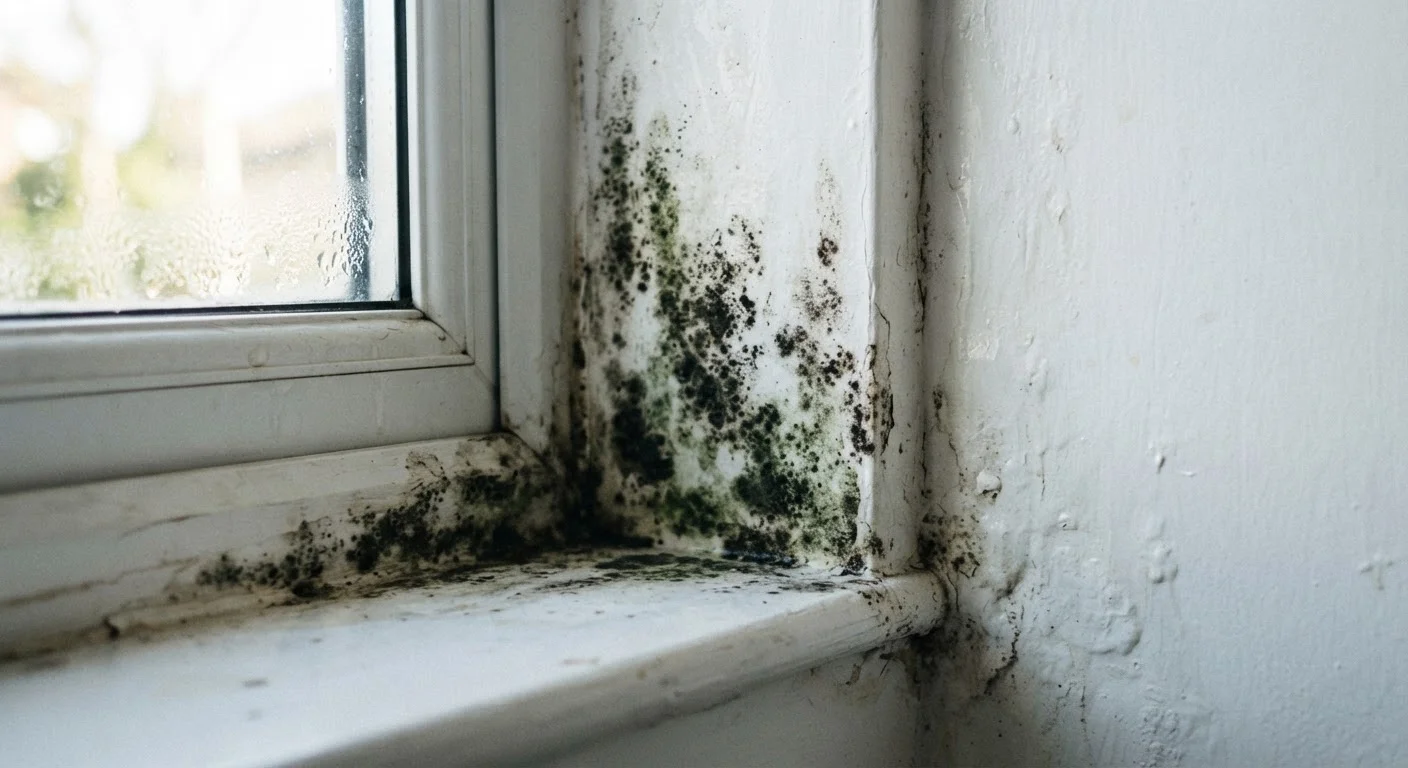
Why Mold Grows - and What It Needs
Mold spores are everywhere. They float in outdoor air, enter homes through open windows and doors, and hitchhike on clothing and pets. The spores themselves are harmless in small quantities - what transforms them into a household problem is moisture.
For mold to colonize, three conditions must be met simultaneously: a moisture source, an organic food substrate, and temperatures typically between 40°F and 100°F. Most home interiors fall comfortably in that temperature range year-round, which means moisture is the variable homeowners can actually control.
Common organic food sources include:
- Drywall paper and gypsum board
- Wood framing, subfloors, and trim
- Ceiling tiles and insulation
- Carpet backing and upholstered furniture
- Grout and caulk in bathrooms
Non-porous materials like glass, metal, and ceramic tile don't feed mold, though mold can still grow on dust or organic residue deposited on those surfaces.
Humidity Control Is Your First Line of Defense
A hygrometer (an inexpensive device that measures relative humidity) can help you monitor indoor moisture levels year-round. Running exhaust fans during and after showers, venting dryers to the exterior, and using a dehumidifier in chronically damp spaces are practical steps that significantly reduce mold risk. These measures are far less costly than any remediation project.
Where Mold Hides Most Often
Mold predictably concentrates in areas with recurring moisture. Bathrooms and kitchens top the list - steam, splashing water, and inadequate exhaust ventilation create ideal conditions. But several less-obvious locations account for a significant share of household infestations:
- Behind walls near plumbing: Slow pipe leaks can feed mold growth for months before any visible sign appears on a wall surface.
- Attics: Inadequate ventilation traps warm, humid air against the roof deck, encouraging growth on wood sheathing and rafters.
- Basements and crawl spaces: Ground moisture, condensation on cool surfaces, and flooding events make these areas chronically vulnerable. Basement waterproofing strategies can significantly reduce this risk.
- HVAC systems: Drip pans, ductwork, and coils can harbor mold that then disperses spores throughout the home.
- Window frames and sills: Condensation on single-pane glass frequently wets surrounding wood or drywall.
A persistent musty odor - even without visible growth - is a reliable indicator that mold may be present in a concealed location. Staying current with routine home maintenance is one of the most effective ways to catch moisture problems before mold takes hold.
Surface Mold vs. Hidden Mold: Why the Distinction Matters
Not all mold problems carry the same remediation complexity. Surface mold on a non-porous material - a few spots of discoloration on a bathroom tile or tub surround - is typically limited to the outermost layer and can often be cleaned without professional intervention, provided the underlying moisture problem is also resolved.
Hidden mold is a different matter. When mold grows inside wall cavities, beneath flooring, or within structural assemblies, simply wiping a surface does nothing. Remediation requires opening the assembly, removing affected materials, and addressing the moisture pathway. This work often intersects with structural repair decisions, particularly in older homes where water damage has been chronic.
~50%
U.S. homes with dampness or mold issues
Research published in environmental health literature has estimated that roughly half of U.S. homes have conditions conducive to mold growth, including visible dampness or mold.
10 sq ft
EPA's general DIY remediation threshold
The U.S. Environmental Protection Agency recommends that mold patches larger than 10 square feet be addressed by a trained professional remediation contractor.
30%-50%
Recommended indoor relative humidity range
Maintaining indoor relative humidity between 30% and 50% is widely cited by the EPA and building science professionals as the primary strategy for mold prevention.
The key diagnostic question is whether the mold is confined to a surface you can see and clean, or whether it has penetrated porous materials or spread to areas behind finished surfaces.
When to Handle It Yourself - and When to Call a Professional
The U.S. Environmental Protection Agency (EPA) offers general guidance that mold patches smaller than about 10 square feet may be manageable by a homeowner, while larger infestations or mold in HVAC systems generally warrant professional remediation. This is a useful rule of thumb, not a guarantee.
Consider professional assessment when:
- The affected area exceeds 10 square feet
- Mold is present inside HVAC ducts or air handling equipment
- There is a history of flooding or long-term hidden leaks
- Residents have respiratory conditions or compromised immune systems
- You detect a musty odor but cannot locate the source
- Mold reappears shortly after cleaning
Much like knowing when a home repair exceeds your skill set - similar to the decision-making outlined in knowing when to call a professional vs. DIY - the honest assessment of scope and risk is what separates a manageable project from one that worsens without expert intervention.
Document Everything Before and After Remediation
Before any remediation work begins, photograph the affected areas thoroughly and keep records of all inspections, lab reports, contractor agreements, and post-remediation clearance tests. This documentation protects you if moisture problems recur, supports insurance claims, and is essential if you later sell the home - mold is generally a disclosable defect.
When engaging a remediation contractor, look for credentials such as the Institute of Inspection, Cleaning and Restoration Certification (IICRC) or the American Council for Accredited Certification (ACAC). Always obtain a written remediation plan before work begins, and consider hiring a separate inspector - not affiliated with the remediator - to verify results.
This article is for general informational purposes only and does not constitute professional health, legal, or financial advice. Consult a qualified professional for guidance specific to your situation.