Why Basement Moisture Demands a Systematic Response
Basement water intrusion is not a cosmetic inconvenience. Sustained moisture weakens concrete, corrodes steel reinforcement, and creates the exact conditions mold needs to colonize - a problem explored in depth in our guide on mold growth in the home. Addressing it effectively means first understanding where the water is coming from.
Water enters basements through three main pathways: hydrostatic pressure pushing through the foundation wall or floor slab, surface runoff that pools against the foundation, and condensation from warm humid air meeting cool concrete surfaces. Each pathway calls for a different response, which is why a single product or technique rarely solves a complex moisture problem.
Because waterproofing projects can represent significant household expenditure, planning ahead with a sinking fund is a practical way to budget for this type of predictable major repair without taking on debt.
| Exterior Waterproofing | Interior Drainage System | Sump Pump | |
|---|---|---|---|
| Primary function | Prevents water reaching foundation | Redirects water already inside | Actively pumps collected water out |
| Best moisture source | Surface runoff, failed membranes | Hydrostatic seepage through floor/walls | Any system collecting water in pit |
| Typical cost range | High - excavation required | Moderate | Low to moderate |
| Disruption to home | Major - exterior excavation | Moderate - interior concrete breaking | Minor - localized pit installation |
| Professional required | Yes, licensed contractor essential | Strongly recommended | DIY possible for replacement |
| Long-term maintenance | Low after installation | Low - periodic inspection | Regular testing and eventual replacement |
| Works in existing homes | Yes, but very disruptive | Yes - common retrofit | Yes - standard retrofit |
Exterior Waterproofing: Stopping Water at the Source
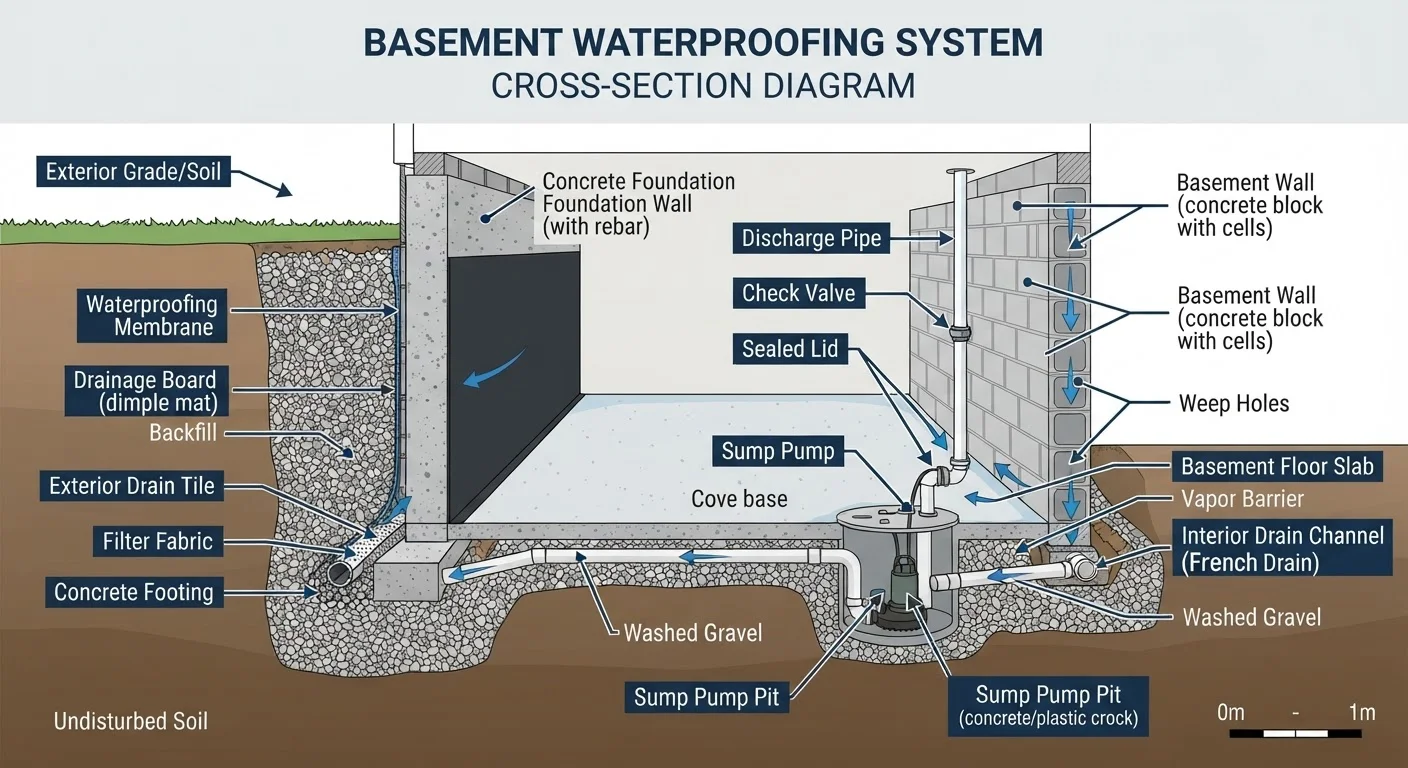
Exterior waterproofing is the most thorough method because it prevents water from ever reaching the foundation wall. The process involves excavating soil around the perimeter of the home down to the footing, cleaning and repairing the foundation surface, and applying a waterproof membrane - typically a rubberized asphalt coating, drainage board, or spray-applied elastomeric compound. A perforated drain pipe (often called a French drain) is then installed at the footing level and covered with gravel to direct groundwater away from the structure.
The primary advantage is that it addresses the root cause rather than managing symptoms. It also protects the exterior face of the foundation from ongoing water damage. The significant drawbacks are cost and disruption: excavation around a full foundation perimeter is labor-intensive, requires heavy equipment, and typically demands permits. In most jurisdictions, this scale of excavation near a home's foundation should be performed by a licensed contractor. Landscaping, driveways, and decks adjacent to the home may also need to be temporarily removed.
Permits and Licensed Trades Are Typically Required
Exterior foundation work almost always requires a permit in US jurisdictions, and many areas specify that work near the foundation footing must be performed by a licensed contractor. Skipping permits can create complications when selling the home and may void homeowner's insurance coverage for related damage. Always check with your local building department before beginning excavation or drainage work.
Interior Drainage Systems: Managing Water That Gets In
When exterior excavation is impractical - which is common in existing homes - an interior perimeter drainage system is frequently the most realistic and cost-effective solution. Installers break up the concrete floor around the basement perimeter, lay a perforated drain pipe or a proprietary drainage channel, and then re-pour concrete over it. The channel collects water seeping through wall-floor joints or through the floor slab and routes it to a sump pit.
Interior systems do not stop water from entering the wall - they intercept and redirect it. This distinction matters: the foundation itself continues to be exposed to moisture, so the method treats symptoms rather than the underlying hydrostatic pressure. That said, for homes where the source is groundwater pressure rather than a failed exterior membrane, interior drainage is highly effective at keeping the living space dry.
This type of repair falls into the structural category of home maintenance - a priority discussed in our article on prioritizing structural versus cosmetic repairs in an aging home.
Test Before You Commit to a Method
Tape a square of plastic sheeting to the basement wall and seal all edges with waterproof tape. Leave it for 24-48 hours. Moisture on the wall side indicates water migrating through the foundation; moisture on the room side suggests condensation. This simple test helps distinguish whether you need waterproofing, improved ventilation, or both - and can save you from investing in the wrong system.
Sump Pumps: The Active Component of Any Drainage System
A sump pump is a submersible or pedestal pump installed in a pit (the sump basin) at the lowest point of the basement floor. When water collects in the pit to a set level, a float switch activates the pump and water is discharged through a pipe to a location well away from the foundation - typically to a storm drain, dry well, or yard area with appropriate slope.
Sump pumps are a component, not a standalone system; they depend on water being channeled to the pit by gravity through an interior drain or natural seepage. Key considerations include pump capacity (measured in gallons per hour), the presence of a check valve to prevent backflow, and - critically - a battery backup or water-powered backup pump for use during power outages, which often coincide with the storms that generate the most groundwater.
Maintenance is non-negotiable: pumps should be tested quarterly by pouring water into the pit, the float switch should be checked for free movement, and the discharge line should be inspected for obstructions. Mechanical components have a finite lifespan, generally seven to ten years for most residential units, after which replacement should be planned proactively.
98%
Basements that will experience some water intrusion
The American Society of Home Inspectors has estimated that nearly all basements will experience some form of water intrusion over the life of a home.
7-10 years
Typical residential sump pump lifespan
Most manufacturers and waterproofing contractors cite a seven-to-ten-year service life for residential sump pumps under normal operating conditions.
~$10,000+
Average exterior waterproofing cost
Exterior waterproofing costs vary widely by home size, soil conditions, and region; full-perimeter projects routinely exceed $10,000 according to industry contractor surveys.
Choosing the Right Approach for Your Basement
The most effective waterproofing strategy depends on a careful diagnosis of moisture source and severity. A contractor or waterproofing specialist can conduct a moisture test and inspect the foundation before recommending a system. Homeowners can also observe the pattern of moisture - walls wet only after rain suggest surface drainage or exterior membrane failure; floors wet during dry periods suggest a high water table - to provide useful preliminary information.
New construction almost always warrants exterior waterproofing from the outset, since the foundation is already exposed during building. In existing homes, interior drainage combined with a properly sized sump pump is the most common professional recommendation for chronic seepage. Minor condensation issues may respond to improved ventilation, dehumidification, and interior-grade masonry sealants - though sealants alone are not adequate for hydrostatic pressure situations.
If a basement renovation is on the horizon - like the kind of upgrade discussed in our comparison of remodel versus refresh decisions - waterproofing should always be resolved before finishing walls or floors, not after.
This article is for general informational purposes only. Waterproofing requirements vary by home, soil conditions, local climate, and local building codes. Consult a licensed contractor and verify permit requirements in your jurisdiction before beginning any foundation or drainage work.