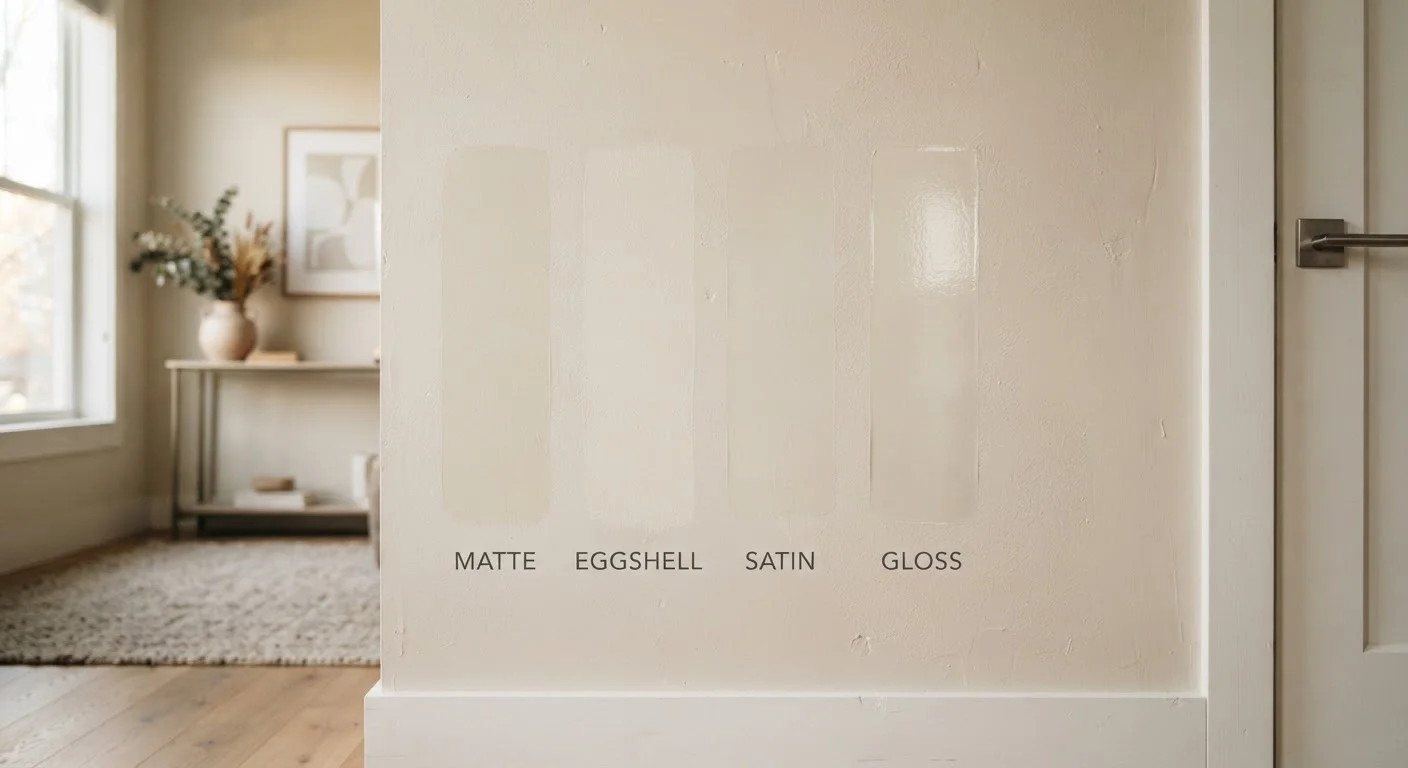
Why Sheen Level Matters
Paint finish - the degree of sheen or gloss in the dried coating - is one of the most consequential choices in any interior painting project. Yet it is frequently treated as an afterthought behind color selection. The sheen level determines how light reflects off a wall, how visible surface flaws become, and critically, how well a surface stands up to cleaning and repeated contact.
Finishes are generally grouped into four practical categories: matte (also called flat), eggshell, satin, and gloss (with semi-gloss as a common sub-category). Each reflects a different percentage of light and carries distinct performance trade-offs. Understanding those trade-offs - room by room - is what separates a paint job that looks great at first from one that holds up for years.
Wall preparation also interacts directly with your finish choice. Higher-sheen paints reflect light at sharper angles, which makes every imperfection in the substrate more visible. If your walls have patches, dings, or uneven texture, a lower-sheen finish will be more forgiving. For background on achieving a smooth substrate, see our drywall finishing levels reference guide.
| Matte | Eggshell | Satin | Gloss / Semi-Gloss | |
|---|---|---|---|---|
| Sheen Level | Very low (flat) | Low, subtle sheen | Medium, pearl-like | High, reflective |
| Washability | Poor - marks easily | Moderate - light wiping | Good - handles scrubbing | Excellent - highly durable |
| Hides Imperfections | Best | Good | Moderate | Poor - amplifies flaws |
| Moisture Resistance | Low | Low to moderate | Good | Best |
| Best Rooms | Bedrooms, ceilings | Living rooms, hallways | Kitchens, baths, kids' rooms | Trim, doors, cabinetry |
| Surface Prep Required | Minimal | Moderate | Thorough | Very thorough |
Matte and Eggshell: The Low-Sheen Options
Matte (Flat) finish reflects very little light - typically under 5% - giving walls a smooth, velvety appearance that reads as rich and intentional in photographs and in person. It is the most forgiving finish for imperfect walls because the diffuse light scatter minimizes shadows around bumps, patches, and texture variations. The downside is durability: matte paints are difficult to wipe clean without leaving shiny marks or removing the paint film itself. They are best suited to adult bedrooms, formal dining rooms, ceilings, and accent walls that will rarely need scrubbing.
Eggshell adds a subtle, low-level sheen - roughly equivalent to the surface of an actual eggshell - that meaningfully improves washability while retaining most of matte's wall-flattering qualities. This makes eggshell the workhorse finish for general living areas, hallways, and bedrooms in active households. It holds up to light cleaning and resists scuffs better than flat paint, without broadcasting every surface flaw the way higher-sheen options do.
Test Before You Commit
Purchase small sample quantities of your chosen color in two adjacent sheen levels and apply them to a 12-by-12-inch section of the actual wall. Observe both in natural daylight and under artificial lighting at different times of day. Sheen can look dramatically different depending on the light source and the angle of observation - a test patch prevents costly mistakes before a full room commitment.
Satin and Gloss: When Durability Takes Priority
Satin sits in the middle of the sheen spectrum and is one of the most versatile interior finishes available. Its soft, pearl-like reflectivity is noticeable but not harsh, and the finish cleans easily - holding up to repeated wiping, moisture, and grease splatter. That durability profile makes satin the standard recommendation for kitchens, bathrooms, laundry rooms, and children's bedrooms. It also works well on doors when a slight sheen is acceptable. The trade-off: satin will highlight surface imperfections more than eggshell, so wall prep matters more.
Gloss and Semi-Gloss are the highest-sheen interior options, reflecting the most light and offering the most durable, moisture-resistant surface of any standard paint finish. Semi-gloss is the traditional choice for trim, window casings, baseboards, and door frames - surfaces that endure constant contact and periodic scrubbing. High-gloss is reserved for specialty applications like cabinetry, furniture-quality trim, or dramatic accent treatments where the reflective effect is a deliberate design choice. Both finishes expose every surface imperfection clearly, so they demand the highest level of surface preparation before application.
Just as different exterior cladding materials serve distinct performance functions - as covered in our exterior siding comparison - interior paint finishes are purpose-built for the demands of specific surfaces and environments.
Choosing the Right Finish Room by Room
A practical approach is to map each room's function, traffic level, and moisture exposure to the appropriate finish tier. Ceilings almost universally benefit from flat paint, which hides the texture irregularities inherent in most ceilings and reduces glare from overhead lighting. Living rooms and bedrooms favor matte or eggshell depending on how much cleaning they require. Kitchens and bathrooms call for satin at minimum, with semi-gloss on trim and any heavily splashed surfaces. Trim and millwork throughout the home perform best with semi-gloss or gloss, which is why painters frequently use a different finish on the same color - or a contrasting color - for trim versus walls.
Budget is a secondary but real consideration. Higher-sheen paints often require more coats of primer and more rigorous surface prep to look their best, which can increase both material and labor costs. However, their extended cleanability and durability can reduce the frequency of repainting in high-use areas over time.
When planning a broader interior refresh, coordinating your paint finish selections with your flooring choices produces a more cohesive result - our flooring options comparison covers how different floor materials interact with light and decor in similar ways.
~80%
Interior repaint jobs that use eggshell or satin
Industry painting contractors report that eggshell and satin finishes account for the large majority of interior wall repaint projects in residential homes.
3-5 years
Typical repaint cycle for high-traffic rooms
The Painting and Decorating Contractors of America have noted that high-use interior spaces with low-sheen paints typically need refreshing every three to five years under normal conditions.