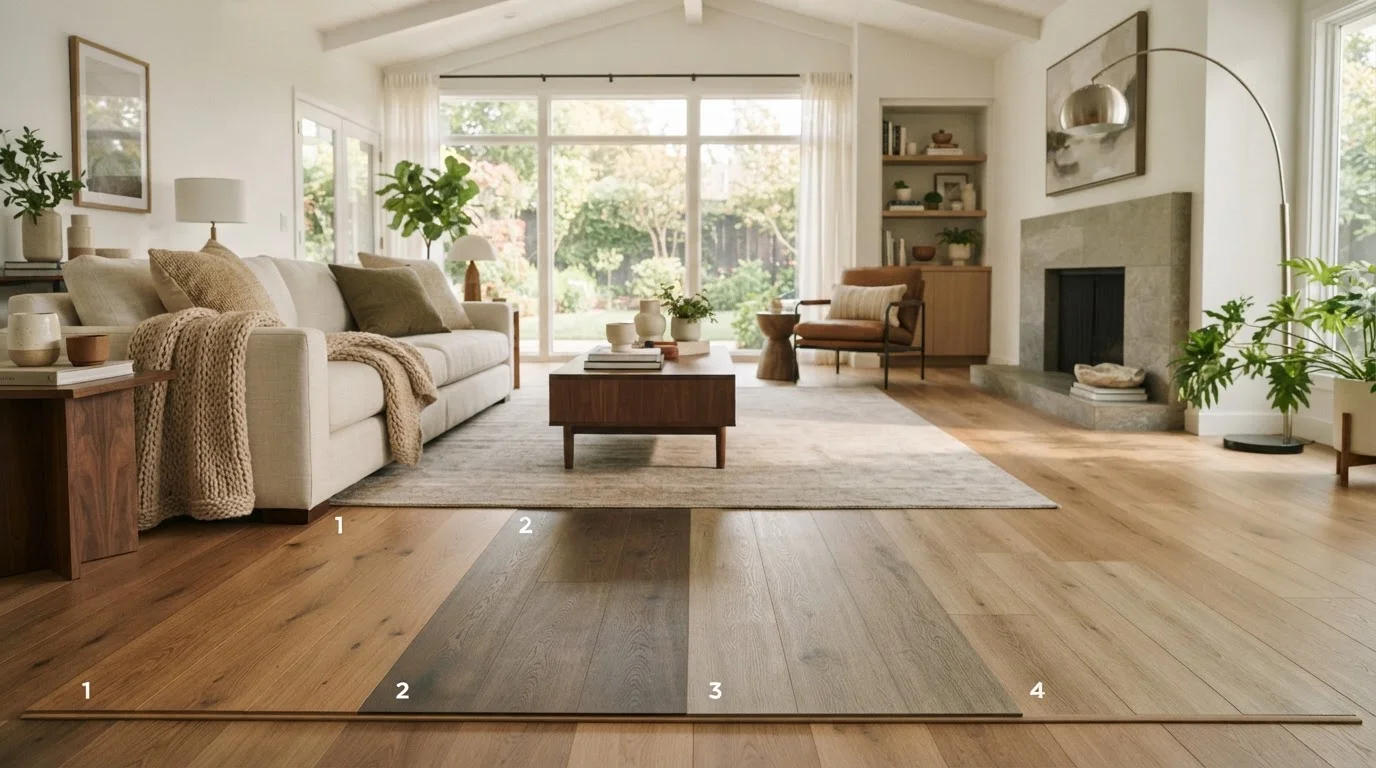
What Sets These Four Materials Apart
Choosing flooring involves more than picking a color or wood grain. Each of the four dominant materials - solid hardwood, engineered wood, laminate, and luxury vinyl plank (LVP) - is constructed differently, performs differently under stress, and carries a different cost profile. Understanding those structural differences is the fastest route to a decision that holds up over time.
Solid hardwood is milled from a single piece of lumber, typically 3/4 inch thick. Its depth allows it to be sanded and refinished multiple times - a meaningful advantage for long-term ownership. Engineered wood bonds a real wood veneer over a plywood core, giving it greater dimensional stability across humidity swings. Laminate uses a photographic layer under a clear wear coat to simulate wood, with no actual wood on the surface. Luxury vinyl plank is 100% synthetic, built with a rigid or flexible core and a printed design layer sealed under a durable wear layer.
For a broader look at how material composition affects long-term performance in home improvement projects, see our comparison of exterior siding materials - many of the same moisture and durability principles apply indoors.
| Solid Hardwood | Engineered Wood | Laminate | Luxury Vinyl Plank | |
|---|---|---|---|---|
| Typical material cost (per sq ft) | $5-$15+ | $3-$10 | $1-$5 | $2-$7 |
| Moisture resistance | Low | Moderate | Low-Moderate | High-Waterproof |
| Can be refinished | Yes, multiple times | Yes, 1-3 times | No | No |
| Lifespan (with care) | 50-100+ years | 25-50 years | 15-25 years | 15-30 years |
| Best room types | Living rooms, bedrooms | Most rooms, basements | Bedrooms, dry areas | Kitchens, baths, basements |
| DIY-friendly installation | Moderate-difficult | Moderate | Moderate-easy | Easy-moderate |
| Resale value impact | Highest | High | Moderate | Moderate |
Durability, Moisture Resistance, and Maintenance
Durability varies significantly by material and use case. Solid hardwood, when properly maintained, can last 50 to 100 years, but it expands and contracts with humidity changes - making it a poor fit for basements, bathrooms, or rooms directly over a slab. Engineered wood handles moderate moisture better due to its plywood core but still should not be used in areas with standing water risk.
Laminate is more moisture-resistant than solid hardwood but is not waterproof. Water that seeps into seams can cause swelling and delamination. Modern LVP, particularly rigid-core formats, is effectively waterproof - a major reason it has become the default choice for kitchens and bathrooms. Most LVP products can withstand temporary flooding without permanent damage.
Don't Overlook Subfloor Condition
Even the highest-quality flooring will fail prematurely if installed over a subfloor that is uneven, soft, or moisture-compromised. Industry guidelines generally require the subfloor to be flat within 3/16 inch over a 10-foot span. Address any structural or moisture issues in the subfloor before installation - costs caught early are far lower than remediation after the new floor is down.
Maintenance expectations also differ. Hardwood requires periodic refinishing every 7-15 years depending on traffic. Laminate and vinyl are low-maintenance but cannot be refinished - once the wear layer degrades, replacement is the only option.
Cost Ranges and Installation Considerations
Material and installation costs vary widely within each category. The figures below reflect general market ranges and will differ by region, product grade, and contractor rates. Always obtain multiple quotes from licensed flooring professionals before budgeting.
$3-$8
Average installed cost per sq ft for LVP
According to industry flooring cost surveys, luxury vinyl plank's total installed cost typically falls between $3 and $8 per square foot, depending on product grade and regional labor rates.
~30%
LVP share of U.S. flooring market
Flooring industry reports indicate luxury vinyl products have captured roughly 30% of the U.S. residential flooring market, reflecting rapid consumer adoption over the past decade.
Installation method matters for subfloor preparation. Solid hardwood typically requires nail-down or staple-down installation over wood subfloors. Engineered wood can be glued, nailed, or floated. Laminate and LVP are most commonly installed as floating floors using click-lock systems - a format that experienced DIYers can often handle in straightforward rooms. However, uneven subfloors, floor transitions, stairs, and rooms with complex layouts generally warrant professional installation to avoid gapping, peaking, and warranty voidance.
If you're planning a broader interior refresh, pairing new flooring with the right wall treatment compounds the visual impact - our guide to interior paint finishes explains which sheen levels hold up best in high-traffic spaces.
Acclimate Your Flooring Before Installation
Most wood-based and wood-look flooring products should be acclimated to the room's temperature and humidity for 48-72 hours before installation. Skipping this step can lead to gapping or buckling after installation as the material adjusts. Check the manufacturer's specific acclimation instructions, as requirements vary by product and climate zone.
Which Rooms Suit Each Flooring Type
Room conditions - primarily moisture exposure and traffic intensity - should drive material selection more than aesthetics alone. Use the guidance below as a starting framework, then verify suitability with the product manufacturer's specifications.
- Living rooms and bedrooms: All four materials work here. Hardwood and engineered wood deliver warmth and resale value; laminate and LVP offer cost savings with a similar look.
- Kitchens: LVP is the strongest performer due to waterproofing and ease of cleaning. Engineered wood with a proper finish is possible but requires vigilance around the sink and dishwasher.
- Bathrooms: LVP is the near-universal recommendation. Solid hardwood and laminate are not suitable. Engineered wood is marginal at best.
- Basements: LVP excels due to moisture from below-grade slabs. Engineered wood rated for below-grade installation is a secondary option. Solid hardwood and standard laminate are generally not appropriate.
- Home offices and high-traffic hallways: Hardwood with a commercial-grade finish, engineered wood, or a high-wear-layer LVP (12 mil or above) all perform well.
Homeowners financing a renovation through a mortgage product may also find it useful to review loan type differences to understand how home improvement costs interact with financing options.